

Author
Marie R. Winters


For private label food brands, packaging is more than a way to contain a product. It influences how customers recognize the brand, how well the food is protected, how convenient the product is to use, and how efficiently the business can manage different product lines.
So, how should flexible pouches be designed for private label food brands? The best approach is to start with the food product itself, then select the right pouch structure, material, barrier properties, closure, and printing design. Each element should work together to meet product requirements and create a consistent brand identity.
Whether you are launching a new snack brand, expanding a coffee product range, or developing private label dried food products, custom flexible pouches offer a practical way to combine product protection, attractive presentation, and flexible customization.
Before choosing a packaging design, private label brands should understand the characteristics of the food they plan to sell. Different products have different packaging requirements, even when they use a similar pouch format.
For example, nuts and dried fruits may need protection against moisture and oxygen to maintain their texture and freshness. Coffee packaging may require additional aroma protection and a one-way degassing valve. Protein powders and seasoning blends may need reliable moisture barriers to prevent clumping.
There are several important factors to evaluate before developing custom food packaging:
These details help prevent common packaging problems, such as selecting a pouch that looks attractive but cannot provide sufficient protection or does not work properly with the filling process.
The right pouch style depends on the product volume, retail display requirements, and intended use. Private label brands do not need to use the same packaging format for every product. Instead, they should select a structure that supports the specific application.
Stand-up pouches are widely used for nuts, granola, dried fruits, candy, cookies, tea, and other packaged food products. Their bottom gusset allows the pouch to stand upright, making products easier to display on retail shelves.
A resealable zipper is particularly useful for multi-serving products. Consumers can open the package, take out the amount they need, and close it again for later use. Brands can also customize the pouch with matte or glossy finishes, printed graphics, transparent windows, and different sizes.
For snack brands looking for flexible retail packaging, custom stand-up pouches provide a practical starting point.
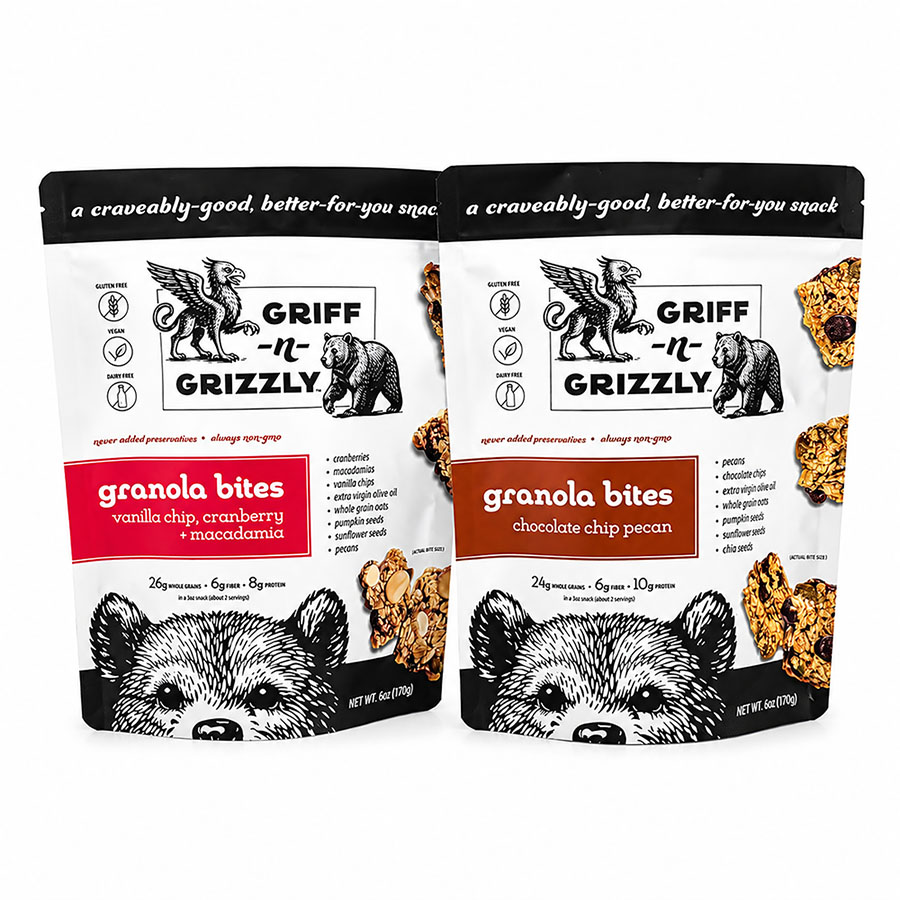
Custom printed stand-up pouches for different granola and snack flavors.
Flat bottom pouches are a good option for brands that want a more structured package with a stable retail presentation. Their box-like bottom helps the pouch stand firmly, while the front, back, and side panels provide additional space for branding and product information.
This format is commonly considered for coffee, nuts, tea, snacks, pet food, and selected dry food products. Brands can also add resealable zippers, tear notches, degassing valves, and customized surface finishes depending on the application.
If shelf stability and a more premium appearance are important, custom flat bottom pouches are worth considering.
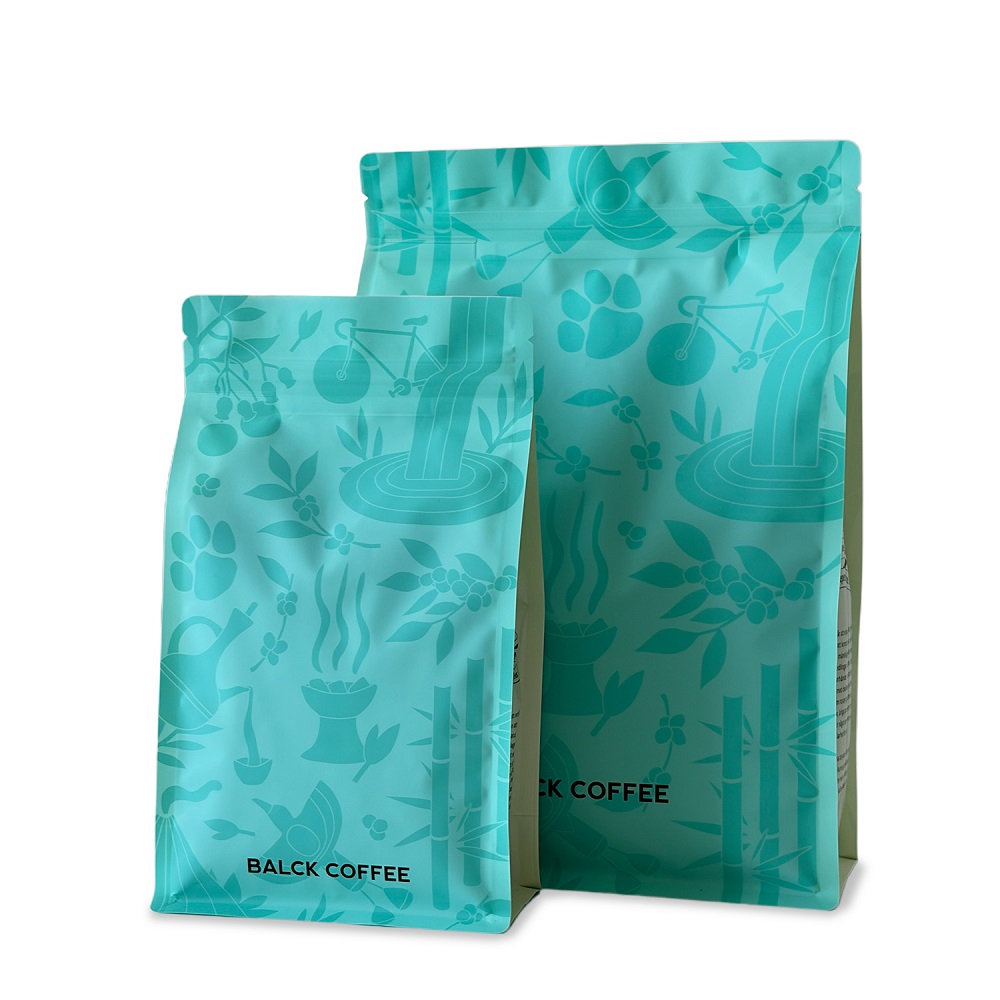
Custom printed flat bottom pouches with a stable base and resealable design.
Flat pouches are suitable for products that require compact, lightweight packaging. They are often used for seasoning sachets, dried snacks, candy, coffee powder, samples, and individual food portions.
For private label brands introducing trial-size products or smaller portions, this format can help simplify packaging while keeping the product presentation consistent with the main product range.
Depending on the product, brands can choose heat-sealed edges, tear notches, hang holes, resealable zippers, and customized printing. Custom flat pouches offer a flexible solution for these smaller packaging applications.

Custom printed flat pouch with a convenient hanging hole.
Side gusset pouches expand along the sides to provide additional filling capacity. They are commonly used for coffee beans, tea leaves, grains, and other products that need more internal volume.
For private label brands selling larger quantities or bulk food products, this format can provide a practical balance between packaging capacity and storage efficiency.
Brands should consider the filled pouch dimensions, product weight, sealing requirements, and retail display method before confirming the final specifications.
Material selection is one of the most important parts of flexible food packaging design. The material structure affects barrier performance, durability, sealing properties, appearance, and the overall suitability of the pouch for a specific food product.
For example, products sensitive to oxygen or moisture may require a higher-barrier structure. Products with less demanding storage requirements may have more flexibility in material selection.
Private label brands can evaluate several material directions:
Bioflexi offers different sustainable packaging directions, including recyclable packaging solutions and compostable material options.
However, choosing a sustainable material should not mean ignoring food protection. Brands need to evaluate the actual barrier performance, food-contact suitability, sealing compatibility, and applicable certification requirements before making a final decision.
A good-looking pouch does not automatically provide good product protection. For private label food brands, the packaging structure must match the product's sensitivity and expected storage conditions.
Oxygen, moisture, light, and external contamination can affect food quality in different ways. For example, moisture can cause dry snacks to lose their crisp texture, while oxygen exposure can accelerate oxidation in products containing fats and oils.
To improve food protection, brands should consider the following design details:
For example, coffee brands may consider a flat bottom pouch with a degassing valve and resealable closure, while snack brands may prioritize moisture protection and easy resealing.
The final specification should be confirmed through packaging samples and product testing rather than relying on material descriptions alone.
Packaging design plays an important role in helping customers recognize a private label brand. When several products are displayed together, the packaging should create a consistent visual identity while making individual products easy to distinguish.
A practical design should include a clear visual hierarchy:
For brands managing multiple SKUs, it is often useful to maintain the same logo placement, typography, and general layout across the product range. Individual flavors can then use different colors or illustrations without losing the overall brand identity.
Printing methods should also be considered early. Digital printing can be useful for smaller runs and multiple artwork variations, while rotogravure printing may be more suitable for larger production volumes. The final choice depends on order quantity, design complexity, material compatibility, and budget.
Additional packaging features can improve the customer experience, but they should be selected according to how the product is used rather than added simply for appearance.
Common options for private label food packaging include:
Not every pouch needs all these features. A single-serving seasoning pouch, for example, may only require a reliable heat seal and easy-open design. A large granola pouch may benefit more from a resealable zipper.
The best custom pouch design is one where every feature has a clear purpose.
Before contacting a flexible packaging manufacturer, private label brands should prepare some basic product and design information. This helps the supplier recommend a suitable pouch structure and provide a more accurate quotation.
A practical preparation checklist includes:
If the packaging design is not finalized, brands can also discuss material and structure options with the supplier before preparing the final artwork.
Bioflexi provides customized packaging support, including packaging artwork services to help brands prepare their printed pouch designs.
Working with an experienced flexible packaging manufacturer can make the development process easier, especially for brands that need several pouch formats, different material structures, or multiple product variations.
Rather than selecting a finished pouch based only on appearance, brands can discuss their product requirements, filling process, packaging dimensions, printing preferences, and sustainability goals with the manufacturer.
Bioflexi offers customized flexible packaging solutions for food and snack applications, with options covering different pouch styles, printing, materials, closures, and finishes. The company also provides sample support so buyers can evaluate packaging options before moving into larger production orders.
For private label businesses, this approach helps connect packaging design with actual production needs. It also makes it easier to develop a consistent packaging system when expanding into new flavors, sizes, or food categories.
What is the best flexible pouch for private label food brands?
There is no single best pouch for every food product. Stand-up pouches are suitable for many snacks and dry foods, flat bottom pouches provide a stable and premium shelf presentation, flat pouches work well for smaller portions, and side gusset pouches offer additional capacity for selected products. The right choice depends on the food, filling weight, protection requirements, and retail needs.
Can private label food pouches be fully customized?
Yes. Customization can include pouch size, material structure, printing artwork, colors, surface finishes, zippers, tear notches, windows, and other functional features. The available options depend on the selected pouch format and material.
Which material is suitable for food packaging?
The suitable material depends on the product's sensitivity to oxygen, moisture, light, and other storage conditions. Conventional laminated films, recyclable structures, compostable materials, PCR materials, and paper-based options can all be evaluated according to the required packaging performance.
Do private label food pouches need resealable zippers?
Not necessarily. Zippers are useful for products that consumers may use over several occasions, such as nuts, granola, dried fruits, and coffee. Single-serving products or packaging intended to be used immediately after opening may not need a resealable closure.
Can different food products use the same pouch design?
Yes, when their filling weights, physical characteristics, and packaging requirements are compatible. Brands can maintain a consistent visual identity while adjusting material structures, dimensions, or functional features for individual products when necessary.
Can I order custom printed pouches with sustainable materials?
Yes. Depending on the application, brands can explore recyclable, compostable, PCR, and paper-based packaging options with customized printing. It is important to confirm material availability, barrier performance, food-contact suitability, and certification requirements before production.
Designing flexible pouches for private label food brands requires more than choosing attractive colors and graphics. The pouch structure, material performance, closure, dimensions, and printing design all need to match the actual product and its market requirements.
By starting with product characteristics and then developing the packaging around filling, storage, consumer use, and brand identity, businesses can create packaging that is both practical and visually consistent.
Whether you need stand-up pouches for snacks, flat bottom bags for coffee, or compact flat pouches for individual food portions, Bioflexi can help you explore customized flexible packaging options for your private label products.
Contact Bioflexi to discuss your food packaging requirements and find a suitable pouch solution for your brand.
lf you would like to work with us or just want to get intouch, we'd love to hear from you!

Copyright @ 2026 Shanghai BioPouches Co., Ltd All Rights Reserved. Network Supported
leave a message