

Author
Marie R. Winters


Nuts and seeds are popular ingredients in snack foods, breakfast products, health foods, and plant-based diets. However, packaging these products involves more than choosing an attractive bag. Many nuts contain natural oils that can become rancid when exposed to oxygen, light, and heat. Seeds also need protection from moisture, which can affect their texture, flavor, and storage stability.
For food brands, choosing the right stand-up pouch means balancing oxygen resistance, moisture protection, sealing performance, and consumer convenience. The packaging must also suit the specific product, whether it contains roasted almonds, walnuts, cashews, sunflower seeds, pumpkin seeds, or mixed nuts.
This guide explains how to select stand-up pouch packaging for nuts and seeds, compare barrier materials, manage oil oxidation and moisture exposure, and choose suitable customization options for commercial food packaging.
Nuts and seeds contain different levels of natural fats, proteins, and moisture. Their packaging requirements depend on the product's composition, processing method, and expected shelf life.
Oil oxidation is a major concern for nuts. Almonds, walnuts, pecans, peanuts, and cashews contain natural oils that react with oxygen over time. This process can cause rancid odors, unpleasant flavors, and reduced product quality. Exposure to light and elevated temperatures can accelerate deterioration.
Moisture is another important factor. Most roasted nuts and dried seeds need to maintain a relatively low moisture level to preserve their crisp texture. If moisture enters the package through the film or an inadequate seal, products may become soft or lose their characteristic texture.
Different products require different protection priorities:
For food manufacturers, the goal is to select packaging based on the actual product rather than applying one material structure to every nut and seed variety.
Oil oxidation occurs when fats react with oxygen. Although it is a natural process, the rate of deterioration can be influenced by packaging materials, storage temperature, light exposure, and the amount of oxygen remaining inside the package.
High-barrier flexible packaging helps slow down this process by limiting oxygen transmission through the packaging film.
When evaluating nut packaging pouches, manufacturers should consider three important factors:
Oxygen barrier performance
Packaging films with suitable oxygen barrier properties help reduce the amount of oxygen entering the pouch during storage. Depending on the required protection level, manufacturers may consider metallized films, aluminum foil laminates, or specialized barrier structures.
Light protection
Light exposure can contribute to oxidation, particularly in oil-rich foods. Opaque or metallized packaging can help reduce light exposure compared with fully transparent packaging. Brands selling premium nuts should consider whether a clear window is worth the potential trade-off in light protection.
Effective sealing
Even a high-barrier material cannot provide reliable protection if the pouch has weak seals or damaged closures. Consistent heat sealing and appropriate zipper construction help maintain package integrity throughout transportation, storage, and retail handling.
For products with higher oil content or longer shelf-life targets, the complete packaging structure should be evaluated rather than selecting a film based on its material name alone.
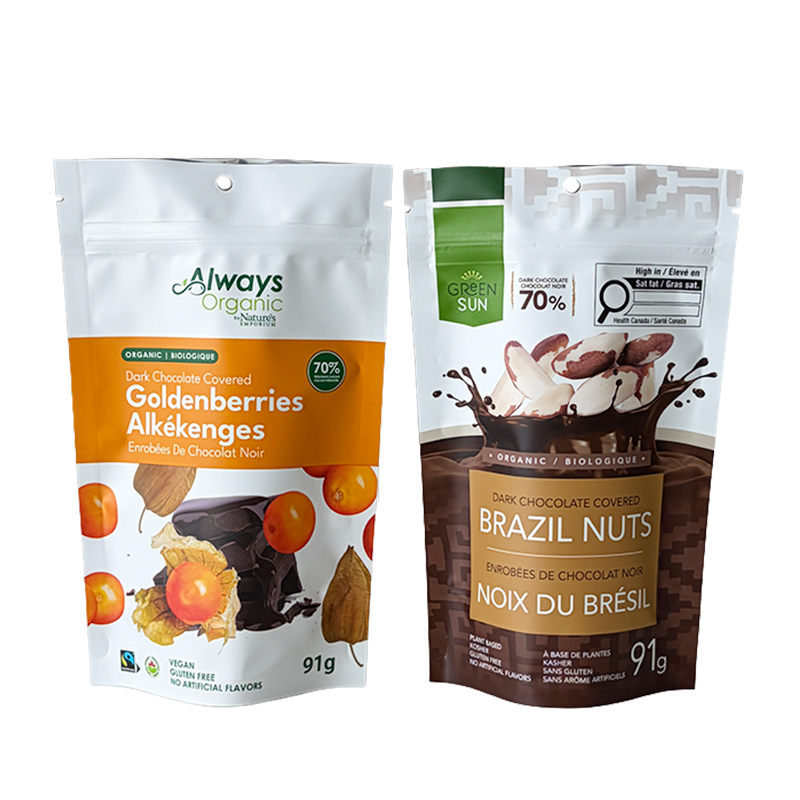
Flexible packaging manufacturers use different laminated film structures to achieve the required barrier performance, mechanical strength, and printing quality.
Common material options include:
PET/PE Laminates
PET/PE is a widely used flexible packaging structure. PET provides mechanical strength, dimensional stability, and a printable outer surface, while PE can provide heat-sealing performance. However, standard PET/PE structures may not provide sufficient oxygen or moisture protection for every nut product. Additional barrier layers may be necessary.
Metallized Film Structures
Metallized films, such as VMPET, can improve oxygen, moisture, and light barrier performance compared with many standard clear film structures. They are commonly considered for roasted nuts, mixed snacks, and products that need stronger protection during distribution.
Aluminum Foil Laminates
Aluminum foil offers a strong barrier against oxygen, moisture, and light when properly converted into a suitable laminate. It can be a practical option for premium nuts, high-oil seeds, and products with demanding shelf-life requirements.
Recyclable Mono-Material Structures
Brands looking to improve packaging recyclability may consider mono-material PE structures or other market-specific recyclable solutions. However, barrier performance must be verified carefully. A recyclable structure should not be selected solely because of its environmental positioning if it cannot adequately protect the food product.
The best material combination depends on the product's fat content, moisture sensitivity, filling process, storage conditions, and target shelf life. Packaging trials and barrier testing are important before large-scale production.
Moisture management is essential for maintaining the quality of dry seeds. Sunflower seeds, pumpkin seeds, chia seeds, sesame seeds, and other edible seeds can absorb moisture from their surroundings if the packaging does not provide adequate protection.
Excessive moisture may cause several problems:
When selecting seed packaging bags, manufacturers should pay attention to the water vapor transmission rate (WVTR) of the packaging material. A lower WVTR generally indicates better resistance to moisture transmission under the specified testing conditions.
Other practical considerations include:
It is important to remember that packaging cannot correct poor drying, contaminated raw materials, or unsuitable storage conditions. Good product handling and suitable packaging need to work together.
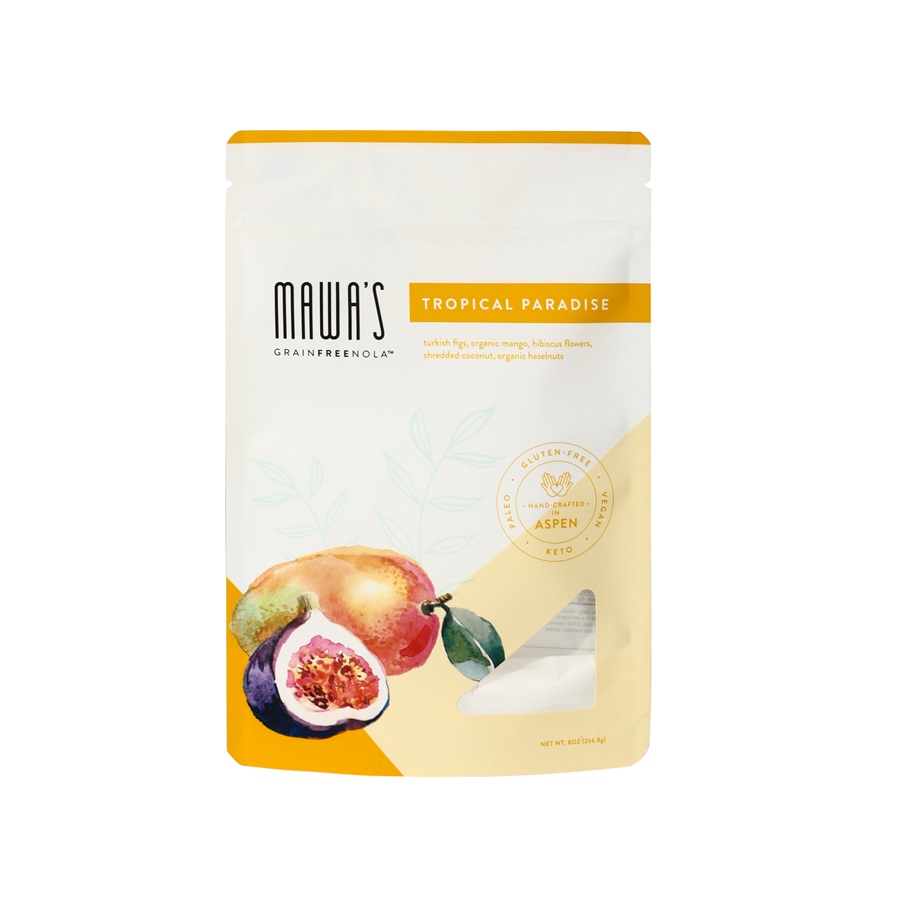
Many retail packages of nuts and seeds are not consumed in one sitting. Consumers may open a pouch, take a portion, and store the remaining contents for later use.
A resealable zipper makes this process more convenient and helps reduce unnecessary exposure to the surrounding environment after opening.
For food brands, zipper stand-up pouches offer several practical advantages:
However, a zipper should not be treated as a replacement for the initial heat seal. For products requiring extended shelf life, the package should be heat-sealed above the zipper before first use. Once opened, the zipper helps consumers close the package again, but it does not restore the original factory-sealed barrier conditions.
Besides material selection, custom stand up food bags can be designed around product weight, filling requirements, retail display, and brand identity.
When developing a custom pouch for nuts or seeds, consider the following options:
Pouch Size and Capacity
Choose the dimensions based on product weight, bulk density, and filling volume. A 100g pack of almonds may require a different pouch size from 100g of sunflower seeds because the products have different shapes and packing densities.
Transparent Windows
A clear window allows customers to see the product inside. This can be useful for natural snacks and specialty seed products. However, window size and placement should be considered carefully because transparent areas may provide less light protection.
Printing and Surface Finishes
Rotogravure printing is suitable for larger production runs with consistent color reproduction, while digital printing can support shorter runs and multiple designs. Matte, glossy, and soft-touch finishes offer different visual and tactile effects.
Additional Functional Features
Brands can also consider tear notches, hang holes, rounded corners, and different zipper configurations. The final design should be compatible with the filling and sealing equipment used in production.
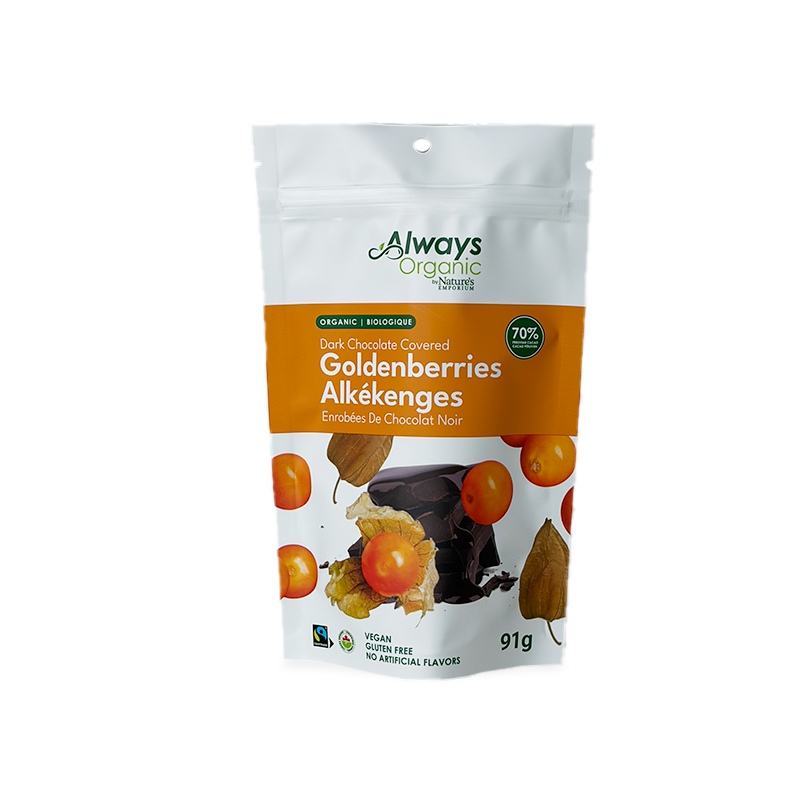
There is no single packaging structure that works equally well for every type of nut or seed. A product-specific approach helps food manufacturers balance protection, cost, and packaging functionality.
Before confirming a packaging specification, buyers should request material details, barrier test data, food-contact compliance documentation, and packaging samples. Real-time shelf-life testing under representative storage conditions can help verify whether the selected structure meets the product's requirements.
The best material depends on the nut variety, oil content, storage conditions, and required shelf life. Metallized films and aluminum foil laminates are common options when stronger oxygen, moisture, and light protection is needed. The final structure should be verified through barrier testing.
Nuts contain natural fats that can oxidize when exposed to oxygen. Suitable oxygen barrier packaging helps slow down rancidity and preserve flavor and product quality during storage and distribution.
Yes. Stand-up pouches are widely used for roasted seeds because they provide convenient retail display and can incorporate high-barrier laminated materials, heat seals, and resealable zippers.
A resealable zipper is useful for multi-serving packages because consumers can close the pouch after opening. For better initial protection, the pouch should also have a factory heat seal above the zipper.
Yes, provided the selected recyclable material structure meets the required oxygen and moisture barrier specifications. Mono-material PE solutions may be considered, but their performance should be tested against the product's shelf-life requirements.
Start with the product's net weight, bulk density, particle size, and filling method. Then determine the pouch width, height, and bottom gusset needed for sufficient filling space and stable shelf display. Request samples before finalizing mass production.
Yes. Custom pouches can include full-color printing, brand logos, transparent windows, matte or glossy finishes, and different zipper options. The design should be coordinated with the selected barrier structure to maintain product protection.
Successful nut and seed packaging starts with understanding the product's sensitivity to oxygen, moisture, and light. The right combination of laminated materials, reliable heat seals, and resealable closures can help maintain product quality while improving retail presentation and consumer convenience.
For food manufacturers, wholesalers, and private-label brands, working with an experienced flexible packaging supplier makes it easier to develop packaging that meets both technical and commercial requirements.
Bioflexi provides custom flexible food packaging solutions, including stand-up pouches for nuts, seeds, snacks, and other dry food products. With customized materials, printing, pouch sizes, and functional features, brands can develop packaging suited to their products and target markets.
Contact Bioflexi to discuss your nut or seed packaging project and request a customized packaging solution based on your product, barrier requirements, and order quantity.
lf you would like to work with us or just want to get intouch, we'd love to hear from you!

Copyright @ 2026 Shanghai BioPouches Co., Ltd All Rights Reserved. Network Supported
leave a message