

Author
Marie R. Winters


Dry fruits and nuts are popular products in supermarkets, specialty food stores, and online retail. From almonds and cashews to raisins, dried mangoes, walnuts, and mixed nuts, consumers expect packaging that keeps food fresh while making the product look appealing on the shelf.
As more food brands look for packaging with a natural appearance and reduced plastic use, paper-based pouches have become an interesting option. However, choosing the right packaging involves more than selecting a kraft paper exterior. Moisture resistance, oxygen protection, sealing performance, material compatibility, and printing quality all affect how well a pouch performs.
For brands sourcing paper nut packaging bags or dried fruit paper pouches, understanding these requirements helps create packaging that balances product protection, shelf appeal, and sustainability goals.
Paper pouches offer a distinctive appearance that works well for natural foods, organic snacks, and premium nut products. Their kraft-style surface communicates a simple, natural image that many consumers associate with responsible food choices.
For food manufacturers and private-label brands, paper-based packaging also provides considerable design flexibility. Different pouch structures, printing methods, and functional features can be combined to meet specific product requirements.
Common advantages include:
It is important to remember that paper alone does not provide the same moisture and oxygen protection as specialized barrier films. The complete material structure should always be selected according to the food product and its expected shelf life.
Although dry fruits and nuts contain relatively little moisture, they can still lose quality when exposed to unsuitable storage conditions. Different products also have different sensitivities, so packaging specifications should be based on the actual food being packed.
Moisture Protection
Moisture is one of the main concerns for dried fruit packaging. Raisins, dried apricots, dates, and dried mangoes can absorb moisture from the surrounding environment. This may affect their texture, increase stickiness, and reduce overall product quality.
For nuts, moisture exposure can cause unwanted texture changes and affect storage stability. A suitable barrier layer and reliable heat-sealed edges help reduce moisture transmission through the packaging.
Oxygen Protection
Almonds, walnuts, pecans, and other nuts contain natural oils that can become oxidized when exposed to oxygen. Oxidation may lead to unpleasant odors and rancid flavors.
Brands selling roasted nuts, mixed nuts, and premium nut snacks should consider the oxygen transmission rate (OTR) of the packaging structure. Depending on the product, additional high-barrier layers may be necessary.
Light Protection
Light exposure can also affect the quality of certain nuts and dried fruits over time. An opaque paper exterior can help limit direct light exposure, while the inner packaging structure provides additional protection.
Contamination and Seal Integrity
Packaging must protect food from dust, handling, and external contamination. Strong heat seals are essential for maintaining package integrity during filling, transportation, warehousing, and retail display.
Not every paper pouch provides the same level of protection. The appropriate material combination depends on the product's oil content, moisture sensitivity, distribution conditions, and shelf-life target.
Several material options are commonly considered for paper-based food packaging:
The key is to evaluate the complete laminate rather than judging performance by the paper layer alone. Brands should discuss oxygen transmission rate, water vapor transmission rate, sealing temperature, and food-contact requirements with their packaging supplier before confirming a material specification.
For additional material options, explore our paper packaging solutions.
The pouch structure affects product capacity, shelf presentation, storage convenience, and packaging efficiency. Here are three formats worth considering.
Stand-Up Pouches
Stand-up pouches are widely used for retail packaging because their bottom gusset allows the bag to stand upright. They provide a large printable surface for product branding and are suitable for almonds, cashews, raisins, dried berries, and mixed nuts.
Resealable zippers are particularly useful for products consumed over multiple occasions. They allow consumers to open and close the package without transferring the contents into another container. A heat-sealed top can provide the initial tamper-evident closure.
Flat Pouches
Flat pouches are suitable for smaller portions, sample packs, and single-serving products. They are relatively compact and can help brands manage packaging and shipping space efficiently.
They work well for dried fruit samples, small nut portions, snack mixes, and promotional food packs. Tear notches can also make the package easier to open.
Flat Bottom and Gusseted Pouches
For larger retail packs, flat bottom pouches offer good shelf stability and multiple printable surfaces. Side gusset pouches provide additional capacity and are useful for bulk quantities or products sold in larger formats.
The best choice depends on package weight, product volume, filling equipment, and retail display requirements.
Packaging design influences how customers recognize and evaluate a food product. With custom paper food bags, brands can combine a natural paper appearance with clear product information and distinctive visual elements.
Several design details deserve attention:
Printing methods can also be selected according to order volume, artwork complexity, and material compatibility. Digital printing offers flexibility for smaller production runs and multiple designs, while flexographic and rotogravure printing are worth considering for larger orders.
Before mass production, brands should review artwork proofs and check color consistency, text readability, and the positioning of functional features such as zippers and tear notches.
Beyond appearance and material protection, functional details can improve the experience for both retailers and consumers.
For example, a 250 g almond pouch may require a different width, height, and bottom gusset from a 1 kg mixed-nut package. Product density and filling volume should both be considered when determining the final dimensions.
Choosing a packaging supplier is not simply about comparing unit prices. A reliable manufacturing partner should understand the product's protection requirements and provide practical recommendations for materials, printing, and pouch construction.
Before placing a bulk order, buyers should evaluate the following points:
At Bioflexi, brands can explore flexible packaging options with customizable materials, pouch structures, and printing solutions. The company supports packaging projects for food and snack applications, including different sustainable material options.
For buyers who want to compare available structures and specifications, the custom paper pouch range is a useful starting point.
A practical example is a kraft-look stand-up pouch developed for dried fruit packaging. This format combines a natural paper appearance with a flexible inner structure designed to provide moisture and oxygen protection.
The pouch can be customized in size, printing, and material composition. Depending on the selected structure, additional features such as resealable zippers, tear notches, and different surface finishes can also be considered.
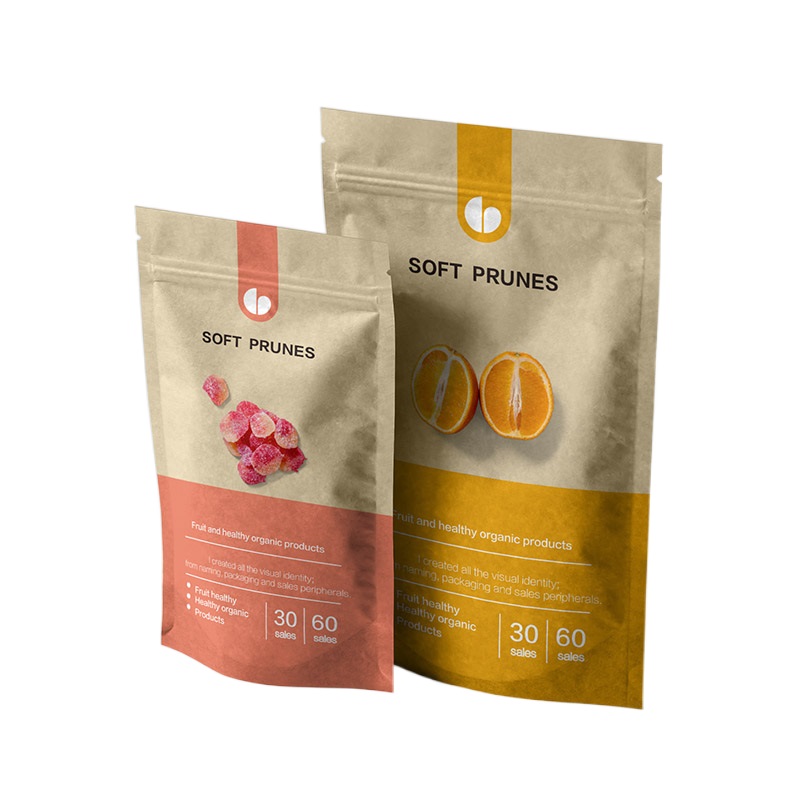
Kraft-style stand-up pouches for dried fruit packaging.
For brands developing products such as dried mangoes, prunes, raisins, and mixed fruit snacks, this type of design provides a useful starting point for discussing material specifications and packaging requirements.
Another important consideration is how the pouch will be stored and transported. Packaging should be evaluated under realistic storage conditions, rather than relying only on its appearance or material description.
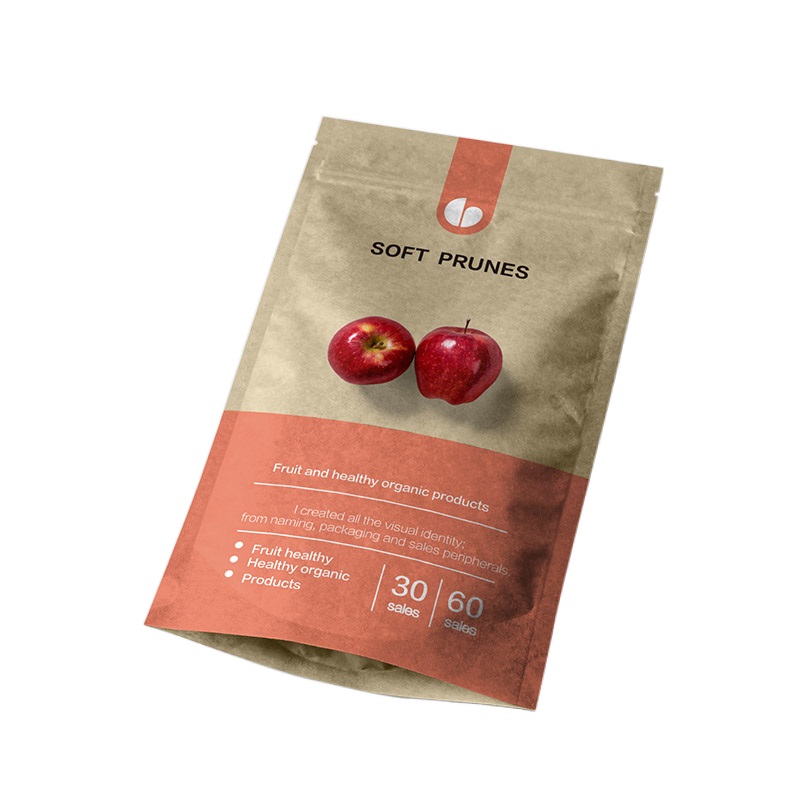
Custom printed paper-style food pouch design.
Q1: Are paper pouches suitable for packaging nuts?
Yes. Paper pouches can be suitable for almonds, cashews, walnuts, pistachios, and mixed nuts when the complete material structure provides the necessary protection against moisture and oxygen. The required barrier level depends on the product's oil content and expected shelf life.
Q2: Do dried fruit paper pouches need an inner barrier layer?
In many applications, yes. Paper alone offers limited moisture and oxygen protection. An appropriate inner film or laminate helps control moisture transmission and maintain product quality during storage and transportation.
Q3: Can paper nut packaging bags include a resealable zipper?
Yes. Many flexible paper-based pouch structures can be customized with resealable zippers. A heat-sealed top can also be added to provide an initial secure closure before the consumer opens the package.
Q4: Can custom paper food bags be printed with a brand logo?
Yes. Custom printing can include logos, product images, nutritional information, brand colors, and other packaging artwork. Digital, flexographic, or rotogravure printing can be selected according to the material and production quantity.
Q5: Are kraft paper pouches recyclable or compostable?
It depends on the complete material structure, coatings, adhesives, and local waste-management requirements. Paper-based appearance does not automatically mean a pouch is recyclable or compostable. Buyers should request relevant certification and disposal guidance for the exact packaging construction.
Q6: What information should buyers provide when requesting a quotation?
Buyers should provide the product type, target filling weight, preferred pouch style, dimensions, material requirements, printing artwork, functional features, and estimated order quantity. If available, existing packaging samples can also help the supplier evaluate the project.
Choosing the right paper pouch involves balancing product protection, packaging appearance, consumer convenience, and material requirements. A well-designed pouch should not only represent the brand but also maintain the quality of the food throughout its distribution and storage cycle.
Whether you are developing packaging for almonds, cashews, dried mangoes, raisins, or mixed nuts, selecting the right material structure and pouch design is an important step toward building a competitive food brand.
Contact our team to discuss your packaging specifications, custom printing requirements, and material options for your next food packaging project.
Request a custom packaging quotation and explore the right pouch solution for your products.
lf you would like to work with us or just want to get intouch, we'd love to hear from you!

Copyright @ 2026 Shanghai BioPouches Co., Ltd All Rights Reserved. Network Supported
leave a message