



Choosing a flat bottom pouch is not simply a matter of picking a bag that looks large enough. For food brands, the right pouch size needs to match the product's actual volume, density, fill weight, filling process, sealing area, and shelf presentation. A bag designed for 500g of coffee, for example, may not hold 500g of nuts or protein powder because different foods have very different densities.
This flat bottom pouch size guide explains how to choose the right capacity for coffee, pet food, snacks, powders, tea, grains, and other dry foods. If you are sourcing custom food packaging bags for wholesale or export, understanding the relationship between pouch dimensions and capacity can also help you avoid unnecessary material costs and filling problems.
What Is a Flat Bottom Pouch?
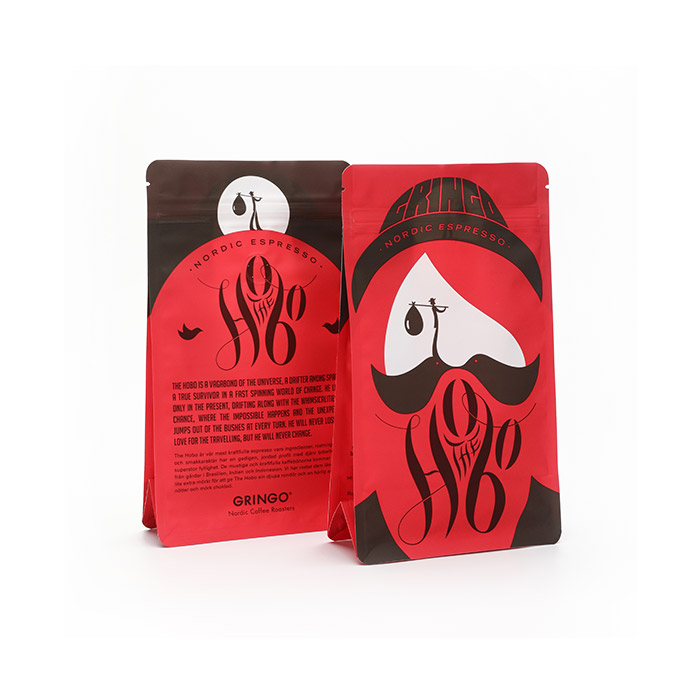
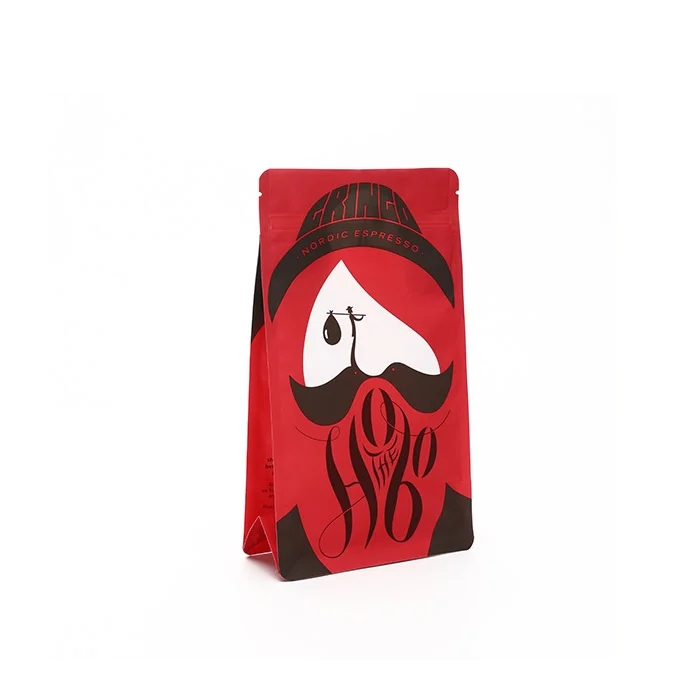
A flat bottom pouch, also called a box pouch, block bottom bag, or square bottom pouch, has a rectangular base with gusseted sides. Unlike a simple flat bag, it expands into a box-like shape when filled and can stand upright without additional support.
This structure makes it suitable for products that need good shelf stability and relatively high filling capacity. Coffee beans, ground coffee, pet food, snacks, nuts, grains, protein powders, tea, and other dry foods are common applications.
For brands that need a premium retail appearance, flat bottom pouches also provide several printable panels. The front, back, side gussets, and bottom area can all contribute to brand presentation, depending on the pouch structure and printing specification.
Why Does Pouch Capacity Matter?
Capacity affects much more than how much product goes into the bag. An incorrectly sized pouch can create problems during filling, sealing, transportation, and retail display.
- Too small: The product may not fill properly, and excessive pressure can affect seals or make the pouch difficult to close.
- Too large: Extra empty space can make the package look underfilled and increase material and shipping costs.
- Correct capacity: The pouch provides enough usable volume while maintaining a good shape, seal area, and shelf appearance.
There is also an important difference between nominal capacity and recommended filling capacity. A pouch may physically hold more than the target product weight, but that does not mean it should be filled to the maximum possible volume.
Does 500g Always Mean the Same Pouch Size?
No. This is one of the most common mistakes when choosing food packaging bags.
Net weight tells you how much a product weighs, but it does not tell you how much space the product occupies. One kilogram of dense rice and one kilogram of lightweight cereal can require noticeably different pouch volumes.
| Product | Typical Packaging Consideration | Important Size Factor |
|---|---|---|
| Coffee beans | 500g, 1kg and other retail formats | Bean density and degassing space |
| Pet food | Small retail packs to larger bags | Kibble size and product density |
| Protein powder | Medium and large-volume packs | Powder density and settling |
| Nuts and snacks | Retail and family-size packaging | Particle size and air gaps |
For this reason, a packaging supplier should normally confirm both the target net weight and the product volume or bulk density before recommending the final dimensions.
How to Choose the Right Flat Bottom Pouch Capacity
A practical way to select the pouch is to work through the following steps.
1. Start With the Product Weight
First determine the intended net weight of each SKU. Common food packaging sizes include 100g, 200g, 250g, 340g, 454g, 500g, 1kg and larger formats, but the right size depends on the market and product category.
For example, Bioflexi currently offers a 454g coffee pouch designed around a specific coffee application. The actual pouch dimensions should still be confirmed against the customer's coffee density and filling requirements rather than assuming every 454g coffee product uses exactly the same dimensions.
2. Check Product Density
Density is critical when converting weight into volume. Two products with identical weights can occupy very different amounts of space.
If you already have the product in production, the easiest approach is to measure the volume occupied by a known quantity. For example, place the target weight of food into a container with known volume and measure how much space it actually occupies.
This gives the packaging supplier a much more useful reference than weight alone.
3. Allow Space for Filling and Sealing
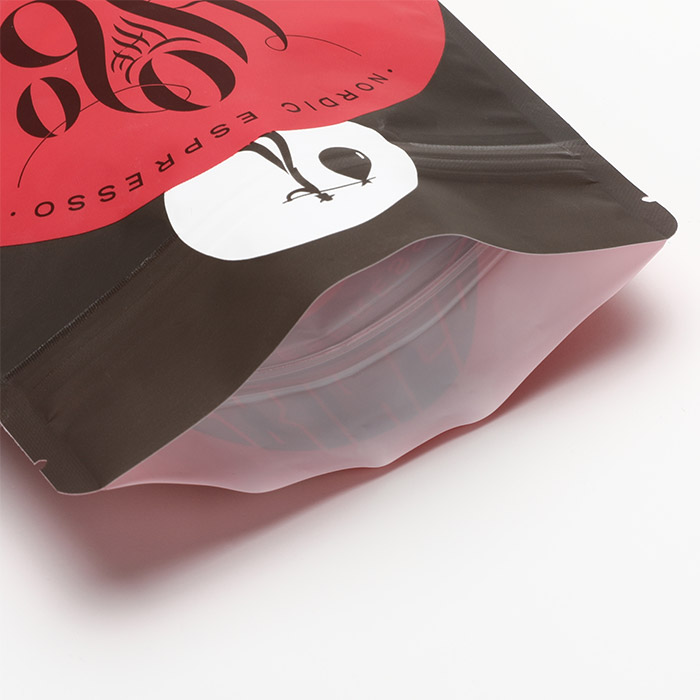
The pouch should not be filled right to the top. The upper area needs enough room for the zipper, heat seal, filling equipment, and product movement during handling.
For powders and products that settle during transportation, additional headspace may also be required. Coffee packaging can have another consideration: freshly roasted coffee releases carbon dioxide, so a one-way degassing valve and appropriate headspace may be necessary.
4. Consider the Product's Shape
Product shape matters almost as much as density. Large pet food kibble, whole nuts, irregular dried fruit, and lightweight cereal do not pack in the same way as fine powder.
Products with irregular shapes create more air gaps between particles. As a result, the pouch may need greater internal volume even when the target net weight is relatively low.
5. Confirm the Filling Method
Manual filling and automated filling do not always require the same pouch specification. If your factory uses a high-speed filling line, the pouch dimensions, opening width, zipper position, sealing area, and overall tolerance need to work with the equipment.
This is particularly important for large-volume orders. A pouch that looks suitable in a sample may still need dimensional adjustments before mass production.
Common Flat Bottom Pouch Capacity Ranges
There is no universal size chart that works for every food product, but the following ranges can be used as a starting point for discussion with a packaging manufacturer.
| Approx. Capacity | Common Applications | Typical Positioning |
|---|---|---|
| 100–250g | Matcha, snacks, specialty foods | Small retail packs |
| 250–500g | Coffee, tea, nuts, snacks | Standard retail packs |
| 500g–1kg | Coffee, pet food, protein powder | Family and premium packs |
| 1kg+ | Pet food, grains, bulk dry foods | Large retail or wholesale formats |
These ranges are only starting points. The final dimensions should be based on the actual product rather than the nominal weight printed on the label.
Flat Bottom Pouch Size for Coffee
Coffee is one of the most common applications for flat bottom packaging. A stable base gives coffee bags a strong shelf presence, while the large printable surface provides plenty of room for branding and product information.
For roasted coffee, the packaging specification should also consider oxygen and moisture barrier performance, zipper requirements, and whether a one-way degassing valve is required.
For example, Bioflexi's 500g coffee pouch is designed with a flat bottom structure, resealable zipper, high-barrier protection, and optional degassing functionality. The product is also available with customized dimensions and printing.
Flat Bottom Pouch Size for Pet Food
Pet food requires a different approach because kibble size, shape, and density can vary considerably between formulas. A 1kg bag of small dry food may need a different volume from 1kg of large-format kibble.
For larger pet food packs, the strength of the pouch also becomes more important. The bottom seal, side gussets, zipper, material thickness, and filling volume all need to work together.
For buyers developing larger retail packs, the pet food pouch format can be customized according to product weight, dimensions, material structure, closure, and artwork requirements.
Should You Choose a Flat Bottom Pouch or Another Format?
Flat bottom pouches are not automatically the best choice for every food product. The packaging format should be selected according to capacity, shelf requirements, product characteristics, and budget.
For smaller portions and samples, custom flat pouches can be more material-efficient. Stand-up pouches are useful for snacks, powders, and products that need a convenient resealable retail format.
For coffee, tea, pet food, and bulkier dry products, side gusset structures can also provide useful volume. A side gusset pouch expands through its side panels and can be suitable when the product needs additional internal volume.
The key question is not simply, “What size bag do I need?” A better question is: What pouch structure gives my product enough usable volume while keeping the package stable, attractive, efficient, and practical to fill?
What Information Should You Give a Packaging Supplier?
If you are requesting a quotation for custom flat bottom pouches, providing the right information from the beginning can make the sizing process much faster.
- Product name and food category
- Target net weight per pouch
- Product density or approximate volume
- Product dimensions or particle size, when relevant
- Preferred pouch structure
- Required dimensions, if you already have them
- Material or sustainability requirements
- Zipper, valve, tear notch, window, or handle requirements
- Printing artwork and finish requirements
- Estimated order quantity
If you do not know the exact pouch dimensions yet, that is not a problem. A packaging manufacturer can normally recommend a suitable starting size after reviewing the product weight, density, filling method, and intended application.
Flat Bottom Pouch Size FAQ
How do I calculate the capacity of a flat bottom pouch?
Start with the product's actual volume rather than weight alone. Measure how much space the target quantity occupies, then allow additional room for the filling process, headspace, zipper, and top seal. The final usable capacity should be confirmed through physical sampling.
What size flat bottom pouch is suitable for 500g?
There is no single universal dimension for 500g. Coffee beans, nuts, pet food, and protein powder have different densities and packing behavior. The correct dimensions should be selected based on the actual product volume and filling requirements.
Can flat bottom pouches be made in custom sizes?
Yes. Custom flat bottom pouches can be produced in different widths, heights, gusset depths, materials, finishes, closures, and printing designs. Custom sizing is particularly useful when a standard pouch leaves too much empty space or does not fit the filling line.
Is a larger pouch always better for food packaging?
No. An oversized pouch can increase material usage, shipping volume, and packaging cost. It can also make a retail package look underfilled. The goal is to balance usable capacity, headspace, shelf appearance, and production requirements.
Can flat bottom pouches be used for sustainable food packaging?
Yes. Depending on the food application and required barrier performance, flat bottom pouches can be produced using recyclable, PCR, compostable, and kraft paper-based structures. The final material should be selected according to the product, shelf-life requirements, local disposal system, and applicable certification requirements.
How to Get the Right Flat Bottom Pouch Size
The most reliable way to determine pouch size is to test the actual product rather than relying only on a general size chart. Send the target weight, product type, density or volume, and preferred packaging format to your supplier. A sample can then be produced and tested with the real product before the final specification is approved.
For food brands, wholesalers, private-label companies, and importers, this approach reduces the risk of ordering bags that are too small, unnecessarily large, or unsuitable for the filling process. It also gives you an opportunity to check the pouch appearance, shelf stability, zipper position, sealing area, and overall package proportions before moving into bulk production.
If you are developing a new food product or changing an existing package size, you can request a quote with your product weight, application, target capacity, and artwork requirements. Bioflexi can help evaluate the pouch structure, dimensions, material options, printing, and custom features for your project.

 Network Supported