

Author
Marie R. Winters


Choosing the right food pouch is not simply a matter of picking the style that looks best on a product page. For food brands, private label companies, wholesalers, and retailers, the pouch needs to fit the product, filling process, shelf presentation, storage conditions, and sustainability goals. Two formats often considered side by side are the flat bottom pouch and the stand-up pouch.
Both formats can be customized with different materials, barrier structures, printing methods, closures, finishes, and sustainable packaging options. So, which one is better for food packaging?
There is no single answer. A stand-up pouch can be a practical choice for snacks, powders, dried foods, supplements, and smaller retail packs. A flat bottom pouch may make more sense when shelf stability, larger capacity, structured appearance, and additional branding surfaces are important.
For wholesale buyers, the better approach is to compare the two formats based on the actual product rather than choosing a pouch simply because it is currently popular.
The main difference is the bottom construction.
A stand-up pouch uses a bottom gusset that expands when the pouch is filled. This allows the package to stand upright on a shelf while maintaining a relatively flexible structure. Stand-up pouches are commonly used for snacks, nuts, dried fruit, pet treats, powders, tea, supplements, and many other food products.
A flat bottom pouch, sometimes called a box pouch, uses a more structured bottom and side gussets. The flat base allows the package to stand securely and creates a box-like appearance. The design can also provide several printable surfaces for branding.
| Factor | Flat Bottom Pouch | Stand-Up Pouch |
|---|---|---|
| Structure | Box-style structure with a flat base and side gussets | Flexible pouch with an expandable bottom gusset |
| Shelf Stability | Strong and highly stable | Good stability when properly filled |
| Appearance | Structured and premium | Flexible and modern |
| Branding Area | Multiple printable panels | Large front and back panels |
| Typical Uses | Coffee, pet food, snacks, powders, tea | Snacks, powders, supplements, tea, dried foods |
| Resealable Options | Yes | Yes |
| Degassing Valve | Available for coffee packaging | Available for selected applications |
| Sustainable Materials | Compostable, recyclable, PCR and paper options | Compostable, recyclable, PCR and paper options |
Flat bottom pouches are particularly useful when the package needs to look and behave more like a rigid container while retaining the advantages of flexible packaging.
The flat base gives the pouch a stable footprint. This can make a noticeable difference for products displayed vertically on retail shelves, especially when the package contains a relatively large amount of dry food.
Another reason brands choose this format is the available branding area. A flat bottom pouch can provide front, back, side, and bottom surfaces that can be customized with logos, product information, nutritional details, QR codes, and other graphics.
Bioflexi's flat bottom pouches are available for applications including coffee, tea, snacks, pet food, powder products, and supplements, with options for customized sizes, materials, printing, closures, and finishes.
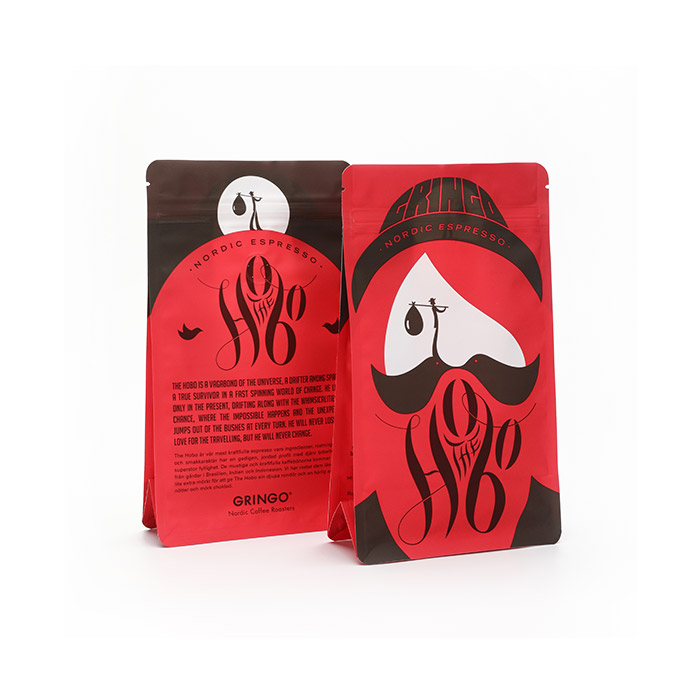
Custom flat bottom coffee pouches with a structured base and strong shelf presence.
Coffee is one of the clearest applications for a flat bottom pouch. Roasted coffee needs packaging that can help protect it from oxygen, moisture, light, and external contamination. The package may also need a one-way degassing valve to release carbon dioxide after roasting.
A flat bottom structure gives the coffee bag a stable retail position while creating a premium visual appearance. Depending on the coffee product and target market, buyers can evaluate high-barrier laminates, kraft paper structures, recyclable materials, compostable materials, resealable zippers, and degassing valves.
For coffee brands that want sustainability and shelf presentation to work together, Bioflexi also offers compostable flat bottom coffee bags with valve options.
Stand-up pouches are often chosen when flexibility and convenience are more important than a highly structured package.
The bottom gusset allows the pouch to stand after filling, while the flexible body keeps the overall package lightweight. This makes the format suitable for many everyday food products, especially snacks and products that are consumed over several occasions.
A zipper can be added when consumers need to open and close the pouch repeatedly. Tear notches, windows, euro slots, matte finishes, gloss finishes, and other options can also be incorporated depending on the product and retail requirements.
Bioflexi's stand-up pouch range covers applications such as snacks, nuts, tea, pet food, grains, powders, candy, bakery products, and supplements.
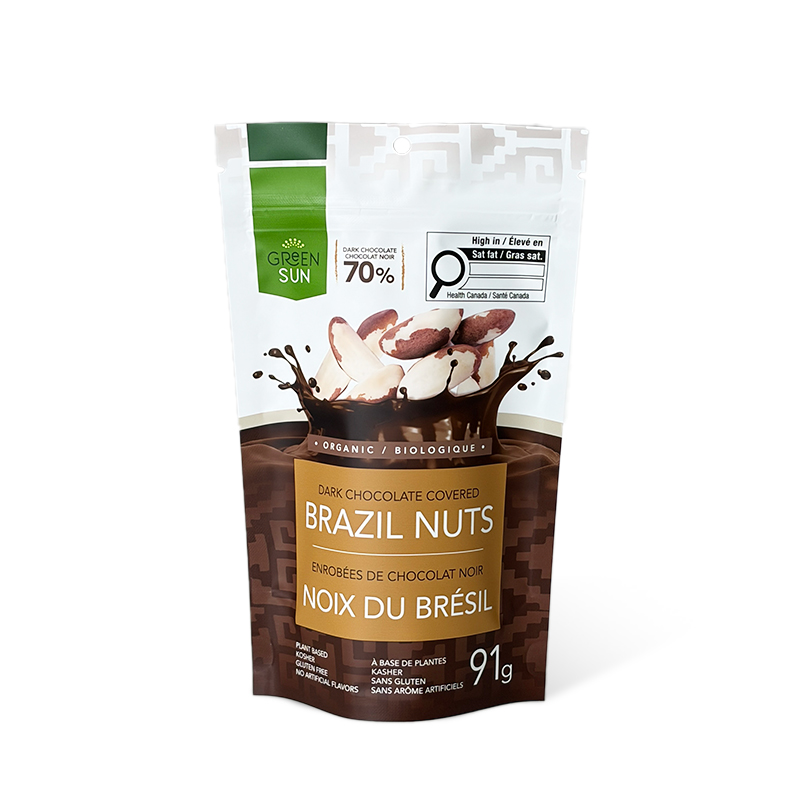
Custom stand-up zipper pouch for nuts and chocolate with a flexible retail-friendly structure.
For snacks, both formats can work well. The decision usually comes down to the product size, filling weight, retail positioning, and how the consumer is expected to use the package.
Stand-up pouches are a natural fit for nuts, granola, dried fruit, cookies, candy, and other snacks. Their flexible construction helps keep packaging lightweight, while a zipper can make the bag easier to reseal after opening.
A flat bottom pouch may be more suitable for brands that want a more structured package or need additional capacity. It can also provide more surfaces for branding, which may be useful for premium snack products competing for attention on retail shelves.
If moisture and oxygen protection are important for the snack, however, do not make the decision based on pouch shape alone. The material structure, seal quality, thickness, and barrier performance need to be considered together.
Protein powder has a different packaging profile from snacks because powder density can vary significantly between whey protein, plant protein, collagen, meal replacement products, and other nutritional blends.
Stand-up pouches can work well for consumer-size protein powder because they are flexible, lightweight, and can be fitted with a resealable zipper. The material should also be selected according to the powder's sensitivity to moisture, oxygen, and light.
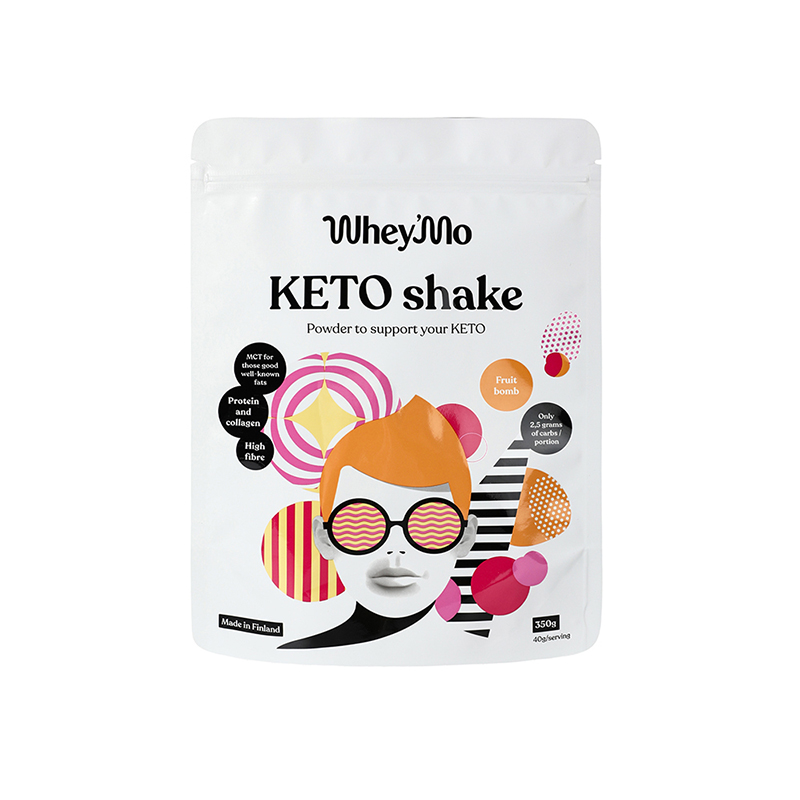
Stand-up pouch format for protein powder and other dry nutrition products.
Flat bottom pouches are another option when the brand wants a more substantial shelf presence. The structured base can also be useful for larger packs that need to remain stable during storage and display.
For brands developing custom nutrition packaging, Bioflexi provides protein powder pouches with customizable sizes, printing, finishes, closures, and material structures.
Pet food is another application where the choice between flat bottom and stand-up construction depends heavily on pack size and product type.
Smaller pet treats, toppers, supplements, and specialty foods can work well in stand-up pouches. The format is flexible and can include resealable zippers, tear notches, windows, and other convenience features.
For larger quantities of dry dog food or cat food, a flat bottom pouch can provide a more structured package with a stable base. This can make the package easier to position on shelves and during storage.
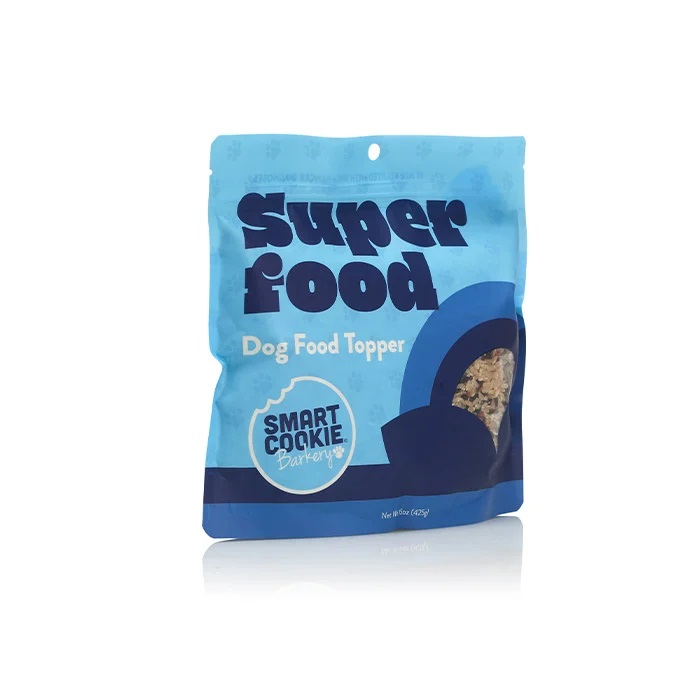
Stand-up pet food pouch with a resealable structure for treats and dry pet products.
For pet food brands, the actual product weight, bulk density, filling method, shelf life, barrier requirements, and transportation conditions should all be reviewed before selecting the final pouch structure.
A suitable pet food pouch can then be customized around the product rather than forcing the product into a standard bag size.
Not by itself. The pouch shape and the material structure solve different packaging problems.
A flat bottom pouch and a stand-up pouch can both be manufactured with high-barrier structures. Depending on the product, the packaging may need protection against oxygen, moisture, light, aroma loss, or external contamination.
Coffee, for example, may require oxygen and moisture protection together with a degassing valve. Protein powder may be particularly sensitive to moisture. Snacks can require strong moisture and oxygen barriers to maintain texture and flavor.
This is why choosing a pouch based only on its appearance can lead to problems later. The packaging structure needs to match the food product, expected shelf life, filling process, and distribution environment.
Yes. Both flat bottom and stand-up pouches can be developed with different sustainable packaging materials. The sustainability characteristics come primarily from the selected material structure and its end-of-life pathway rather than the pouch shape itself.
Depending on the project, buyers may evaluate compostable materials, recyclable structures, PCR-based materials, kraft paper solutions, or other packaging constructions.
However, a sustainable material still needs to provide the required protection for the food. A pouch that uses less conventional plastic but cannot provide the required shelf life may not be the right solution for the product.
For this reason, B2B buyers should discuss both sustainability targets and technical packaging requirements with the manufacturer before finalizing the material.
When ordering custom food pouches in bulk, the decision should go beyond choosing between two bag styles. Before approving the final specification, ask your packaging supplier:
These questions are especially important for OEM and private label food brands. A pouch may look perfect in the artwork but still need adjustment after filling tests reveal issues with dimensions, sealing, zipper position, or product volume.
If your priority is a stable, structured package with a strong retail presence and multiple branding surfaces, a flat bottom pouch may be a good fit.
If your priority is a lightweight, flexible package that can be resealed and used across a wide range of food applications, a stand-up pouch may be more practical.
For coffee, flat bottom construction can provide a particularly strong combination of shelf stability, branding space, and optional degassing features. For snacks and smaller dry products, stand-up pouches often offer a convenient balance between flexibility, presentation, and functionality.
For protein powder and pet food, either structure can work. The final decision should be based on fill weight, bulk density, product characteristics, packaging equipment, shelf-life requirements, and the desired retail appearance.
Not necessarily. Flat bottom pouches provide a more structured base and strong shelf stability, while stand-up pouches offer flexible construction and convenient resealing. The better option depends on the product and packaging requirements.
Both formats can be used for coffee. Flat bottom pouches offer a stable retail presentation and can include a degassing valve. The material's oxygen, moisture, and aroma barrier performance is more important than the pouch shape alone.
Stand-up pouches are suitable for many consumer-size protein powder products because they are lightweight and can include resealable zippers. Flat bottom pouches are also suitable when a more structured package is preferred.
Yes. Flat bottom pouches can be produced using compostable material structures when the selected materials and components are designed and certified for the intended composting system.
Yes. Stand-up pouches can be manufactured with recyclable material structures. The appropriate structure depends on the required barrier performance, product characteristics, and recycling requirements of the target market.
Yes. Both formats can be customized with artwork, dimensions, materials, finishes, closures, and other features. Printing methods such as digital and rotogravure printing can be selected according to the order quantity and artwork requirements.
Flat bottom pouches and stand-up pouches can both be effective solutions for food packaging. The key is matching the pouch structure with your product, filling process, barrier requirements, shelf presentation, and sustainability targets.
Bioflexi provides customized food packaging solutions for coffee, tea, snacks, protein powder, pet food, and other dry food applications, with options including compostable, recyclable, PCR, and paper-based materials.
If you are sourcing food packaging in bulk or developing a private label product, you can request a packaging quote with your product type, filling weight, pouch dimensions, material requirements, artwork, and expected order quantity.
lf you would like to work with us or just want to get intouch, we'd love to hear from you!

Copyright @ 2026 Shanghai BioPouches Co., Ltd All Rights Reserved. Network Supported
leave a message