

Author
Marie R. Winters


Choose the right flexible packaging structure to protect product quality and your brand's reputation. You need to match the features of your snack directly to the material layers. High-oil snacks like roasted nuts need a high-barrier film for snack packaging to block oxygen. Crispy foods like potato chips need low moisture permeability to stay fresh and avoid going stale.
|
Snack Property |
Primary Barrier |
Key Benefit |
|---|---|---|
|
High Oil / Fat |
Metallized Film |
Prevents Rancidity |
|
High Moisture |
PET/PE Laminate |
Retains Crispness |
These stand up pouches make sure you follow FDA food safety rules. Custom stand up pouches for snacks balance nice brand designs with packaging costs. Correctly designed stand-up pouches help your product stay fresh on the shelf longer. Better stand-up pouches make your snack food packaging pouches stand out above the competition.
High-barrier materials like aluminum foil protect oily and crunchy snacks from air, wetness, and light.
Picking the correct pouch size and film thickness for your snack's weight keeps the package safe during shipping.
Earth-friendly choices like mono-PE films help companies obey recycling rules while keeping their food fresh.
FDA-approved inside layers and reusable zip locks keep food safe and make buyers happier.
Careful quality tests check the seal strength and leak resistance before full packaging production starts.
Air moisture quickly spoils crunchy treats like chips and crackers. Extra wetness causes crisp foods to get soft and stale. You should pick packaging materials with a low Water Vapor Transmission Rate to keep outside moisture away. Layered films that mix PET, VMPET, and PE offer a solid moisture barrier. These custom stand up pouches for snacks keep food crunchy and protect overall quality on store shelves.
Fats and oils in roasted nuts react fast with surrounding oxygen and light. Exposure to air causes chemical oxidation, which creates bad smells and spoiled flavors. You need a special barrier film for snack packaging that fully blocks oxygen and harmful UV rays. Strong barrier designs using aluminum foil or metallized-PET drop the Oxygen Transmission Rate below 0.01 cc/m²/day. High-barrier stand-up pouches delay oxidation and increase product freshness from weeks to months.
Product density decides how much space your food fills inside the bag. Flexible stand up pouches hold different product weights and volumes with ease. Light items like popcorn need much more room than heavy foods like dried fruit. Weight by itself cannot tell you the correct pouch size or bottom fold depth. Light snacks need bigger stand-up pouches to avoid overfilling and keep the package looking great.
Food weight also affects the needed material thickness and seal strength. Tough stand up pouches must support heavy contents during normal handling. Heavier snacks put extra pressure on the bottom seams during transport. You must select strong snack packaging pouch material to prevent holes or broken seals. Heavy-duty stand-up pouches must keep a minimum seal strength of 6.0 N/15mm using ASTM F88 testing rules.
Properly sized stand-up pouches keep their shape throughout the entire shipping process. Good stand-up pouches protect delicate snacks from getting crushed in transit. Strong stand-up pouches survive accidental drops along supply routes. You balance packaging cost and safety when matching pouch size to food features. Pick trustworthy stand up pouches to ensure lasting product freshness.
Finding the best setup for stand-up pouches means balancing shelf safety, store appearance, and eco-friendly goals. Packaging suppliers like bioflexi make special film layers that protect sensitive ingredients. You need to pick flexible packaging structures that fit your specific shelf-life needs.
Multi-layer plastic laminates shield delicate foods from harmful oxygen and air moisture. Regular chips usually need an Oxygen Transmission Rate under 5 cc/m²/day and a Water Vapor Transmission Rate under 1 g/m²/day. Custom stand up pouches for snacks often use lower-cost metallized films to hit these targets. Pure foil laminates completely block light and air, so they work great for sensitive, oily nuts.
|
Laminate Structure |
Moisture Barrier (MVTR, g/m²/24h) |
Oxygen Barrier (OTR, cc/m²/24h) |
Barrier Level |
|---|---|---|---|
|
PET / metallized PET / PE |
0.01–0.10 |
0.5–2.0 |
Good to very good |
|
PET / Al foil / PE |
<0.002 |
<0.1 |
Excellent |
This chart shows how aluminum foil layers deliver the absolute best shield against product decay. Still, metallized PET gives strong safety at a lower cost for growing companies. These high-barrier options help stand-up pouches stretch shelf life up to a full year. Selecting the right barrier film for snack packaging keeps food fresh and prevents costly store waste. High-end snack food packaging pouches use these proven film blends to keep foods crunchy during long shipments. Companies usually select metallized stand up pouches for cheaper items that still require high quality. Meanwhile, foil-lined stand-up pouches defend fragile foods during long stays on retail shelves.
Kraft paper laminates combine an earth-friendly appearance with strong, protective plastic layers inside. A normal kraft paper stand up pouch uses a KRAFT/PET/PP design. The outside paper layer feels smooth and looks natural on store displays. The middle PET layer increases durability, while the inside plastic layer seals food safely. You can easily modify your snack packaging pouch material to match natural branding with tough freshness standards.
New worldwide environmental laws are driving companies toward green packaging choices today. Rules like Extended Producer Responsibility, the EU packaging directive, and the UK Plastic Packaging Tax demand less trash. Major food brands like Nestlé recently changed European products over to mono-material stand-up pouches to hit these targets.
Mono-PE film represents a major advancement in sustainable snack packaging. These single-polymer designs are fully compatible with store drop-off recycling programs.
Recyclable packaging made from mono-PE combines stretched MDO-PE layers with special coatings to match older multi-layer designs. Even so, all-PE films melt more easily than standard PET laminates. Factory packaging machinery might need lower heat settings and revised sealing times to avoid melting bags. Some companies also test Compostable packaging options for specific green product lines. Switching to mono-material stand-up pouches helps your business comply with modern recycling laws while keeping flexible packaging fast and dependable. Today's shoppers favor businesses that put eco-friendly stand up pouches on grocery shelves. Upgrading your stand-up pouches to single-material designs protects your sales in areas with strict recycling laws. Modern snack food packaging pouches give your company a big advantage over rival brands in busy stores.
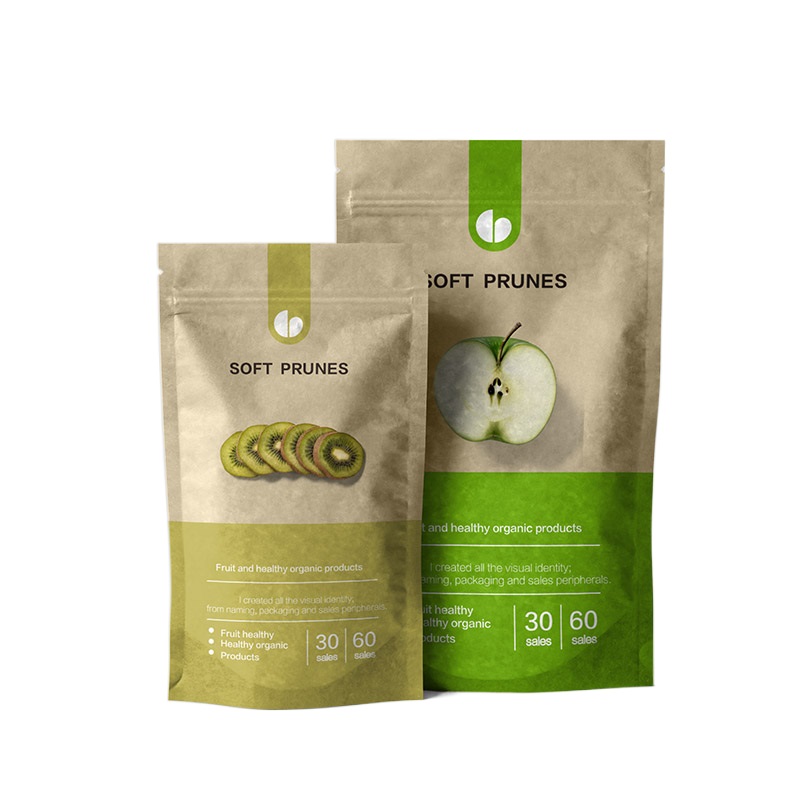
Strong exterior films make your stand up pouches rigid and tough. Producers usually pick PET or nylon for the outside coat because it prints nicely. This top surface shields graphics and stops your flexible packaging from tearing on shelves. Alternatively, a kraft paper stand up pouch exterior gives products a rustic, organic style. Smart businesses buy dependable stand up pouches to defend brand image.
The central core guards your treats against air, wetness, and sunshine. Solid aluminum foil creates total protection with OTR and WVTR ratings near zero. Cheap metallized PET drops OTR down to 0.5–2 cc/m²/day for custom stand up pouches for snacks. EVOH layers lower OTR to 0.5–3 cc/m²/day, though damp air weakens them. Clear PVDC acts as a transparent barrier film for snack packaging so buyers view food clearly.
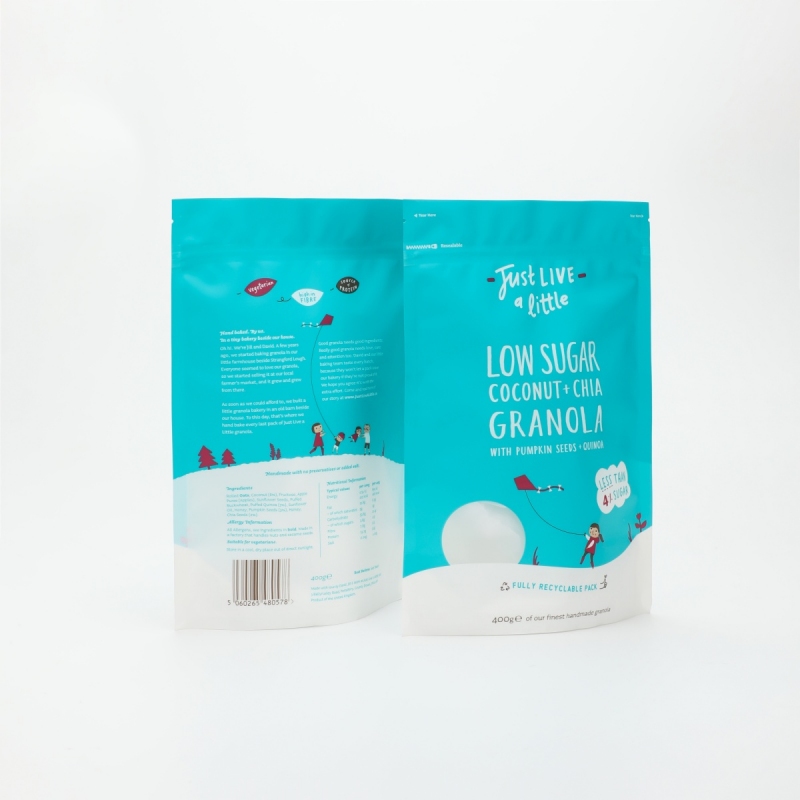
The interior liner touches food directly and fuses closure edges securely. Polyethylene (PE) or polypropylene (PP) surfaces form tight thermal bonds to lock moisture out. These inner coatings help create durable closures on stand-up pouches during factory packing. Basic stand-up pouches shield daily nibbles with standard plastic blends.
Packers build nitrogen-flushed stand-up pouches using BOPP/VMPET/PE layers to keep foods extra fresh. Advanced stand-up pouches combine distinct sheets into 5-layer or 7-layer films for longer shelf life. Choosing clean snack packaging pouch material stops harmful chemical leaks into food. Eco-conscious groups often select mono-PE linings to manufacture Recyclable packaging choices. Green suppliers also try Compostable packaging options for eco-friendly lines. Premium stand-up pouches protect flavor, while sturdy stand-up pouches ensure long shelf life for snack food packaging pouches. You can buy custom stand up pouches tailored to factory setup demands.
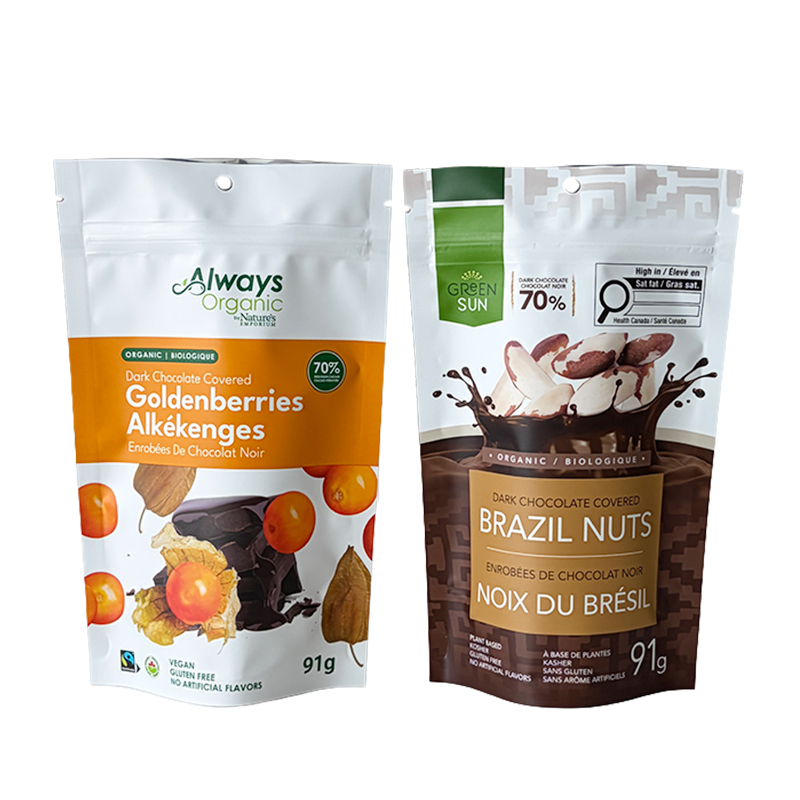
Press-to-close zippers turn stand up pouches into easy multi-serving bags. You offer shoppers a simple way to store treats in home cabinets or fridges. These zippers supply useful sound and touch feedback while reclosing. Buyers hear and feel the seal snap shut tight. This basic tool gives customers complete trust that their tasty treats stay fresh between quick snack breaks.
You must match zipper seals with smart tear notches for simple opening on stand-up pouches. Place tear notches neatly above the inner zipper seal. This design makes sure your stand up pouches stay fully resealable after first opening. Plant packing machines can also use laser scoring for a clean tear line across the pouch top. Adding useful seals to stand-up pouches boosts buyer happiness and drives repeat orders for your expanding snack company.
Your inside sealant layer touches food directly within stand-up pouches. You need to check that your snack packaging pouch material satisfies strict national food safety laws. Title 21 of the US Code of Federal Regulations lists exact requirements for packing items. Part 174 sets basic standards for secondary food additions. At the same time, Part 177 controls plastic layers like LLDPE films. Polyethylene resins also show up on the official FDA Generally Recognized as Safe list for direct contact.
Chemical leak tests prove that stand up pouches will not spill dangerous chemical parts into edible items. Separate testing labs measure total material movement under severe time and heat situations. Scientists analyze packing films using real food substitutes like ethanol and olive oil. European Union rules under Regulation (EU) No 10/2011 demand a total leak cap of 10 mg/dm² or 60 ppm. Approved stand-up pouches pass worldwide safety standards. Reliable stand-up pouches defend buyer wellness, keep unique snack tastes, and secure store selling access through every supply path.
Before placing a huge manufacturing order, you need to check physical samples of stand up pouches. Testing physical bags proves whether stand-up pouches keep a tight seal while sitting in storage. While ASTM F88 tests check seal power, ASTM F1140 burst tests check overall process control for stand-up pouches. Still, burst testing by itself cannot promise leak-proof bags. Bubble emission tests following ASTM D3078 find tiny hidden leaks in flexible stand-up pouches using a vacuum chamber.
Real product capacity tests show how your actual snack volume fits into the inside bag space. Different food shapes and natural settling change how the filled pouch looks on shelves. Extra physical checks ensure that your custom stand up pouches for snacks survive rough shipping conditions. Compression tests measure stacking strength in warehouses, while puncture resistance tests protect bags against sharp snack edges. Proper drop tests and puncture resistance tests prove that stand up pouches survive long travel routes.
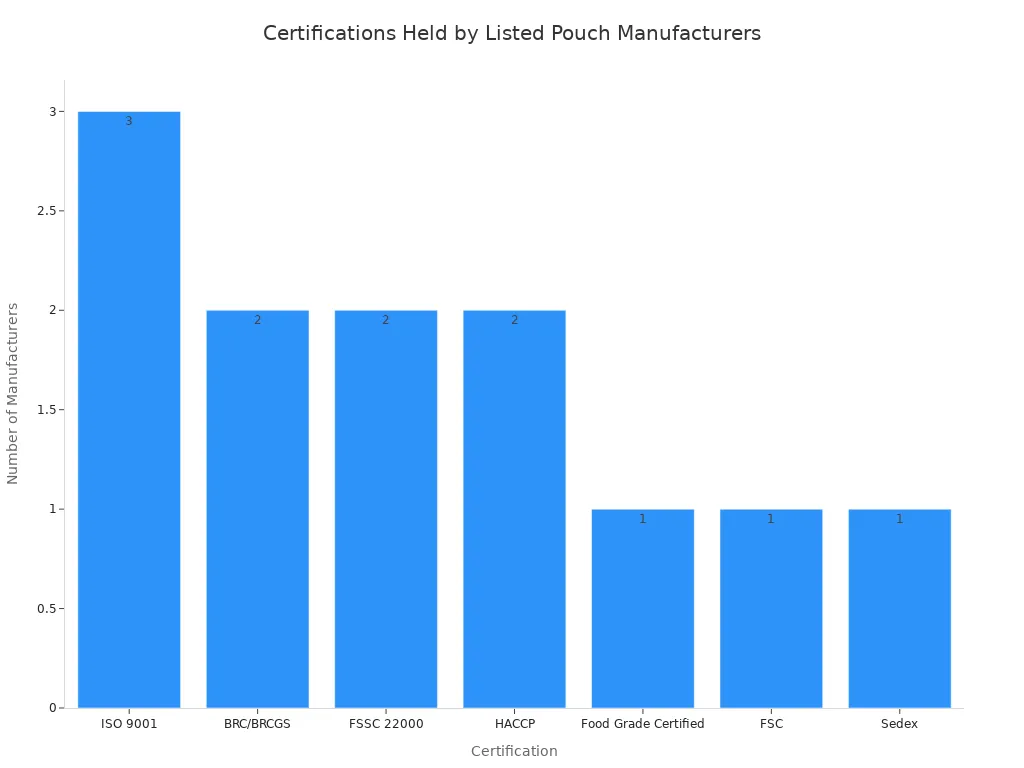
You must check if your packaging factory holds top food safety certificates. Excellent plants that make stand-up pouches pass official BRCGS or SQF audits. High quality standards like BRCGS Grade AA show that a plant runs a clean workshop. Reviewing these active certificates ensures your stand up pouches meet global food safety rules.
Ask your suppliers for official papers that prove legal food safety. Your supplier needs to give you a Declaration of Compliance citing exact FDA rules like 21 CFR 177.1520 for polyethylene resins. Independent testing teams like SGS or Intertek run overall migration tests to prove chemical safety. Reading oxygen transmission rate reports confirms your barrier film capability and total packaging performance. Asking for a clear Declaration of Compliance guards your brand and proves that stand-up pouches stay safe for food inside grocery stores.
Selecting the ideal flexible packaging requires three key steps:
Check how long your snack stays fresh and how air, water, and sun affect it.
Pick strong foils, natural brown paper, or green recyclable films that match your brand design.
Compare full material cost with strength, then test real sample bags in your shop.
Protect your brand before ordering large amounts of bags. Ask your film supplier for free sample packages. Test sealed stand up pouches for leaks and freshness times. Check FDA papers from your factory to guarantee clean safety standards. Well-made stand up pouches keep your treats tasting great. Buying tested stand-up pouches builds long-term customer trust. Superior stand-up pouches make your snack food packaging pouches beat rival store brands.
Fatty treats like roasted nuts demand top defense against sunlight and oxygen breakdown. Your brand must pick a barrier film for snack packaging featuring a metallized PET or aluminum foil sheet. That inner coat lowers the Oxygen Transmission Rate past 0.01 cc/m²/day so food stays fresh.
Select a kraft paper stand up pouch whenever your team wants an earthy, simple store style. Layered paper mixes use inside plastic sheets like PP alongside PET. Those middle barriers provide solid protection against air while outer paper shows off a wholesome look.
Your team could pick Recyclable packaging built with single-polymer PE sheets or buy verified Compostable packaging materials. Today's green wrappers shield tasty treats while cutting down on landfill trash. Using earth-friendly designs helps your business follow world recycling laws without losing needed freshness time.
The chosen snack packaging pouch material must utilize food-safe interior seal sheets such as LLDPE. Producers verify full safety under FDA codes like 21 CFR 177.1520. Outside lab tests check that no bad chemical pieces leak into your edible foods.
lf you would like to work with us or just want to get intouch, we'd love to hear from you!

Copyright @ 2026 Shanghai BioPouches Co., Ltd All Rights Reserved. Network Supported
leave a message