

Author
Marie R. Winters


You will notice two big changes in food packaging by 2026. These are smart packaging and sustainable materials. These trends make you think about how you use food packaging pouches, Food packaging bag, Stand up pouches, and Flat bottom pouches. The smart packaging market might be worth over $42 billion by 2034. This shows it is growing fast.
New rules and younger shoppers make companies use less plastic and more paper-based solutions.
| Change | Impact |
|---|---|
| EPR rules | Companies use more sustainable materials |
| Gen Z & Millennials | Want more paper-based packaging |
| Innovation | Brands make shelf-life longer with eco-friendly designs |
Smart packaging is changing how food stays fresh and safe. It uses technology to give you more information about your food. There are two main types of smart packaging. Active packaging works with the food and its surroundings to keep it good. Intelligent packaging gathers and shares facts about things like temperature and freshness. Here is a table to help you understand:
| Type of Smart Packaging | Description |
|---|---|
| Active Packaging | Interacts with the product environment to maintain quality. |
| Intelligent Packaging | Gathers and transmits data about product conditions like temperature, moisture, or freshness. |
Smart packaging is growing quickly. In 2024, the market is about $22.5 billion. By 2033, it could reach $39.6 billion. You will see more smart packaging in stores each year.
You can find smart labels and sensors on many food packages. These tools help you know if your food is safe and fresh. They can track temperature and show where food comes from. Some even tell you if food is spoiled. Here is a table with the main types:
| Type of Smart Label/Sensor | Description |
|---|---|
| Temperature Tracking | Indicates if food stayed at safe temperatures during storage and transport. |
| QR Codes | Provides traceability from farm to table, allowing consumers to see the source of ingredients. |
| Spoil Detection Mechanisms | Detects spoilage and provides information on product integrity through smartphone-accessible data. |
| Sensing Labels | Equipped with sensors to detect environmental factors like temperature and humidity. |
| RFID | Uses radio frequency identification for tracking and inventory management. |
| Dynamic Display | Provides real-time information about the product's status. |
| Smart Food Labels | Incorporate advanced technologies to provide detailed product information. |
Tip: Scan QR codes on packages to learn where your food comes from and how it was made.
Smart packaging helps keep food safe and fresh for longer. Labels and sensors watch for changes in temperature and humidity. They warn you if food is not safe to eat. Studies show smart packaging can make food last longer. For example, oxygen sensors and ethanol emitters in bread packaging keep bread fresh. Here is a summary of what smart labels do:
You can trust your food more when you see these smart features on packaging.
Smart packaging makes shopping and eating easier and better. You get more facts about your food, like where it came from and how it was made. QR codes show you details about the product, such as certifications and expiration dates. Some packages have labels that change color if food is not safe. Humidity indicators help keep food fresh and stop waste. Here are some ways smart packaging helps you:
You can use your phone to scan codes and get tips on storage or nutrition. This helps you make smart choices and trust brands more.
Note: Smart packaging helps you make good choices by giving you lots of information about your food.
Smart packaging is showing up more often. Companies like the benefits, but they also think about costs. New materials and technology can cost more. Automation and compliance software help lower costs. You will see more smart packaging as companies find ways to balance quality and price.
Every year, you see more compostable and recyclable packaging. These materials help cut down on waste and protect nature. Companies use biodegradable choices for boxes, mailers, wraps, and food containers. You find these materials in things like tea bags, coffee pods, and fruit labels.
You can pick packaging that breaks down faster and makes less trash. Recyclable packaging also helps the planet. Many people like eco-friendly products, so you help nature and support caring brands.
Tip: Check for compostable or recyclable labels on packaging. This helps you make smart choices for the earth.
You see lighter plastics and paper in stores now. These use less material and weigh less, so there is less waste. You help nature when you choose packaging that uses fewer resources.
Green packaging includes reusable, recyclable, and biodegradable types. You might see glass containers you can wash and use again. Paper packaging can be recycled. Cotton sacks break down without harm. Better waste management, especially in some countries, helps cut plastic waste.
| Benefit | Description |
|---|---|
| Waste Reduction | Sustainable packaging can lower the amount of trash in landfills. |
| Carbon Footprint Reduction | Biodegradable materials help cut down on carbon emissions from plastics. |
| Enhanced Brand Loyalty | Companies can connect with eco-friendly shoppers and build loyalty through green choices. |
You support brands that use lighter materials and help stop pollution. You also see more food packaging pouches made from these green options.
You help the circular economy when you pick sustainable packaging. This idea means you reuse, recycle, and compost packaging. Companies make packaging from plants, so you can compost it and return it to the earth. This helps lower food waste and greenhouse gases.
| Benefit | Description |
|---|---|
| Greenhouse Gas Emissions | Sustainable packaging lowers greenhouse gases during production. |
| Resource Consumption | Using green practices cuts down on the resources needed for packaging. |
| Positive Public Perception | Businesses using eco-friendly materials look better to the public and meet what shoppers want. |
Sustainable packaging shows companies care about the earth. You notice brands using these materials stand out in stores. You help the planet and push more companies to use green solutions.
Note: When you pick packaging that fits the circular economy, you help make a cleaner world for everyone.
Many new materials are used in food packaging pouches now. Companies pick recyclable and bio-based materials instead of hard-to-recycle ones. Mono-material pouches like polyethylene or polypropylene are easier to recycle. Special barrier films keep food safe from air, water, and light. Some brands use mushroom packaging made from mycelium. This material breaks down easily and saves energy. Bioplastics from cornstarch and sugarcane can be composted. Edible packaging made from seaweed or starch can be eaten, so there is less trash. New compostable films work as well as plastic.
Tip: Choose pouches with compostable or recyclable labels to help nature.
You help cut waste when you pick small and low-waste packaging. Small pouches help control portions and keep food fresh. Re-sealable pouches let you use only what you need. You throw away less food this way. Clear packaging lets you see the food, so you use it before it goes bad. Designs that help you get all the food out also lower waste. Active packaging keeps food fresh for longer.
| Aspect | Impact on Food Waste (%) | Implication on Sustainability |
|---|---|---|
| Service Style | 10–47% | Service style changes how much food gets wasted. |
| Packaging Characteristics | 3–11% | Good design makes it easier to eat all the food. |
| Consumer Wastefulness | 5–37% | People waste more food when they have more money. |
Note: Small sizes and smart designs in food pouches help you waste less and save money.
Automation changes how companies make food packaging pouches. Fast rotary machines make lots of pouches quickly. Automation helps use less material during making. New technology checks each pouch to make sure it is good. Smart sensors watch the machines and help stop problems. IoT lets companies watch machines all the time and fix things fast.
| Evidence Description | Key Points |
|---|---|
| High-speed operations | Rotary machines make pouches fast for large orders. |
| Material waste reduction | Automation cuts down on waste during production. |
| Quality assurance | Technology checks each pouch for uniformity and accuracy. |
| Smart sensors | Sensors watch the process and improve reliability. |
| IoT integration | Continuous monitoring helps fix problems before they stop production. |
Tip: Automation in making pouches means better quality and less waste.
Food packaging pouches now have zippers and spouts that are easy to use. Recyclable films and mono-material pouches help the environment. Special printing and cool shapes make products look different. QR codes and augmented reality give you more facts and fun.
Every year, there are new rules for food packaging. In 2026, governments make stricter rules for materials and design. You have to follow laws about recycling, labels, and safety. Many states do not allow PFAS chemicals in packaging. The EU says you must use packaging that can be recycled or used again. You also need to sign up and tell how much packaging you use for recycling programs. Here is a table with the main rules:
| Regulation Type | Description |
|---|---|
| EU Packaging and Packaging Waste | Packaging must follow EU rules about recycling, reuse, and labels. |
| U.S. State PFAS Restrictions | States are banning PFAS in packaging, which changes what companies can use. |
| Extended Producer Responsibility (EPR) | Companies must sign up, report packaging amounts, and pay fees for recycling programs. |
You also have to keep track of materials and report ESG data. You must show where your materials come from and prove they do not hurt forests. You need to keep records and share them every year.
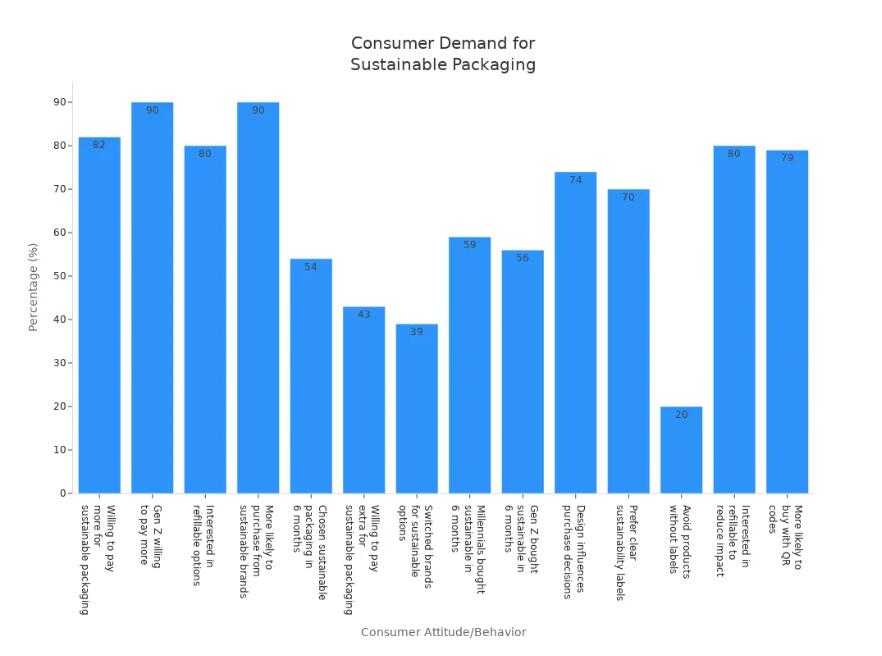
Shoppers want greener packaging now. Most people like packaging that can be recycled or composted. Many will pick a new brand if it is better for the earth. Younger people, like Millennials and Gen Z, are leading this change. They want brands to use smart technology and clear labels. Here is a table with important numbers:
| Statistic | Value |
|---|---|
| Likelihood of choosing brands with sustainable packaging | 90% |
| Consumers who bought eco-conscious packaging recently | 54% |
| Millennials adopting sustainability | 59% |
| Gen Z adopting sustainability | 56% |
| Willingness to pay more for sustainable packaging | 43% |
| Consumers switching brands for eco-friendly options | 39% |
You need backup plans for new rules and changing markets. Companies use different ideas to stay ready:
You can get ready for the future by learning about these ideas and picking brands that care about rules and the planet.
You can get ahead by using smart packaging and sustainable materials. These trends help you stand out and get more customers. Smart packaging helps you check if food is fresh and safe. Nanotechnology makes packaging lighter and stronger. Compostable plastics come from things that grow back, which helps the planet. Automation lets you make packaging faster and with less waste.
| Trend/Innovation | Description |
|---|---|
| Smart Packaging | Embedded sensors for freshness monitoring |
| Nanotechnology | Improves barrier properties without adding weight |
| Compostable Plastics | Derived from renewable resources |
| Automation | Enhances precision and reduces waste |
More companies are moving from small tests to using smart packaging everywhere. IoT and analytics in packaging help protect your brand and work better. Most companies plan to use smart packaging soon because it is important for success.
You face some problems when you try new packaging ideas. Many smart packaging parts are hard to recycle. You have to follow lots of rules, which takes time and money. Smart packaging collects data, so you need strong security. Green materials often cost more, which is hard for small businesses. It is tough to find enough eco-friendly materials for big orders. You must teach customers how to throw away packaging the right way. Packaging has to keep food safe when it ships, especially foods that spoil fast. Rules are different in each place, so you need flexible plans.
| Challenge | Description |
|---|---|
| Sustainability Concerns | Some smart packaging is not fully recyclable |
| Legal Complexities | More rules mean more work for compliance |
| Privacy Issues | Data collection needs strong security |
| Cost Implications | Sustainable materials cost more |
| Supply Chain Limitations | Hard to find enough green materials |
| Consumer Behavior | Customers need education on disposal |
| Durability Concerns | Packaging must protect food during transit |
| Regulatory Variances | Rules differ by region |
You can get ready for the future by making packaging a big part of your business. Pick solutions that keep food safe and help you follow the rules. Make packaging look nice, even for small sizes. Support grab-and-go options without extra work. Focus on green choices that fit your daily work.
As technology gets better, packaging will help you track inventory and waste less food. Digital tools can study orders and help you plan for what you need. Watch for new trends like bold designs and packaging that shows social identity. Many companies use food packaging pouches that meet these new rules and attract younger shoppers. Experts say green choices will stay important, with more focus on energy, water, and waste. You can invest in flexible systems that use renewable energy and smart tools to stay ahead.
Tip: Start planning now so you can be a leader in food packaging innovation.
You see smart packaging and sustainable materials changing food packaging in 2026. New bio-based and compostable options help you use less plastic. Smart packaging with AI and IoT makes food safer and cuts waste. You can take action by:
You should review your packaging now to stay ahead and meet new rules and customer needs.
Smart packaging uses sensors and labels with technology. You can see if food is fresh or safe. It also shows where food comes from. This helps you pick good food and waste less.
Sustainable materials break down quickly or get recycled. You help stop pollution and trash when you pick plant, paper, or bioplastic packaging.
Many new pouches can be recycled if made from one material like polyethylene. Always look for recycling symbols before you throw a pouch away.
Automation makes packaging fast and correct. You get better products and less waste. Machines help companies follow rules and save money.
Tip: Find compostable, recyclable, or bio-based labels. These mean the packaging is better for nature.
lf you would like to work with us or just want to get intouch, we'd love to hear from you!

Copyright @ 2026 Shanghai BioPouches Co., Ltd All Rights Reserved. Network Supported
leave a message