



You face several cost drivers when selecting custom sustainable packaging. Supply shortages for eco-materials often raise base prices. Smaller production runs reduce efficiency and increase unit costs. Certified sourcing for compostable materials ensures compliance but adds expense. Heavier packaging leads to higher freight charges. Custom molds for refill systems require significant upfront investment. The following table summarizes these factors as part of your cost breakdown:
|
Cost Driver |
Description |
|---|---|
|
Low supply of eco-materials |
Leads to higher base prices |
|
Smaller production runs |
Results in less efficiency |
|
Certified sourcing for compostable materials |
Necessary for compliance and quality assurance |
|
Heavier packaging |
Increases freight costs |
|
Custom molds for refill systems |
Requires high initial investment |
Key Takeaways
-
Understand the key cost drivers of custom sustainable packaging, including material selection, tooling, and logistics.
-
Optimize your packaging design by using lighter materials and smaller sizes to reduce shipping costs and waste.
-
Order packaging in bulk to lower per-unit costs and negotiate better rates with suppliers.
-
Collaborate with suppliers to access innovative solutions and improve sustainability while managing costs.
-
Regularly review and adapt your packaging strategy to align with changing regulations and market demands.
Custom Packaging Cost Breakdown
Understanding the packaging cost breakdown helps you make informed decisions about budgeting and strategy. Each component of custom packaging impacts your total packaging costs and shapes the true cost of packaging for your business. You need to evaluate tooling, eco-materials, manufacturing, customization, and logistics to optimize your custom packaging cost.
Tooling and Setup Costs
Tooling and setup costs represent the initial investment required to launch custom packaging solutions. You pay for specialized production machinery, physical infrastructure, and an initial stock of materials. These expenses often make custom packaging more expensive than conventional options, especially for startups. However, custom packaging can deliver long-term savings by reducing waste and shipping costs.
|
Cost Type |
Amount |
|---|---|
|
Specialized production machinery |
$250,000 |
|
Physical infrastructure |
$75,000 |
|
Initial stock of materials |
$75,000 |
Custom packaging incurs higher upfront costs due to design, production, and tooling. Conventional packaging typically has no upfront costs, making it more accessible. When you invest in custom packaging, you offset these expenses over time through improved efficiency and reduced waste. Tooling and setup costs usually account for 10-40% of the retail price, depending on complexity and volume.
Tip: You can reduce tooling costs by standardizing designs across product lines and negotiating with suppliers for shared molds.
Eco-Materials Pricing
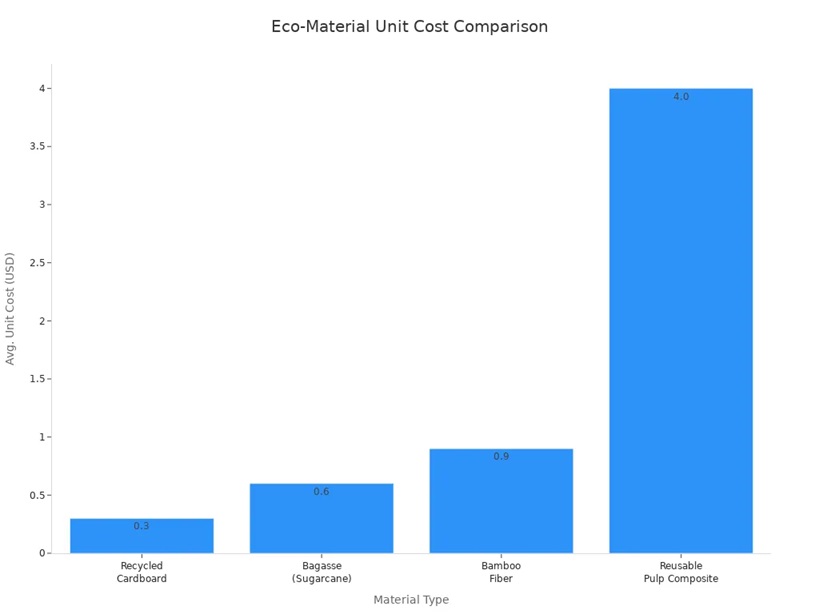
Eco-materials pricing forms a significant part of your packaging cost breakdown. The cost of custom packaging rises when you select sustainable options like recycled cardboard, bagasse, bamboo fiber, or reusable pulp composites. These materials offer environmental benefits but often come at a premium compared to traditional packaging.
|
Type |
Avg. Unit Cost |
Best For |
Disposal Method |
|---|---|---|---|
|
Recycled Cardboard |
$0.30 |
Shipping, Storage |
Curbside Recycling |
|
Bagasse (Sugarcane) |
$0.60 |
Food Service |
Industrial Composting |
|
Bamboo Fiber |
$0.90 |
Premium Retail |
Composting / Limited Recycling |
|
Reusable Pulp Composite |
$4.00 |
Subscription Kits |
Wash & Reuse (5+ times) |
You see higher packaging pricing for eco-materials due to low supply, certified sourcing, and smaller production runs. Growing consumer demand for eco-friendly and sustainable packaging also influences pricing. Bulk purchasing can lower your packaging costs, while custom designs and printing choices may increase them. Regulations and supply chain availability further affect packaging pricing.
Note: Choosing recycled content or compostable materials supports sustainability and enhances brand perception, but you must balance these benefits against the cost of custom packaging.
Manufacturing and Production
Manufacturing and production costs include cutting, molding, quality checks, and finishing. Custom packaging cost increases with specialized processes and eco-friendly materials. Sustainable packaging typically costs 10-25% more per unit than traditional packaging, with unit prices ranging from $0.20 to $0.50.
|
Packaging Type |
Cost Increase (%) |
Cost per Unit Range ($) |
|---|---|---|
|
Sustainable Packaging |
10-25% |
$0.2 – $0.50 |
Material selection, order quantity, and customization drive packaging costs. Larger orders reduce per-unit packaging pricing, while smaller runs miss out on discounts. Finishing options like matte or gloss are less expensive than embossing, debossing, spot UV, or foil stamping. More finishing options lead to higher packaging costs.
Tip: You can optimize manufacturing costs by selecting cost-effective sustainable materials and limiting advanced finishing features.
Customization and Design Fees
Customization and design fees add value to your custom packaging but also increase packaging costs. You pay for custom designs, branding, structural engineering, and visual extensions. Fees vary widely based on provider and project scope.
|
Service Provider |
Typical Range (USD) |
|---|---|
|
Freelancers |
$1,000–$10,000 per project; hourly $24–$62 |
|
Small Studios / Boutique Agencies |
$10,000–$20,000 per project |
|
Large / Top-Tier Agencies |
$15,000–six figures |
|
Single SKU – basic graphic refresh |
$1,000–$3,000 |
|
Single SKU – customized graphic + guidance |
$3,000–$10,000 |
|
Structural design (engineering & protection) |
$8,000+ |
|
Multi-SKU/line system (visual extensions) |
$20,000–$30,000 |
|
Integrated brand + packaging program |
$50,000–$100,000+ |
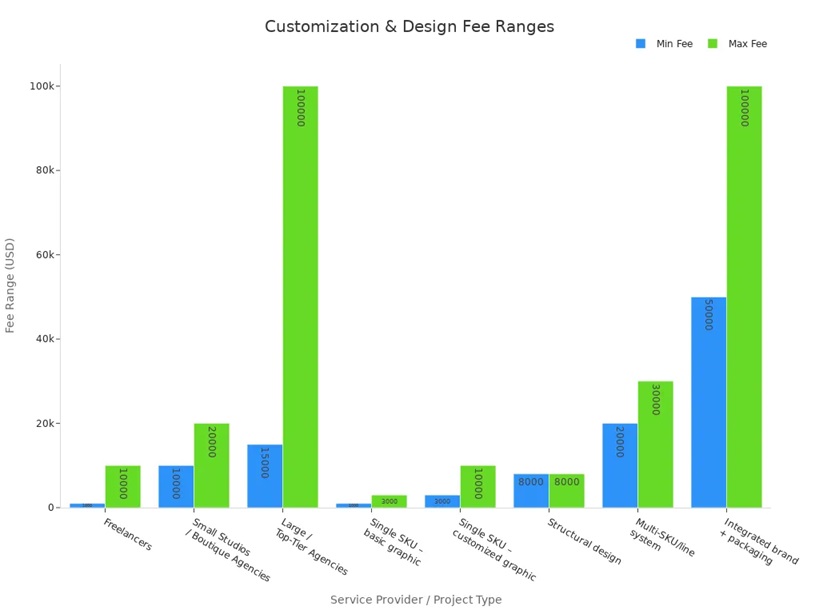
Advanced design features and unique branding elements can significantly increase the cost of custom packaging. Special textures, customized logos, and unique color schemes require intricate printing processes and specialized skills. Minimal branding may be cost-effective, but luxury products often demand premium customization. Custom packaging cost for design fees ranges from $300 to $5,000 for basic projects and can reach six figures for global programs.
Note: You can control customization costs by prioritizing essential branding elements and avoiding unnecessary complexity.
Logistics and Disposal
Logistics and disposal costs complete your packaging cost breakdown. You must consider production, transportation, storage, and end-of-life disposal. Sustainable packaging increases supply chain costs by 40-60% compared to conventional packaging. Storage costs for biodegradable materials rise by 15-20% due to climate control needs. Transportation costs may increase by 25-30% because sustainable materials often have lower packing density.
Quality control for sustainable materials incurs higher packaging costs due to increased variation and inspection needs. Certification for environmentally compliant packaging can cost £10,000 to £50,000 per product line. Rejection rates for sustainable packaging are 3-4 times higher during initial implementation.
|
Impact Category |
Reusable Packaging |
Single-Use Packaging |
|---|---|---|
|
Carbon Footprint |
Lower |
Higher |
|
Resource Conservation |
Significant savings |
Minimal savings |
|
Long-term Financial Benefits |
High ROI |
Low ROI |
Biodegradable packaging reduces the carbon footprint by decomposing quickly, meeting consumer expectations for sustainability. Reusable packaging eliminates continuous purchases, reduces disposal fees, and improves labor efficiency. You achieve long-term financial benefits and resource conservation by investing in sustainable packaging.
Tip: You can lower logistics and disposal costs by optimizing packaging design for efficient shipping and selecting materials with easy recycling or composting options.
You must analyze each component of the packaging cost breakdown to understand the cost of custom packaging and make strategic decisions. Custom packaging cost varies based on tooling, eco-materials, manufacturing, customization, and logistics. By evaluating these factors, you gain control over packaging pricing and discover ways to reduce costs while supporting sustainability.
Factors Influencing Packaging Cost Breakdown
Volume and Order Size
Order volume plays a critical role in determining your custom food packaging costs. When you place larger orders, you spread fixed costs such as tooling and setup over more units. This approach lowers the cost per unit and increases efficiency. For example, if you order 200 custom food packaging bags, your total unit cost reaches $1.40. If you increase your order to 2,000 bags, the unit cost drops to $0.86. Bulk orders also allow you to negotiate better rates with suppliers and secure volume discounts. You can reduce storage costs by forecasting sales accurately and avoiding excess inventory. Lightweight and size-optimized flexible packaging further reduces shipping costs, which offsets the higher initial investment in sustainable and recyclable materials.
|
Order Volume |
Fixed Cost per Unit |
Variable Cost per Unit |
Total Unit Cost |
|---|---|---|---|
|
200 bags |
$0.60 |
$0.80 |
$1.40 |
|
2,000 bags |
$0.06 |
$0.80 |
$0.86 |
Material Quality and Complexity
The quality and complexity of your packaging materials directly impact your custom food packaging costs. Sustainable and eco-friendly materials often cost more than conventional options. Specialty films and multi-layer recyclable flexible packaging can increase initial costs but provide long-term savings through durability and reduced waste. Compostable and biodegradable food packaging requires specific manufacturing processes, which adds to your costs. Limited availability of these materials can drive prices higher. You must balance sustainability goals with cost efficiency when selecting materials and dimensions for your custom packaging.
|
Material Type |
Cost Impact |
|---|---|
|
White Cardboard |
Moderate |
|
Coated Paper |
Higher |
|
Art Paper |
Higher |
|
Corrugated Paper |
Variable |
Note: Specialty eco-friendly materials may have higher upfront costs, but their durability and recyclability can improve efficiency and lower overall food packaging costs.
Regional and Supply Chain Factors
Regional manufacturing costs and supply chain disruptions significantly affect your custom food packaging costs. Sourcing sustainable packaging materials that meet quality standards can be challenging and expensive. Tariffs, such as the 25% U.S. tariff on imported packaging materials and the 55% tariff on Chinese goods, increase costs and force you to reconsider your supply chain strategy. Ongoing disruptions from global events can delay production and raise logistics costs. A broader distribution network and more SKUs add to warehousing and transportation expenses. You must monitor these factors to maintain efficiency and control costs. For context, average monthly operating costs for packaging manufacturers range from $140,000 to $180,000, which includes rent, software, insurance, and legal fees.
Tip: You can improve cost efficiency by choosing local suppliers, optimizing your packaging dimensions, and selecting recyclable flexible packaging that streamlines logistics.
Optimization Strategies for Custom Packaging
Smart Design Choices
You can lower your custom packaging costs by making smart design decisions. Start by auditing your packaging to remove unnecessary materials. Choose eco-friendly materials for your custom packaging. While the initial investment may be higher, these materials can improve your brand image and reduce environmental impact, which benefits your bottom line. Optimize the size and weight of your custom packaging. Smaller and lighter custom packaging reduces both material and shipping costs. Switch to 100% recycled mailers instead of boxes to cut costs and minimize waste. Downgauge materials to use thinner but durable options. This approach maintains protection while reducing the amount of material needed.
|
Benefit Type |
Description |
|---|---|
|
Cost Savings |
Optimized custom packaging reduces costs through lighter materials and smaller package sizes. |
|
Sustainability |
Using sustainable materials minimizes landfill waste and meets consumer expectations. |
|
Performance |
Better-designed custom packaging protects products, reducing returns and improving satisfaction. |
Tip: Streamline your packing process and train your team to minimize waste during assembly.
Bulk Ordering Benefits
Ordering custom packaging in bulk can significantly reduce your per-unit costs. Fixed startup costs, such as printing and die-cutting, remain the same regardless of order size. When you order larger quantities of custom packaging, you spread these costs over more units, lowering the price per item. Bulk purchasing also gives you leverage to negotiate discounts with suppliers. Sustainable packaging materials, when ordered in bulk, can further reduce the need for new packaging with each shipment. This cycle of reuse minimizes waste management expenses and decreases product damage during transit, resulting in fewer returns.
-
Bulk orders of custom packaging lower material and production costs.
-
Reusable sustainable packaging reduces ongoing procurement and disposal fees.
-
Small improvements in customer retention from sustainable packaging can drive revenue growth.
Supplier Collaboration
Building strong relationships with your custom packaging suppliers leads to better pricing and improved sustainability outcomes. Collaborate with suppliers to negotiate bulk discounts and access innovative sustainable packaging solutions. Many companies work with suppliers to optimize production processes, which makes sustainable packaging more economically viable. For example, Klingele partnered with a university to develop AI-based consulting for sustainability in corrugated custom packaging. Metsä Group and Mondi have also collaborated with partners to create new sustainable packaging materials and coatings.
-
Supplier collaboration enables better pricing and access to bulk discounts.
-
Joint innovation can improve custom packaging quality and sustainability.
-
Partnerships help you stay ahead of industry trends and regulations.
Reducing Waste and Logistics Costs
You can reduce waste and logistics costs by adopting reusable custom packaging solutions. Although the initial investment may be higher, reusable custom packaging leads to long-term savings. Eliminating continuous procurement and reducing disposal fees lowers your overall operational costs. Companies that use continuous improvement methods to optimize custom packaging consumption see significant reductions in waste and operating expenses. A total cost of ownership analysis often shows that reusable custom packaging is more economical than single-use alternatives.
Note: Focus on lightweighting and right-sizing your custom packaging to further cut logistics costs and reduce your carbon footprint.
You must understand the main cost drivers for custom flexible sustainable packaging to make informed decisions. Material selection, design efficiency, economies of scale, regulatory compliance, and supplier capabilities all influence your packaging expenses. Balancing cost, quality, and sustainability ensures your packaging supports both your brand and environmental goals.
-
Review all packaging-related expenses, including materials, customization, shipping, storage, and printing.
-
Optimize packaging size and weight to reduce shipping costs.
-
Collaborate with suppliers to streamline packaging production and minimize waste.
-
Order packaging in bulk and consolidate SKUs to lower unit costs.
-
Evaluate packaging regularly to adapt to changing regulations and market demands.
Ongoing analysis and supplier collaboration help you optimize packaging costs and maintain a competitive edge.
FAQ
What factors most influence custom sustainable packaging costs?
You see the biggest impact from material selection, order volume, and design complexity. Tooling and logistics also play a major role in determining your final packaging expenses.
How can you reduce packaging costs without sacrificing sustainability?
You can optimize design, order in bulk, and collaborate with suppliers. Choosing lighter materials and right-sizing your packaging helps lower costs while maintaining eco-friendly standards.
Are eco-materials always more expensive than traditional options?
Eco-materials often cost more due to limited supply and certification requirements. You may find cost savings by ordering larger quantities or selecting recycled content for your packaging.
What is the typical lead time for custom sustainable packaging?
Lead times range from four to twelve weeks. You should plan ahead and communicate with your supplier to avoid delays and ensure timely delivery.
How do you ensure packaging meets regulatory standards?
You must request certifications from your supplier and review compliance documents. Regular audits and quality checks help you maintain packaging standards and avoid penalties.

 Network Supported