


Author
Marie R. Winters


When a food brand sells multiple flavors, recipes, or product sizes, packaging decisions can quickly become complicated. Each SKU may have different ingredients, shelf-life requirements, filling weights, and retail positioning. Without a clear packaging standard, brands may end up managing too many pouch sizes, material specifications, artwork files, and production requirements.
So, how should multi-SKU food brands standardize their flexible pouch packaging? The most practical approach is to establish a common packaging system for the entire product range while allowing necessary differences in flavor identification, product protection, and consumer convenience.
For manufacturers, private-label businesses, and growing food brands, this means standardizing the elements that can remain consistent instead of forcing every product into exactly the same package. Bioflexi provides customizable pouch formats and material options for snacks, confectionery, dried foods, powders, coffee, and other food products.
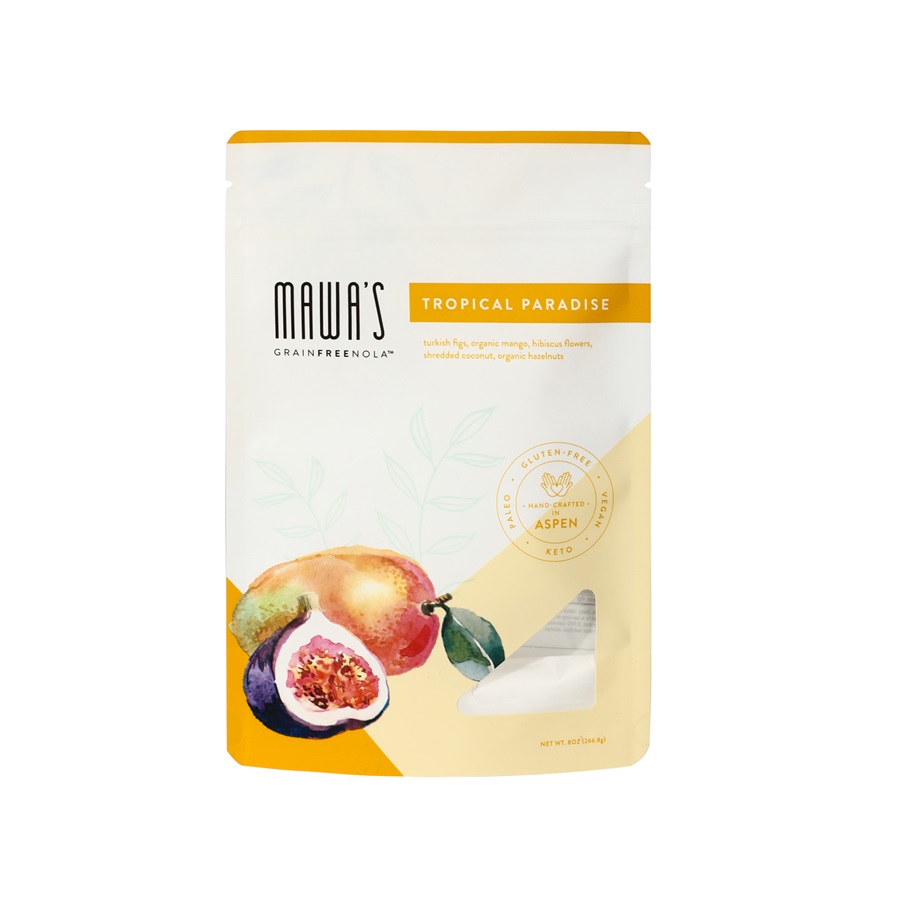
Custom printed stand-up pouch with a consistent package structure and distinctive product artwork.
A multi-SKU product range often includes several flavors, different net weights, seasonal editions, and new product launches. If every SKU is developed independently, packaging specifications can gradually become inconsistent.
For example, a snack brand selling sea salt, barbecue, cheese, and spicy flavors may use different pouch dimensions, zipper positions, and material combinations even when the products have similar packaging requirements. This creates additional work for procurement, artwork management, inventory planning, and production coordination.
A standardized flexible packaging system can help brands:
Standardization does not mean every food product must use an identical pouch. The objective is to establish clear rules for which packaging components can be shared and which must be adjusted for the product itself.
The first step is to separate packaging specifications into common requirements and product-specific requirements. This helps a brand avoid unnecessary customization without compromising food protection or packaging performance.
| Specification | Standardization Approach |
|---|---|
| Pouch dimensions | Use shared sizes for products with similar fill weights and volumes where practical. |
| Material structure | Group products with comparable oxygen, moisture, light, and aroma protection requirements. |
| Closure and sealing | Standardize zipper types, seal areas, and opening features when product use allows. |
| Artwork layout | Keep logo placement, typography, information hierarchy, and brand elements consistent. |
| Product identification | Use clearly defined flavor names, color systems, product codes, and net-weight information. |
| Quality control | Apply consistent specifications for sealing, dimensions, print quality, and incoming inspection. |
The most effective starting point is usually the pouch format and the material specification. Once these are defined, the brand can create artwork templates and SKU-specific variations around the approved packaging structure.
Choosing a common pouch format can simplify purchasing and production, but the format must suit the food product, filling weight, storage conditions, and retail requirements.
Custom stand-up pouches are worth considering for snacks, nuts, dried fruit, candy, and other products that benefit from upright shelf display. The bottom gusset supports standing presentation, while a resealable zipper can be useful for products consumed over multiple occasions.
For premium snacks, larger food packs, or products that need a more structured shelf appearance, flat bottom pouches provide a stable base and multiple potential branding surfaces. A shared flat-bottom format may work across several SKUs when the product volumes and filling requirements are compatible.
Smaller samples, single-serving products, and individual seasoning portions may be better suited to flat pouches. For brands with different product sizes, a small number of approved pouch formats is often more practical than attempting to use one format for the entire range.
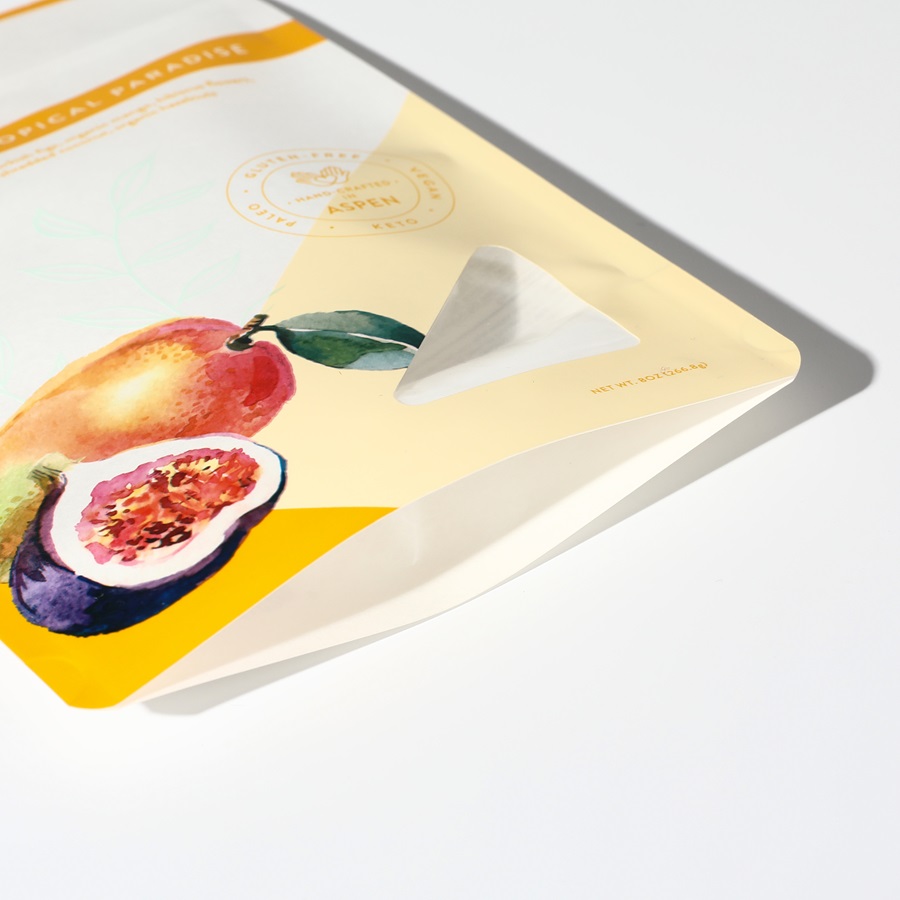
Packaging finish and pouch construction should be evaluated alongside dimensions and product requirements.
The key decision is whether the same pouch dimensions can accommodate each SKU without causing underfilling, excessive headspace, sealing difficulties, or an inconsistent appearance on the shelf.
Packaging standardization should make products easier to recognize as part of the same brand, not make every flavor look identical. A common artwork template provides a useful starting point.
Brands can maintain consistent logo placement, typography, product information, and graphic hierarchy while using different colors, flavor names, illustrations, or product images to distinguish individual SKUs.
For example, a granola brand could use the same pouch dimensions and front-panel layout for its original, chocolate, berry, and nut varieties. Each flavor could have a different accent color and product image, while the brand logo and essential information remain in the same positions.
This approach can simplify design approvals and reduce the risk of missing or incorrectly positioned information. It also helps retailers and consumers identify product variations more quickly.
Before printing, brands should confirm that every artwork version contains the correct ingredients, allergen declarations, nutritional information, net weight, barcode, and other market-specific labeling details. These details should be reviewed for each SKU rather than copied without verification.
Not necessarily. Material standardization should be based on product protection requirements rather than appearance alone.
Two products may look similar but behave differently during storage. A dry snack may require moisture protection to preserve crispness, while a product containing sensitive fats may need stronger oxygen protection. Coffee, powdered foods, confectionery, and dried fruit can each have different packaging priorities.
Brands should evaluate the required barrier performance, expected shelf life, filling conditions, transportation environment, and food-contact requirements before approving a common material structure.
Where several SKUs have similar protection needs, using one qualified material structure may simplify purchasing and quality control. If one product requires a different barrier level, however, a separate specification may be necessary.
Brands exploring environmental packaging options can also review recyclable flexible packaging or compostable alternatives. Suitability depends on the actual material structure, food protection requirements, local collection infrastructure, and relevant certifications. A sustainability claim should always match the verified properties of the finished packaging.
Closures and convenience features are another area where multi-SKU brands can reduce unnecessary variation. If several products are consumed over multiple occasions, a shared resealable zipper specification may be practical.
For example, custom stand-up pouches for seeds and grains illustrate how a stand-up format can support food products while maintaining a consistent packaging style.
However, a zipper is not necessary for every SKU. Single-serving products may only need a reliable heat seal and an easy-open feature. Products with oily surfaces, fine powders, or special filling requirements may also need additional testing to confirm that the closure and sealing areas perform as intended.
Brands should document approved zipper types, tear-notch positions, seal widths, opening directions, and any other functional features. These details help ensure that packaging remains consistent across suppliers, production batches, and future SKU launches.
When packaging specifications are fragmented across many SKUs, procurement teams may need to manage numerous material combinations, pouch dimensions, and artwork versions. A standardized system can make these requirements easier to track.
Start by creating a packaging specification sheet for each approved pouch family. It should include the pouch format, dimensions, material structure, thickness where applicable, closure type, printing requirements, food-contact requirements, and quality acceptance criteria.
Each SKU should then be linked to the appropriate specification and artwork file. Any exception should be recorded with a clear reason, such as a different product weight, higher barrier requirement, or special filling condition.
Brands should also review minimum order quantities, forecast volumes, production lead times, and storage capacity. Consolidating specifications can reduce complexity, but it does not automatically mean that every SKU can be ordered in the same quantity or produced in the same run.
Before placing a bulk order, request samples and test them using the actual food product and filling process. Confirm pouch dimensions, filling performance, sealing strength, zipper function, shelf stability, and print accuracy before approving mass production.
For a growing food brand, the best approach is to create a packaging system that is repeatable without being unnecessarily restrictive. The system should support current SKUs while leaving room for new flavors, sizes, and product categories.
A practical implementation process includes the following steps:
Bioflexi offers customizable flexible pouch formats and packaging options for different food applications. By discussing product characteristics, required dimensions, material performance, printing, and closure preferences with a packaging supplier, brands can identify which specifications can be shared and which need to remain product-specific.
To discuss packaging requirements for multiple SKUs, brands can contact Bioflexi for a packaging consultation and prepare a list of current products, target weights, expected order volumes, and packaging priorities.
Can multiple food SKUs use the same flexible pouch size?
Yes, if the products have compatible fill weights, bulk densities, pouch volumes, and filling requirements. The final size should be validated with the actual product rather than selected by net weight alone.
Should different food flavors use the same packaging material?
They can share a material structure when their barrier, shelf-life, and food-contact requirements are comparable. Products with different sensitivities may require different structures even when they belong to the same product family.
How can brands differentiate flavors without redesigning every pouch?
Use a shared artwork template with consistent brand elements, then change controlled features such as accent colors, flavor names, product images, and SKU-specific information.
Does packaging standardization reduce costs?
It can reduce specification complexity, artwork management, and purchasing administration. Actual savings depend on order quantities, printing methods, material choices, minimum order requirements, and production planning.
What should brands test before approving standardized pouches?
Test dimensions, filling performance, seal integrity, closure function, barrier suitability, shelf presentation, transportation performance, and artwork accuracy. The required tests depend on the food product and its intended use.
Can sustainable flexible pouches be used across multiple SKUs?
Potentially. Recyclable, compostable, or recycled-content materials can be evaluated for compatible product groups, but each structure must meet the relevant protection, food-contact, performance, and certification requirements.
Ultimately, standardizing flexible pouch packaging is about finding the right balance between consistency and product-specific needs. A clearly documented packaging system helps multi-SKU food brands manage their product range more efficiently while maintaining the quality, shelf appeal, and functionality expected by customers.
lf you would like to work with us or just want to get intouch, we'd love to hear from you!

Copyright @ 2026 Shanghai BioPouches Co., Ltd All Rights Reserved. Network Supported
leave a message