

Author
Marie R. Winters


Choosing the right custom flat pouches comes down to seven decisions: product compatibility and barrier needs, material, size and shape, printing and branding, regulatory compliance, cost and order quantities, and supplier capabilities. Flat pouches suit a wide range of goods, from snacks to powders to small parts. Get these seven choices right, and you avoid costly reprints and spoiled products.
You don't need to guess your way through custom pouches. Treat this as your decision framework for pouch packaging. Weigh each factor against your product, your budget, and your timeline. Bioflexi is here as a resource for custom pouch guidance whenever you want a second opinion.
Match the pouch barrier to your product's sensitivities to prevent spoilage.
Choose a material structure that balances protection and sustainability goals.
Size pouches by fill weight and confirm the format with a fill test.
Pick a printing method that fits your run length and design needs.
Verify food-contact compliance for every market where you sell.
Before you compare prices or pick a print design, start with the product itself. Choosing the right custom flat pouches begins with two questions: what can damage your product, and how long must it stay protected? Answer those first, and every later decision gets easier.
Different goods fail in different ways inside a sealed pouch. Map your product against the common sensitivities below before you talk to any supplier.
|
Product type |
Sensitivity |
Required protection |
|---|---|---|
|
Nuts, cereals, snacks |
Air/oxygen exposure |
Air-tight packaging to preserve freshness |
|
Chocolate |
Light and moisture |
Protection from light and moisture |
|
Sticky candies |
Adhesion to packaging |
Additional barriers to prevent sticking |
|
Portion-consumed products |
Repeated opening |
Zipper/resealable pouch |
Flat pouches typically suit small, single-serve, or lightweight items, where low material cost and efficient shipping matter most. That means your barrier requirements may differ from those of stand-up or box pouches built for larger or premium goods. Note your filling method, required shelf life, and storage conditions too. Product sensitivity is a primary driver of pouch specification, so treat this step as the foundation of your custom pouch packaging plan.
Four threats matter most: moisture, oxygen, aroma loss, and contamination. Multi-layer films are engineered to provide tailored barriers against each one, preserving product integrity through storage, transport, and home use.
The numbers behind barrier properties vary widely by construction. Foil laminate (PET/Al/PE) delivers MVTR below 0.002 and OTR below 0.1, with excellent light blocking. Metallized film sits at MVTR 0.01–0.10 and OTR 0.5–2.0. Standard poly (LDPE/HDPE) offers minimal protection, with MVTR above 5.00 and OTR above 50.0. Those gaps decide whether your snacks stay crisp or your chocolate survives a warm warehouse.
Define these needs before you request quotes. Specify your target shelf life and shipping route, then let your supplier recommend a structure. Getting this right early protects your product and your budget.
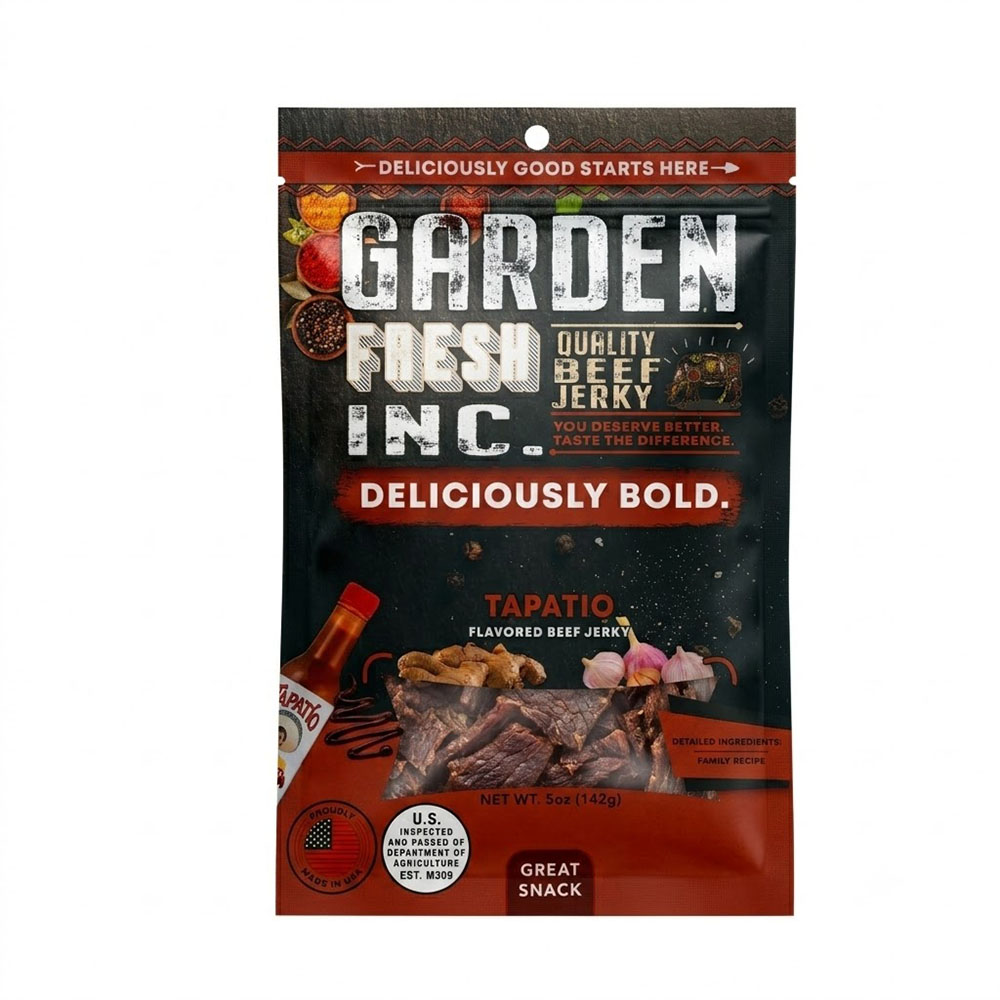
Your product's sensitivities point to a shortlist of pouch materials. Most custom pouches use laminations, which combine films so each layer does a job. A common flat pouch lamination is PET/PE. Swap in foil and you get PET/ALU/PE, the structure for the toughest barrier demands. Kraft-based builds like KRAFT/PET/PE add a natural look and tear strength.
Each layer brings its own strengths. Aluminum foil blocks gases, moisture, and light completely, and it dead-folds well. Metallized PET gives a metallic look at lower weight and cost than foil. EVOH delivers outstanding oxygen and odor barrier with high flavor retention. Nylon resists heat and blocks oxygen, but it handles water vapor poorly. BOPP offers a strong moisture-vapor barrier at low cost, and CPP gives excellent heat-seal strength and puncture resistance.
Match the structure to the job. Beef jerky in a simple three-side-seal flat pouch needs little more than a solid moisture barrier. Light-sensitive chocolate needs foil or a metallized layer. Powders and sticky candies often need extra protection against adhesion or contamination. Ask your supplier to map each candidate structure against your shelf life and shipping route.
Recyclable mono-material films and high-barrier laminates pull in opposite directions. Mono-PE has a weaker oxygen barrier, though coatings and additives can boost it. Foil and EVOH give near-impermeable protection for long shelf life. Multi-material laminates resist recycling in standard film streams, and mono-material options depend on local soft-plastics collection.
Recyclable does not mean fragile. Well-designed lay flat pouches can still deliver strong moisture, oxygen, and contaminant barriers while staying light and durable. Some suppliers now claim a mostly polyethylene laminate with a thin metallized PE coating matches metallized PET barrier properties, though cost runs higher and recyclability depends on your region. Weigh shelf life against end-of-life goals, then choose the right material for your product.
Fill weight alone won't tell you the dimensions you need. Convert weight to volume first. Measure your product's bulk density by filling a known-volume container the way production will fill it, then average the results across trials. Divide product weight by bulk density to get required volume — 500 g at 400 g/L works out to about 1.25 L. Add roughly 10–15% for top seal, zipper clearance, headspace, and settling in transit. Airy goods need more room. Then map that volume to a standard size chart and size up when you land between options.
Gusset depth drives capacity on its own. Two pouches with identical width and height hold very different amounts depending on gusset depth. A deeper gusset adds capacity and footprint stability; a shallow one limits fill volume and raises tipping risk once filled. A balanced working rule is a gusset depth of about 35–50% of the pouch width. Remember that size is the external measurement, while capacity is what actually fits once seals, zipper clearance, and headspace come out. Dense products like protein powder need less volume than granola or whole coffee beans at the same weight.
Before you order, compare lay flat pouches vs. stand-up pouches fairly. Each format fits different goals.
|
Dimension |
Stand-Up Pouches |
Flat (Lay Flat) Pouches |
|---|---|---|
|
Shelf presence |
Upright, self-standing design gives prominent display and resists tipping |
Lie flat when empty for a sleek, minimalist look; less vertical presence |
|
Functionality |
Often include resealable zippers for freshness; suit solid or granulated goods |
Stackable design saves warehouse and transit space; large surface for graphics; ideal for low-viscosity liquids |
Measure width and gusset separately to avoid confusion. Allow for seals and the top zipper area, since both reduce fillable space. Never assume internal volume equals external volume — material thickness and seal width eat into it. A fill test on real equipment confirms stand-up stability, clean sealing, and appearance after shipping. That step matters most for custom flat pouches headed to retail shelves.
Your print run size and design complexity point to a method. Compare the four common options before you commit.
|
Printing Method |
Key Advantages |
|---|---|
|
Flexographic Printing |
Cost-effective for large-scale runs; versatile; vibrant colors and sharp images; flexible design changes; supports various inks and coatings |
|
Digital Printing |
Fast turnaround; ideal for short runs and customization; variable data printing (barcodes, serial numbers, names) |
|
Offset Printing |
High quality and consistency; precise color matching; detailed designs; high-resolution images and smooth gradients; suited to medium-to-large runs |
|
Screen Printing |
Ideal for specialty designs; thick ink layers and special inks; raised/textured finish for logos, patterns, and text |
Digital printing suits short runs and personalized printed lay flat pouches, where variable data like barcodes or names changes per order. Flexo and offset reward volume with lower unit costs. Screen printing gives you a textured finish for a premium look. Match your printing techniques for your custom pouch to run length, then confirm the method handles your materials and finishes.
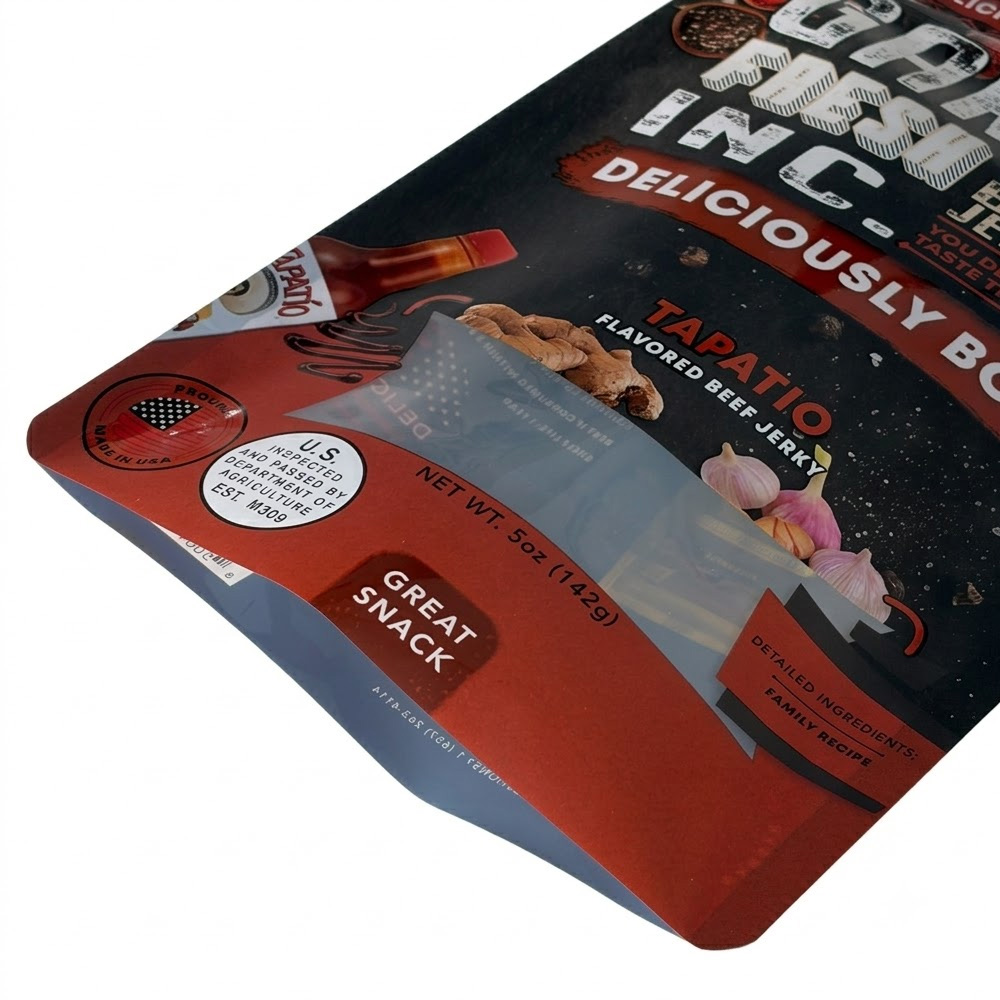
The broad, flat face of a lay flat pouch acts as an expansive branding canvas. That uninterrupted area lets you show bold graphics, detailed product information, and storytelling elements without distortion. Custom printed lay flat pouches can boost brand visibility precisely because the surface stays flat rather than curved.
Plan artwork across both front and back panels, and confirm fill volume, headspace, and panel dimensions first. Place your logo in the upper third of the front panel. Use font type and visual hierarchy to guide the eye, and apply a white ink layer behind text on clear film for contrast. Skip the clutter — prioritize the product name, volume, and one or two key benefits. High-contrast colors and legible fonts matter most on small sizes and transparent packaging. Check that product imagery matches the real product.
Layout and custom finishes come last, yet they shape how buyers see and use the pouch. Treat customization options for your pouches as part of the design brief, not an afterthought. Well-planned printed lay flat pouches lift shelf appeal and keep production efficient. Good printed flat pouches start with a clean layout, and branded lay flat pouches earn their space on the shelf.
Compliance starts with the material itself. Every layer of your custom flat pouches must be a cleared food-contact substance. The rules differ by market, so match your structure to the region where you sell.
|
Region |
Regulatory Standard |
Core Mechanism |
Key Buyer Focus |
|---|---|---|---|
|
USA |
FDA 21 CFR 177 |
"Condition of Use" — safety judged against specific physical conditions |
Verify the material is certified for your actual condition of use |
|
EU |
Regulation (EU) No 10/2011 |
"Positive List" plus Specific Migration Limits |
Monitor Overall Migration limits and Primary Aromatic Amines in laminates |
|
China |
GB 4806 Series |
General safety requirements plus material-specific standards |
Confirm the GB code matching your resin type |
Ask for third-party test reports from labs like SGS or Intertek. They must be recent, within 12–24 months, and the test conditions must match your filling process. The scope should list your exact structure, such as PET/AL/PE. A Declaration of Compliance carries more weight — it cites the specific regulation, states safe food types and temperature limits, and bears the manufacturer's signature. Factory certifications like BRCGS Grade A/AA, ISO 9001, and HACCP show the production environment is hygienic enough for food-contact materials.
Dry goods in flat or gusseted pouches usually skip process filing, but the material still needs clearance. Resealable pouches, like dry snacks with low moisture, shift the focus to labeling and material compliance. Dual-column Nutrition Facts often apply there.
Know who carries the legal duty. The company that fills the pouch is the responsible food facility. It registers with FDA, holds any process filing, and ensures labeling compliance. Foreign facilities also need a U.S. Agent. Your pouch supplier's job is to provide food-contact documentation. For shelf-stable low-acid products, the foreign facility needs FCE registration and a scheduled process, and importers carry FSVP duties. Imported pouches built for other markets often need a fresh review of material, label, and filing.
Unit price follows a handful of levers. Bag size matters most, since larger bags use more film. Material type comes next, and aluminum foil structures cost considerably more than standard BOPP. Order quantity pulls the unit price down as volume rises. Print complexity adds cost with more colors and finer detail. Each added feature — a zipper, valve, or window — adds material and a process step.
Here is how size and material combine in real quotes for flat bottom bags.
|
Size / Material |
Flat Bottom Bag (USD/unit) |
|---|---|
|
Small (100g), Clear PET/PE |
$0.10 – $0.15 |
|
Medium (500g), PET/AL/PE |
$0.20 – $0.30 |
|
Large (1kg), Kraft/AL/PE |
$0.33 – $0.48 |
Watch the extras too. Mono-material recyclable structures carry a 5–8% premium over traditional laminates. Digital printing adds roughly $0.02–0.05 per bag on short runs, yet it removes plate fees and pays off under 10,000 units. Finishes stack up fast: spot gloss or UV adds $372, and interior printing adds $532. Freight counts as well, since bulkier formats cut container capacity.
Stock pouches and custom-printed pouches serve different budgets and timelines. A plain pouch plus a sticker wins under 500 units, because you skip setup and keep outlay low. Stock options also suit prototyping and short runs, and they carry no tooling wait. Their unit cost stays flat as volume grows, though label cost and hand application quietly eat the savings.
Custom printed lay flat pouches flip that math. Digital runs usually start near 1,000 units, and production takes 7–15 days after approval. Between 1,000 and 5,000 units, digital is typically cheapest. Past 10,000, gravure spreads its cylinder cost thin and drops steeply. Plan freight on top: about 1–2 weeks by air or 3–6 weeks by sea.
Bioflexi can walk you through both routes without pushing one over the other. Bring your volume and timeline, and we will help you weigh stock against printed lay flat pouches.
A supplier's quality system tells you more than any sample ever will. Ask for ISO 9001 at minimum, plus HACCP and BRC certification for food-contact work. Then dig into the test data behind the certificate.
|
Test |
Standard |
Pass Criteria |
|---|---|---|
|
Seal Strength |
ASTM F88 |
≥ 3.0 N/15mm (food); ≥ 6.0 N/15mm (industrial) |
|
Burst Pressure |
ASTM F1140 |
≥ 40 kPa (standard); ≥ 60 kPa (heavy-duty) |
|
Drop Test |
ASTM D5276 |
No leakage from 1.2m filled drop |
|
Ink Adhesion |
ASTM F2252 |
Tape test: <5% ink removal |
Color accuracy should hold to ΔE < 2.0 for brand consistency, and solvent residual testing via GC analysis protects food safety and odor. Friction, measured under ASTM D1894, affects how smoothly your lay flat pouches run on high-speed filling lines.
Lead time benchmarks give you a reality check. Standard production runs 15–25 business days; expedited runs take 10–15. Confirm the factory holds capacity headroom of at least 30% above your peak demand, and check that its customization depth covers 2-to-7-layer structures and up to 10-color gravure.
Start with identity. Is your contact a manufacturer or a trading company? Request a live factory-floor video call, a business license, and an audit certificate naming the specific site. A genuine factory can show lamination, printing, and bag-making lines in one walkthrough.
Then work through the operational questions:
Which food-safety certifications do you hold, and does the scope name film conversion and printing?
What are your real MOQs and lead times for digital versus gravure?
Which barrier structure fits my product — and will you recommend one rather than just confirm my request?
How do you handle samples, artwork proofing, and color approval?
What is your quality control process, and will you share failure records?
Can you scale with my order size, so I don't re-qualify packaging later?
Request samples within 7–10 days and references from past clients. Watch communication style too — transparent answers signal professionalism. A supplier that explains both digital and gravure paths clearly can grow with your custom pouch packaging needs.
Run through this checklist before you commit to any order:
Match barrier needs to product sensitivities.
Pick a material structure that balances protection and sustainability.
Size for fill weight, then confirm the format.
Choose a printing method that fits your run length.
Verify food-contact compliance for every market you sell in.
Compare stock versus custom options against your budget.
Vet suppliers on certifications, lead times, and honest answers.
Seven quick checks stand between you and pouch packaging that performs. Get them right, and choosing the right custom printed flat-pouch bags becomes a straightforward decision. A flat pouch protects your goods, and printed lay flat pouches carry your brand. Ready to match lay flat pouches to your product? Talk to Bioflexi. We'll help you spec the right custom flat pouch and avoid costly reprints.
Digital printing usually starts near 1,000 units. Below that, a stock pouch with a label keeps your outlay low. Ask your supplier for exact minimums on both routes before you commit.
Request samples within 7–10 days. Fill them on your real equipment, then check seal strength, drop performance, and appearance after shipping. A live fill test catches problems a flat sample photo never will.
Standard runs take 15–25 business days. Expedited runs take 10–15. Add freight time on top: about 1–2 weeks by air or 3–6 weeks by sea. Build that timeline into your launch plan early.
Stock suits prototypes, short runs, and tight budgets. Custom printing pays off past roughly 1,000 units and rewards volume with lower unit costs. Weigh your volume and timeline, then pick the path that fits.
Yes. Mono-material films like mono-PE offer recyclability, though their oxygen barrier is weaker than foil. Coatings can boost performance. Confirm local soft-plastics collection accepts them, then balance shelf life against end-of-life goals.
Getting choosing the right custom flat pouches right starts with good questions. Ask early, test samples, and confirm your numbers. That habit keeps your custom pouch packaging on budget and on schedule.
lf you would like to work with us or just want to get intouch, we'd love to hear from you!

Copyright @ 2026 Shanghai BioPouches Co., Ltd All Rights Reserved. Network Supported
leave a message