

Author
Marie R. Winters


For food brands, choosing between mono-material PE and traditional multi-layer laminates is no longer just a packaging performance decision. Recyclability, material simplification, shelf life, production efficiency, and end-of-life options are all becoming part of the buying process.
Traditional laminated bags can combine PET, PE, nylon, aluminum foil, and other layers to achieve excellent barrier and mechanical performance. The challenge is that different materials bonded together can make recycling more complicated. Mono-material PE packaging takes a different approach by keeping the main package structure within a PE-based material system.
So, does mono-PE automatically make a pouch better? Not necessarily. The right choice depends on the product, required shelf life, barrier performance, filling process, target market, and available recycling infrastructure.
This guide compares mono-material PE pouches with multi-layer laminates and explains what food packaging buyers should consider when sourcing recyclable packaging for snacks, coffee, pet food, grains, powders, and other dry food products.
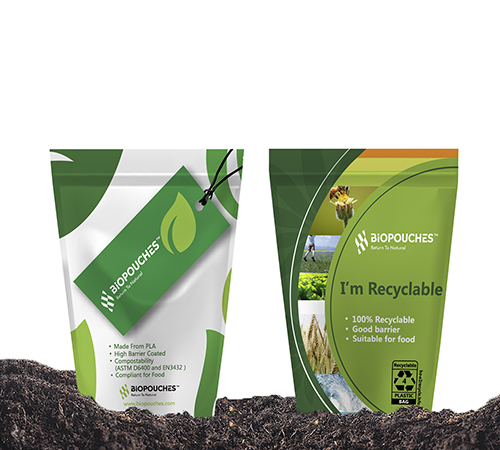
Mono-material PE packaging is flexible packaging built primarily around polyethylene rather than combining several different polymer families. Depending on the application, manufacturers can use different PE films, orientations, seal layers, coatings, or compatible barrier technologies while maintaining a PE-based structure.
The basic idea is straightforward: instead of combining several materials to give a pouch its required properties, the package is engineered to achieve those properties while keeping the material structure simpler.
Bioflexi's recyclable packaging solutions use engineered Mono-PE structures and MDO-PE technology. According to the company's recyclable packaging information, the structure is designed to provide strength, stiffness, thermal resistance, and barrier performance while remaining compatible with PE recycling pathways.
This makes mono-material PE an increasingly relevant option for brands looking for fully recyclable flexible packaging without moving away from the convenience and lightweight characteristics of flexible pouches.
Multi-layer laminates have become popular because each layer can perform a specific job.
A conventional food pouch may use an outer layer for printing and mechanical strength, another layer for oxygen or moisture protection, and an inner PE layer for heat sealing and food contact. In some applications, aluminum foil or metallized film is added when very high barrier performance is required.
From a packaging engineering perspective, this makes sense. Different materials bring different advantages.
The challenge comes at the end of the package's useful life. When several materials are permanently bonded together, separating and recovering those materials can be more difficult than processing a package designed around a single polymer family.
That does not mean every multi-layer laminate is automatically non-recyclable. Actual recyclability depends on the complete structure, local collection systems, sorting infrastructure, recycling technology, and applicable guidelines.
However, material simplification is one reason mono-material structures are receiving more attention from food brands and packaging buyers.
| Factor | Mono-Material PE | Multi-Layer Laminates |
|---|---|---|
| Main structure | Primarily PE-based | Multiple material types |
| Recycling potential | Designed for compatible PE streams | Depends on the complete laminate |
| Barrier performance | Can be engineered for specific applications | Traditionally very strong |
| Heat sealing | Well suited to PE sealing layers | Depends on the sealant layer |
| Material complexity | Lower | Higher |
| Typical sustainability strategy | Recyclability and material simplification | Performance-focused multi-material design |
The important point for buyers is that neither structure should be selected simply because it sounds more sustainable or more advanced. Packaging performance still needs to match the product.
Barrier performance is often the first concern when a food brand considers switching from a conventional laminate to a mono-material structure.
Food products can be sensitive to oxygen, moisture, aroma loss, grease, light, and external contamination. Coffee, pet food, snacks, powders, nuts, grains, and dried foods can all have different packaging requirements.
Modern mono-PE structures are more sophisticated than a basic polyethylene film. MDO-PE can improve stiffness and heat resistance, while compatible barrier technologies can be used when higher oxygen or moisture protection is required.
Bioflexi states that its recyclable packaging solutions can use EVOH co-extrusion technology for oxygen and moisture barrier performance. It also highlights MDO-PE as a way to improve stiffness and thermal resistance for production applications.
For buyers searching for high-barrier mono-PE bags, the better question is therefore not simply whether the pouch is made from PE. The real question is whether the specific PE structure can provide the required shelf life and protection for the packaged product.
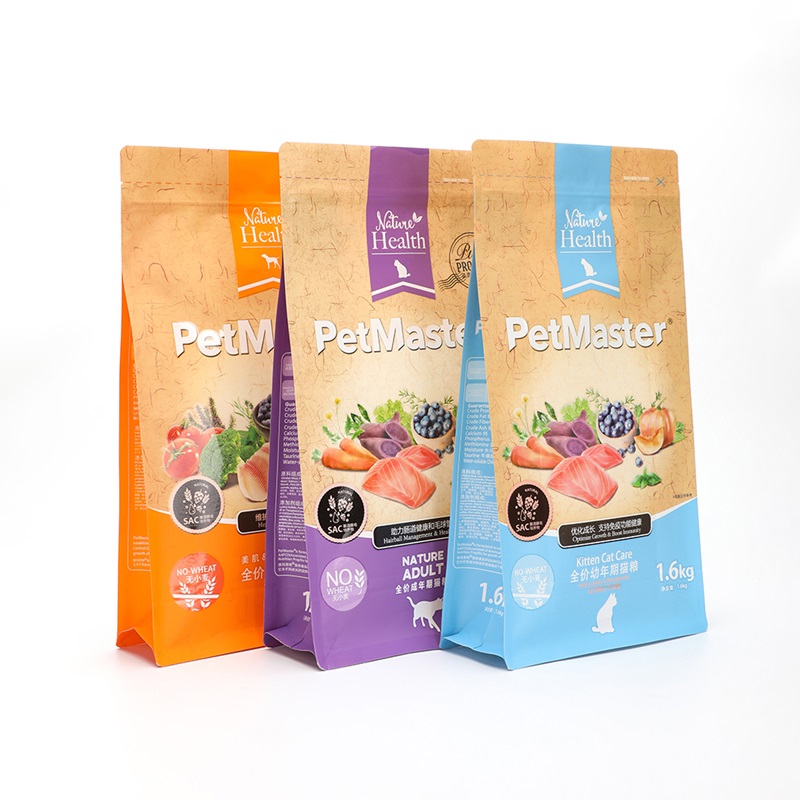
Mono-PE can be a practical choice when recyclability is a major packaging objective and the required barrier performance can be achieved within a PE-based structure.
Common applications include dry snacks, grains, seeds, pet treats, powders, coffee-related products, and other products that need flexible packaging with moisture and oxygen protection.
Bioflexi's recyclable packaging range specifically focuses on mono-material structures and includes solutions designed around PE-based recycling pathways.
For food manufacturers and importers, mono-material packaging can also make sense when the brand wants to keep the familiar benefits of flexible pouches while moving toward a more simplified material structure.
Yes. Multi-layer laminates still have an important role in food packaging.
Some products require extremely strong protection against oxygen, moisture, aroma migration, or light. Certain products may also need specific mechanical properties that are easier to achieve with a combination of different films.
Multi-layer construction can also be useful when a packaging line, filling process, or distribution environment has already been optimized around a particular structure.
That is why replacing a laminate with mono-PE should not be treated as a simple material substitution. The new structure needs to be tested under real production and storage conditions.
A good packaging supplier should be able to discuss barrier requirements, seal strength, thickness, printing, filling equipment, storage conditions, and expected shelf life before recommending a structure.
The word "recyclable" needs to be considered in context.
A package can be designed with a recyclable material structure, but actual recycling depends on whether the package is collected, sorted, accepted, and processed by the recycling infrastructure in the target market.
For food packaging buyers, several questions are worth asking:
Bioflexi also offers PE-based recyclable accessories such as mono-material PE zippers and PE degassing valves, with the goal of keeping package components within the same material strategy.
The move toward mono-material packaging is closely connected with the broader idea of circular economy packaging.
A circular approach looks beyond the manufacturing stage. It considers how packaging is designed, produced, used, collected, processed, and potentially converted into material for another product.
For flexible food packaging, that means material selection is only one part of the equation. Packaging designers also need to think about unnecessary layers, package weight, recyclability, component compatibility, production waste, and the recycling infrastructure available in the target market.
Mono-material structures can support this strategy because they reduce the number of different polymer families used in the package.
Bioflexi's recyclable packaging page describes its Mono-PE approach as a way to reduce conventional Nylon, foil, metallized, and PET layers while developing packaging around a PE-based structure.
In some applications, yes. In others, a conventional laminate may still be the more appropriate option.
The decision should be based on the product's actual packaging requirements rather than the material name alone.
For example, a dry snack may have very different oxygen and moisture requirements from roasted coffee, powdered nutrition products, or a product with a long international shipping cycle.
Before changing materials, brands should compare:
Sample testing under actual production conditions is especially useful before placing a large custom packaging order.
Material is only one part of the packaging decision. The pouch format also affects filling efficiency, product capacity, shelf presentation, storage, and transportation.
For smaller retail products, stand-up pouches are widely used because the bottom gusset allows the bag to remain upright. Bioflexi's stand-up pouches are available for snacks, powders, pet food, seeds, grains, and other applications, with recyclable and Mono-PE options included in its product range.
For larger-volume products, side gusset bags can provide additional capacity without requiring a rigid container. Bioflexi's side gusset pouches include recyclable options for pet food, coffee, and other dry products.
Flat-bottom pouches are another option when shelf stability and a larger printable surface are important. The flat bottom pouch range includes recyclable options for products such as matcha, coffee, pet food, and dry goods.
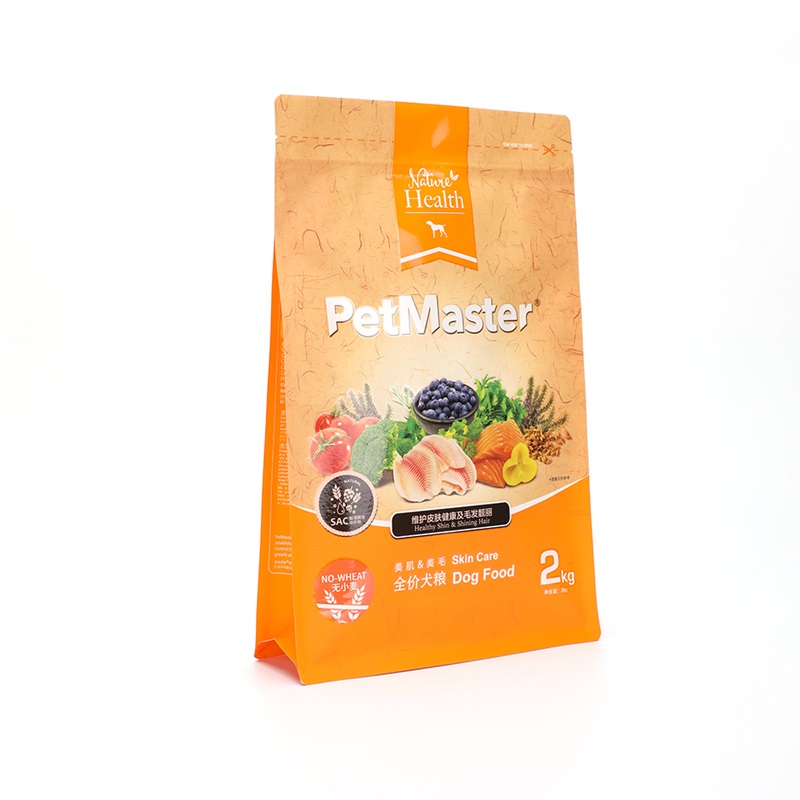
If you are sourcing custom food packaging bags in bulk, do not stop at asking whether the bag is recyclable.
A more useful supplier discussion should cover the complete packaging specification.
These questions help buyers compare packaging suppliers based on actual engineering and manufacturing capabilities instead of relying only on sustainability terminology.
It is easy to focus on recyclability and overlook product protection.
But packaging that fails to protect food properly can result in product spoilage, shorter shelf life, returns, and unnecessary food waste. Sustainability therefore cannot be evaluated only by looking at the packaging material.
The better approach is to balance material efficiency with product protection.
For a dry snack, that could mean selecting a mono-PE pouch with appropriate moisture and oxygen protection. For coffee, the packaging may require a degassing valve and stronger aroma protection. For pet food, a larger side gusset or stand-up structure may be more suitable depending on the package size and distribution requirements.
The objective is not to use the simplest material at any cost. It is to develop the simplest suitable structure that can protect the product throughout its expected life cycle.
The transition from multi-layer laminates to mono-material PE is part of a wider change in flexible food packaging.
Brands are looking for packaging that can combine shelf appeal, reliable barrier protection, production efficiency, and more practical end-of-life options. At the same time, packaging buyers need solutions that can be manufactured consistently at commercial volumes.
That is why mono-material PE pouches should be evaluated as a complete packaging system rather than simply as a replacement for PET/PE or PET/AL/PE.
The right solution depends on the food product, package size, shelf-life target, filling equipment, distribution environment, recycling pathway, and market requirements.
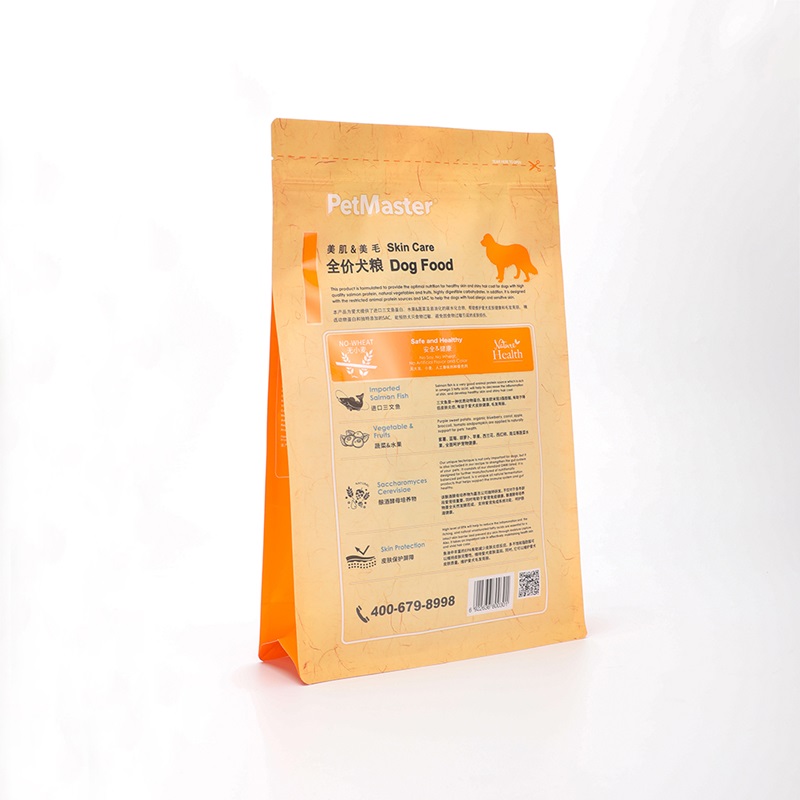
Mono-PE pouches are designed around a PE-based material structure and can be developed for compatible PE recycling streams. Actual recycling depends on the complete package design, local collection systems, sorting facilities, and applicable recycling guidelines.
Modern mono-PE structures can provide strong mechanical and sealing performance, but the result depends on the film structure, thickness, orientation, barrier technology, and application. Product-specific testing is recommended before changing from a conventional laminate.
Yes. Engineered mono-PE structures can use orientation and compatible barrier technologies to improve protection against oxygen and moisture. The required barrier level should be selected according to the product and expected shelf life.
Mono-PE packaging can be suitable for many dry food applications, including snacks, grains, seeds, powders, pet food, treats, and other products where the required barrier performance can be achieved with a PE-based structure.
Recyclable packaging is designed to enter a recycling pathway where materials are collected and reprocessed. Compostable packaging follows a different end-of-life pathway and is designed to break down under specified composting conditions. They should not be treated as the same sustainability solution.
Yes. The accessories need to be considered as part of the overall packaging structure. PE-compatible zippers and valves can be used when the goal is to maintain a more consistent recyclable material system.
Mono-material PE and multi-layer laminates each have their place in flexible food packaging.
Multi-layer laminates remain valuable when a product requires specialized barrier or mechanical performance. Mono-material PE, meanwhile, offers a practical direction for brands that want to simplify their packaging structure and work toward more recyclable flexible packaging.
The best choice is not necessarily the material with the strongest sustainability claim. It is the structure that provides the right balance of product protection, manufacturing performance, shelf life, cost, and end-of-life considerations.
For brands evaluating recyclable packaging, high-barrier mono-PE bags, and other sustainable food packaging formats, starting with the actual product requirements is the most reliable way to make the transition.
lf you would like to work with us or just want to get intouch, we'd love to hear from you!

Copyright @ 2026 Shanghai BioPouches Co., Ltd All Rights Reserved. Network Supported
leave a message