



Protein powder clumps because it is hygroscopic. The pouch must therefore deliver a high moisture and oxygen barrier, a powder-resistant zipper, and strong, contaminant-free seals. Clumping, caking, and shortened shelf life are packaging failures, not product failures. A weak protein powder pouch lets humidity migrate inward, and the protein powder packaging then fails the consumer long before the protein itself does.
This article examines zipper types, barrier film structures, and seal integrity. It also shows how to match a design to the product and its distribution. High-barrier protein powder packaging, custom film selection, and packaging for protein powder each play a role in keeping every scoop free-flowing.
Key Takeaways
-
Protein powder clumps because it absorbs moisture from the air. A high-barrier pouch stops moisture and oxygen from getting in.
-
Choose a powder-proof zipper. It resists clogging from fine particles and keeps the pouch sealed after opening.
-
Seal integrity is critical. Proper spacing of the top seal, tear notch, and zipper prevents leaks and contamination.
-
Select the right barrier film. PET/AL/PE offers the highest protection, while PET/VMPET/PE provides good protection at a lower cost.
-
Test your packaging for shelf life and drop performance. This ensures the pouch survives shipping and daily use without failing.
Why Protein Powder Clumps
Powder clumps because its ingredients attract and hold moisture from the air. Each class behaves differently, but the result stays the same: particles stick together and form hard masses.
Hygroscopic Ingredients And Moisture Bridges
Several ingredient classes accelerate clumping through different mechanisms. The table below summarizes the most common culprits and how they behave.
|
Ingredient Class |
Mechanism of Clumping |
|---|---|
|
Whey and dairy proteins |
Amorphous lactose adsorbs moisture, lowering glass-transition temperature, making particles sticky and leading to hard recrystallization |
|
Pre-workout acids (citric, malic) |
Deliquescent; above critical humidity they dissolve in the moisture they attract, causing hardening |
|
Creatine and amino salts |
Fine crystalline powders wick moisture, forming liquid bridges that turn into solid clumps |
|
Greens and superfood blends |
Mixture of botanical powders; the most moisture-sensitive ingredient sets the caking threshold |
Once moisture collects on particle surfaces, it creates liquid bridges between adjacent grains. These bridges harden as the moisture evaporates or undergoes chemical change. The result is a solid network that transforms free-flowing powder into a single mass.
Oxygen, Light, And Heat Effects
These ingredients are major targets for oxidative damage. Two processes occur when powder encounters oxygen and light. First, direct photo-oxidation happens when UV radiation excites the protein or bound chromophores, generating radicals. Second, indirect oxidation occurs when singlet oxygen forms through energy transfer to molecular oxygen. Singlet oxygen modifies amino acid side-chains on tyrosine, histidine, and tryptophan residues. These modifications create reactive peroxide intermediates that propagate further oxidation. The damage can spread to nearby molecules through both radical and non-radical reactions.
Different formulations show varying sensitivity. Whey protein is sensitive to both light and oxygen. It requires a barrier that keeps oxygen transmission below 10 cc/m²/day. Plant-based proteins such as pea, rice, and hemp are more prone to oxidation than whey. High-calorie mass gainer blends need a stricter barrier below 5 cc/m²/day to protect fats from rancidity.
Heat compounds these effects. Higher temperatures accelerate moisture migration and chemical reaction rates inside the pouch. A pouch that lacks a strong barrier allows humidity and oxygen to enter simultaneously. This combination degrades quality and promotes clumping faster than either factor alone.
Effective packaging stops these failures before they start. The right high-barrier protein powder packaging provides a strong moisture barrier. Proper protection stops the chain reactions that lead to off-flavors and hardened clumps.
Zipper Design For Powder Pouches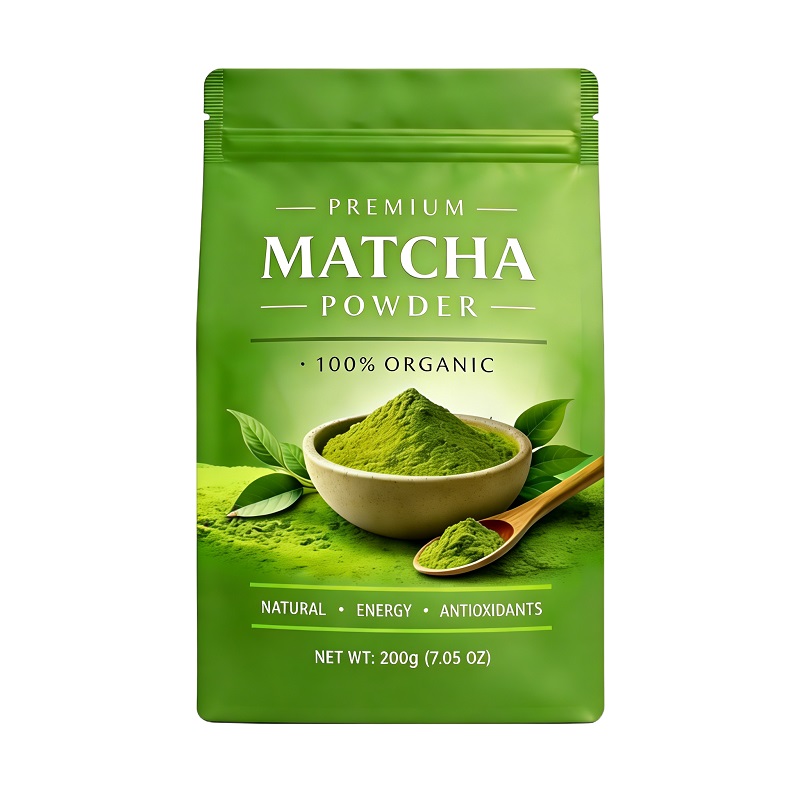
A powder-proof zipper is essential for any protein powder pouch. Protein powder consists of extremely fine particles, typically in the range of tens to hundreds of microns. These particles migrate within the protein powder packaging during handling. When they settle at seal zones, they create micro-channels between film layers. A custom zipper design must address this challenge directly.
Powder-Proof Zipper Profiles
Standard press-to-close zipper tracks tend to clog with granular or dusty products. Fine particles become lodged in the female groove, which blocks the male profile from locking in. A powder-proof zipper profile prevents this by using modified track geometry that resists particle entrapment.
Hook-and-loop closures, by contrast, rely on micro-hook alignment rather than interlocking tracks, so they can push through particulates and still secure the seal even when the surface is dusty.
A validation plan for a powder-resistant zipper includes several key steps:
-
Expose the track to a controlled amount of real product before testing closure.
-
Cycle the zipper repeatedly to simulate consumer use.
-
Evaluate visible engagement of the closure.
-
Measure opening force.
-
Assess sift leakage.
-
Assess moisture protection.
-
Assess consumer usability.
Do not rely on testing only a clean, empty pouch. That defeats the purpose of selecting a powder-resistant design. The testing protocol should also include initial opening, repeated reclosure cycles, powder challenge, zipper-flange integrity, filled-package drops, storage conditions, and production inspection. Match the zipper to particle size, dust, oil, static, and expected use period. Confirm the profile, flange, resin, and application process as one specification. Leave enough headspace and finger room for opening and reclosing. Keep top seals, tear notches, hang holes, sliders, and artwork from conflicting.
Slider, Velcro, And Dual-Seal Options
Slider zippers feel easier to open but may trap powder near the track. Hook-and-loop closures rely on micro-hook alignment. They push through particulates and still secure closure on dusty surfaces. This maintains barrier protection after opening.
Many Resealable Ziplock Stand Up Bags combine an outer resealable zipper with an inner closure for first-use protection.The inner closure keeps the product sealed until the consumer opens it. The outer zipper provides convenient reclosure after opening. Premium flat bottom pouches with slider zippers, such as the Stand Up Pouch with Zipper format, are engineered for durability, freshness, and brand appeal. They combine a strong barrier structure with smooth operation. A Whey Protein Packaging Bag benefits particularly from powder-resistant zipper tracks due to the fine particle size of whey isolates.
Ten open-close cycles are suggested as a threshold that exposes weak zipper performance. Evaluate opening force together with powder leakage after repeated use. A powder-resistant zipper stays easier to close when fine particles enter the area. It improves usability but does not replace clean filling or consistent heat bonding at the pouch top. The packaging system must work together to protect the protein content. Proper testing of the complete protein powder pouch ensures shelf stability. Each element of the packaging contributes to the final result. The right packaging prevents clumping and extends shelf life. The pouch must deliver consistent performance through distribution and storage.
Seal Integrity And Top Design
Seal quality determines whether a protein powder pouch survives shipping and daily use. The top area deserves the same engineering attention as the film structure.
Top Seal, Tear Notch, And Zipper Spacing
The distance between the top seal, tear notch, and zipper needs careful planning. A tear notch sits too close to the zipper and the consumer rips through the track. Too far away and the opening becomes awkward. Protein Powder Packaging engineers treat these three elements as one layout. The spacing must allow a clean tear, expose the zipper, and leave enough material above the track for a strong top seal.
Seal behavior, barrier needs, product contact, and machine settings all affect dust attraction around the zipper. Fine protein particles settle on seal zones during filling. Contaminated seal areas create weak bonds and channels for moisture. Proper jaw pressure, dwell time, and temperature settings produce a clean bond. A strong top seal keeps powder away from the track and supports strong seal performance over repeated openings.
Rounded Corners, Tear Notch, And Puncture Resistance
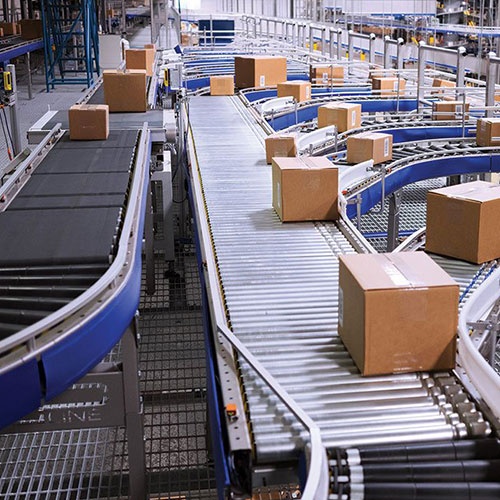
Corner geometry and notch placement influence durability. Rounded corners reduce stress concentration at the edges. A Stand Up Pouch with Zipper benefits from this shape during handling and transport. High puncture and drop resistance prevents damage when pouches fall, stack, or rub against each other. This protection matters for e-commerce and subscription shipping, where parcels travel through automated sorting equipment.
A custom design should balance easy opening with structural strength. The tear notch must guide a clean rip without weakening the pouch body. Puncture and drop resistance testing confirms the package survives real distribution conditions. High puncture and drop resistance also protects the barrier layer from pinholes. Even a tiny breach lets moisture enter and starts the clumping process. Every element works together to keep protein powder free-flowing.
High-Barrier Protein Powder Packaging Materials
High-barrier protein powder packaging prevents clumping and extends shelf life. It achieves this by blocking moisture, light, heat, and oxygen. A quality pouch uses multiple layers to create this protection. Each layer serves a specific function. Custom protein pouch bags are made from high-quality barrier film. They are re-sealable and reusable. This combination delivers dependable performance across the product's life.
PET/VMPET/PE And PET/AL/PE Compared
Material selection determines barrier strength. Two common structures dominate the market. Each offers distinct advantages for packaging for protein powder.
PET/VMPET/PE uses metallized film as its core barrier layer. This structure provides solid performance at a reasonable cost.
|
Barrier Property |
Value |
OTR (Oxygen Transmission Rate) |
≤ 10 cm³/m²/day (typically 5–10 cm³/m²/day) |
|---|---|---|---|
|
WVTR (Moisture Vapor Transmission Rate) |
≤ 5 g/m²/day |
||
|
UV Protection |
Partial (not an opaque light barrier) |
PET/AL/PE uses aluminum foil instead. Foil delivers the highest practical barrier and complete light blocking. However, it is not microwave-safe. It complicates metal detection. It also makes the laminate effectively non-recyclable in most streams.
Thin aluminum foil is not automatically the strongest choice mechanically. It can be vulnerable to flex cracking when a package is repeatedly folded or stressed. The complete laminate must provide the needed support. The pack should be tested through filling and distribution to confirm real-world durability.
Since pure aluminum foil is solid metal, rough handling and shaking during ocean freight can cause microscopic cracks. This ruins the barrier. We prevent this by laminating the foil between a tough outer plastic layer and a soft, shock-absorbing inner sealant (LLDPE). This structure absorbs the impacts during shipping, keeping the foil core intact and your product safe.
Metallized film provides strong barrier at lower cost and weight with a metallic look.
Pinholes and flex cracking reduce performance versus foil. Transparent oxide coatings give high barrier with a clear window. They allow microwave use and pass metal detection cleanly. They cost more and are more sensitive to flex damage.
Recyclable Mono-PE And Bioflexi Options
Sustainability demands new material approaches. Mono-PE structures use a single polymer family. This design simplifies recycling compared to mixed laminates. Performance depends on grade selection and total structure thickness.
High Barrier Flat Bottom Pouches represent a premium format for protein powder packaging. A Flat Bottom Pouch stands upright on the shelf. It offers excellent stability and a large printable surface. These formats work well with mono-PE films and high barrier flexible packaging designs.
Custom flexible packaging allows brands to match film, zipper, and seal to their specific protein product. Bioflexi offers custom protein powder packaging solutions. These solutions cover film selection, zipper choice, and seal tuning. The right barrier protects every scoop.
Custom Protein Powder Packaging With Bioflexi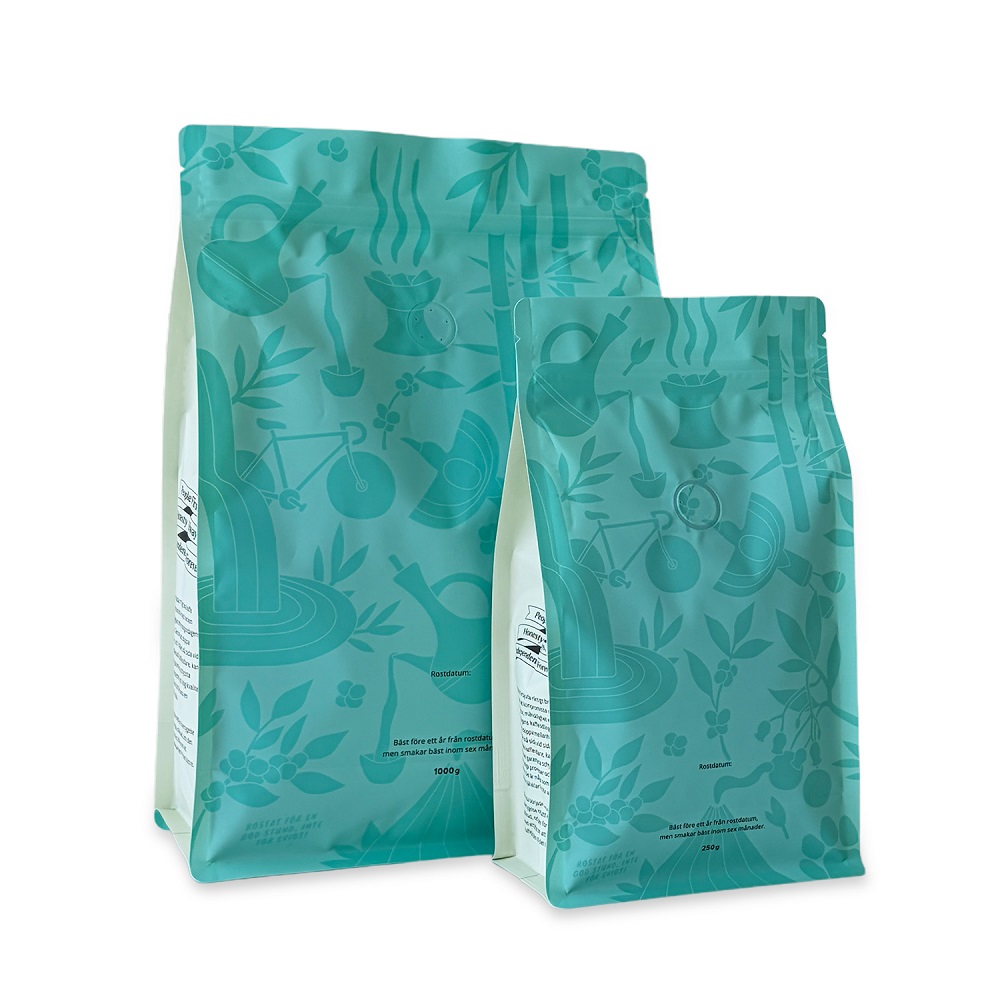
Matching Film, Zipper, And Seal To Product
Bioflexi partners with brands to develop custom flexible packaging. The process starts with film selection. The film must match the protein powder's specific moisture and oxygen sensitivity. A Whey Protein Packaging Bag, for instance, requires a film that keeps oxygen transmission low. Plant-based blends may require even tighter protection. Bioflexi engineers evaluate each formulation to select the correct film structure. They choose from options like PET/VMPET/PE, PET/AL/PE, or recyclable mono-PE laminates.
Zipper choice follows film selection. Powder-proof zippers prevent particle entrapment in the track. Bioflexi offers multiple profiles. Options include slider zippers and hook-and-loop closures. The choice depends on particle size, dust level, and expected use cycle. A consistent seal prevents powder from settling at the bond line. It also maintains barrier integrity.
Bioflexi's Flat Bottom pouch (8-side seal) works well for automatic opening, filling, and sealing lines. This format stands upright on retail shelves. It offers a large printable surface and strong top integrity. The flat bottom design supports high fill weights common in protein powder packaging. Each element of the protein powder pouch must work together.
Testing For Shelf Life And Drop Performance
Testing confirms the packaging performs under real conditions. Protein powder packaging must survive distribution and daily use. Shelf life testing measures moisture ingress and oxygen transmission over time. Bioflexi places filled pouches in controlled environments. They monitor weight gain, oxygen levels, and product quality at set intervals. This data confirms the high-barrier protein powder packaging works as designed.
Drop performance testing simulates distribution damage. Filled pouches fall from set heights onto hard surfaces. The test checks for leaks, pinholes, and zipper failure. A Whey Protein Packaging Bag must survive multiple drops without compromising the barrier. A Flat Bottom pouch with its 8-side construction typically performs well in these tests. The combined system of film, zipper, and closure integrity protects the product.
Custom flexible packaging allows brands to match every element to their product. Bioflexi provides expertise and testing facilities. This approach reduces the risk of clumping and shelf life failures.
Matching Packaging To Product And Distribution
Fill Weight, Particle Size, And Scoop Use
Protein powder packaging must fit the actual powder, scoop, and label. A nominal gram capacity does not guarantee a good fit. Two formulas with the same net weight can occupy different volumes. They settle differently after filling. They leave different working space above a zipper.
A scoop inside the pouch changes the design equation. The opening must let the scoop enter, tilt, and withdraw without scraping the tear edge. Consumers need to retrieve a partially buried scoop without forcing the panels apart. Normal fill variation must stay below the zipper and the final top-seal zone. The filled pouch should not distort label copy or create an unstable base. Teams should repeat the opening and scoop check after realistic product removal and settling.
Protein powder pouch packaging should be sized around the actual powder, scoop, and label—not a nominal gram capacity. A pouch can hold the target weight yet still frustrate customers if the scoop does not pass through the opening, powder collects in the closure, or required copy is squeezed into folds and seals.
Record the scoop diameter, handle length, usable mouth width below the tear opening, fill height, settled height, and clearance to zipper and final seal. If the scoop cannot be retrieved cleanly, consider a wider opening, a different scoop, a different placement method, or an alternate pack format. No reliable universal conversion exists. Use representative powder, the intended fill process, and a real scoop. Then measure filled volume, settling, opening access, and seal clearance. A passing result for one 500 g flavor does not automatically approve a 1 kg format or a formula with different bulk density.
Retail, E-Commerce, And Subscription Shipping
Distribution channel shapes the packaging for protein powder. Retail shelves demand a Stand Up Pouch with Zipper that stands upright and displays branding clearly. A Flat Bottom Pouch offers excellent stability and a large printable surface. High Barrier Flat Bottom Pouches protect against moisture and oxygen during long shelf dwell times.
E-commerce and subscription shipping add mechanical stress. Parcels travel through automated sorting equipment and endure repeated handling. Puncture and drop resistance prevents damage that creates pinholes in the barrier layer. Even a tiny breach lets moisture enter and starts clumping. A custom flexible packaging design balances easy opening with structural strength. The right protein powder packaging system delivers protection from filling line to consumer hand.
A protein powder pouch works as one product protection system. The zipper, barrier film, and seal must perform together. A weak link lets moisture inside and starts the clumping process. The right design also depends on the specific protein, the fill weight, and the distribution channel. A 500 g retail format and a 1 kg subscription pack need different answers. Brands should treat protein powder packaging as an engineering decision, not a graphic one. Testing confirms whether a custom structure survives real shipping and daily use. A partner like Bioflexi can tune the film, closure, and seal for each protein product. That approach protects every scoop.
FAQ
1.What causes clumping in sealed pouches?
Moisture enters through weak seals or inadequate barriers in protein powder packaging. Hygroscopic ingredients absorb this moisture. Liquid bridges form between particles and harden into clumps.
2.How does a powder-proof zipper work?
Modified track geometry resists fine particle entrapment. Standard zippers clog with protein dust. Hook-and-loop closures push through particulates and maintain barrier protection after opening.
3.Which barrier material protects protein best?
PET/AL/PE delivers the highest barrier with complete light blocking. PET/VMPET/PE offers strong protection at lower cost. The choice depends on the specific protein formulation.
4.How does distribution shape packaging?
E-commerce shipping adds mechanical stress from sorting equipment. Puncture resistance prevents pinholes. A Flat Bottom Pouch withstands repeated handling during transit.
5.What testing confirms performance?
Shelf life testing measures moisture ingress over time. Drop tests check for leaks after falls. These tests confirm the packaging protects protein throughout distribution.

 Network Supported