

Author
Marie R. Winters


The global pet food industry has experienced explosive growth over the past decade, and with it, the demand for high-quality, functional, and attractive packaging. Pet owners today are more discerning than ever—they read labels, check sourcing information, and expect their chosen brands to deliver both freshness and sustainability. As a result, pet food packaging has evolved from a simple containment solution into a powerful marketing and brand-building tool.
In this comprehensive guide, we will explore everything you need to know about pet food packaging, including the most popular bag styles, material options, certification requirements, and emerging trends shaping the industry.
Pet food packaging serves multiple critical functions beyond simply holding the product. It must:
Choosing the right packaging solution is therefore a strategic decision that affects product quality, brand perception, and operational costs.
There is no one-size-fits-all solution when it comes to pet food packaging. Different products, portion sizes, and retail channels call for different bag styles. Below are the most widely used formats in the industry today.
The flat bottom pet food bag has become the industry standard for mid-to-large size kibble packaging. Its distinctive block-bottom design allows the bag to stand upright on retail shelves, creating a stable billboard effect for your brand graphics.
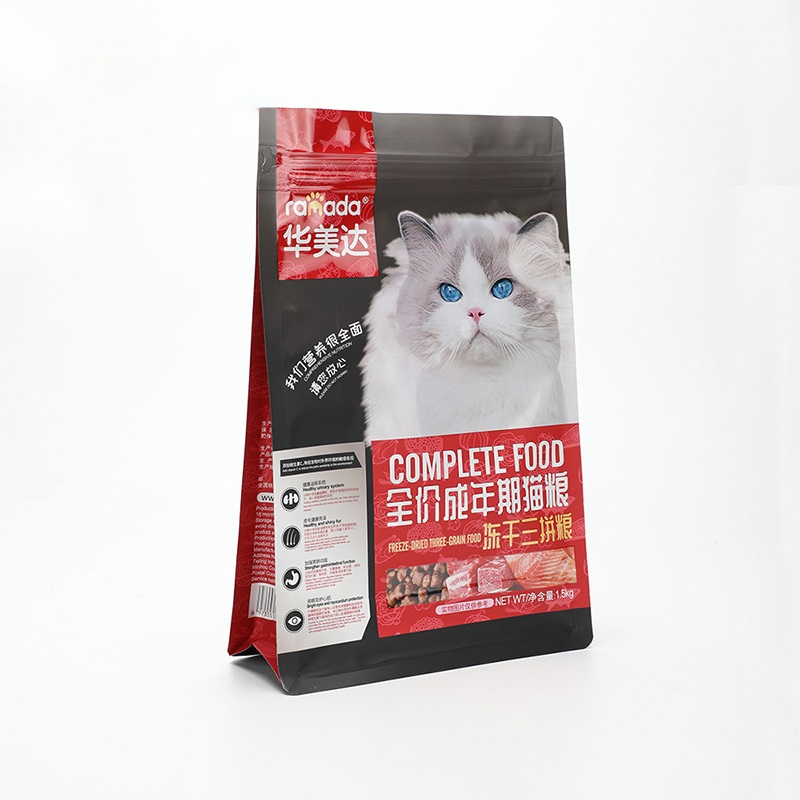
BioFlexi's flat bottom pet food bag offers five printable sides for maximum brand impact.
Key advantages:
Flat bottom bags are ideal for bag sizes ranging from 1 kg to 20 kg and are used by many of the world's top pet food brands.
The stand-up pet food pouch (also known as a doypack or SUPP) is a lightweight, flexible packaging solution that has gained massive popularity in recent years, particularly for smaller format pet food products, treats, and supplements.
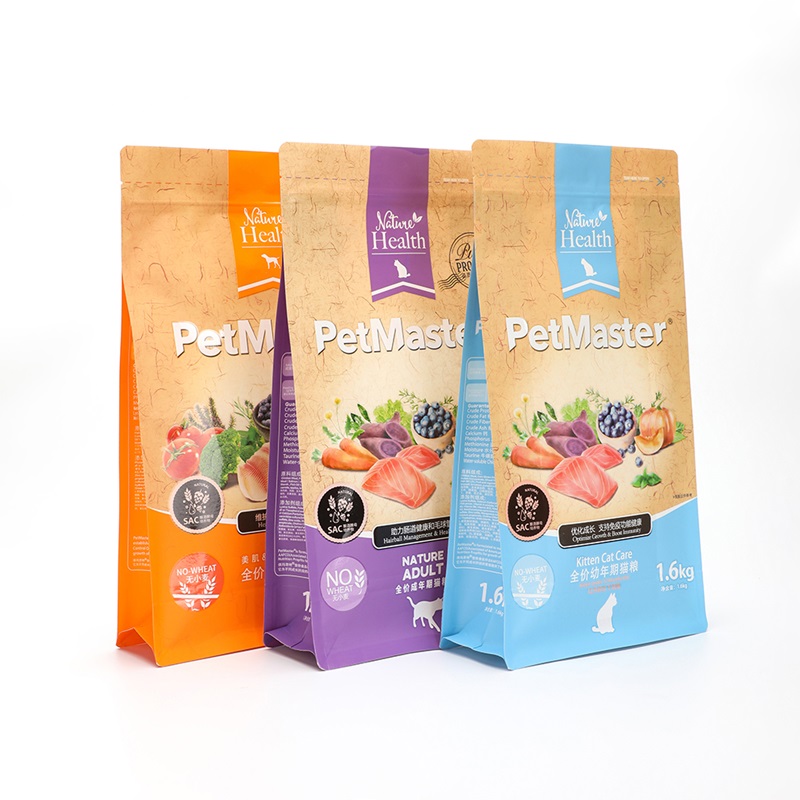
BioFlexi's stand-up pet food pouch features a high-barrier laminated structure and resealable zipper for optimal freshness.
Key advantages:
Stand-up pouches are commonly used for 200 g to 2.5 kg packages, premium treats, and freeze-dried raw food products.
Simple and cost-effective, side gusset bags are a workhorse solution for many pet food brands, especially for entry-level products and bulk packaging.
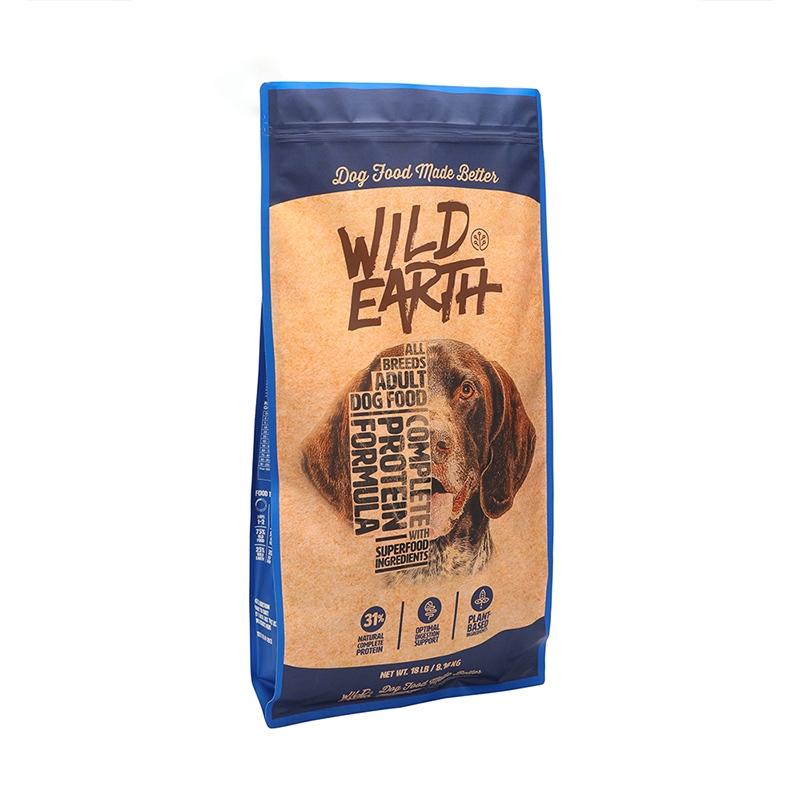
BioFlexi's recyclable side gusset pouch combines eco-friendly monomaterial construction with reliable barrier performance.
Key advantages:
They lack the premium shelf presence of flat bottom bags but offer a practical entry point for new brands.
The choice of material is arguably the most important factor in pet food packaging performance. It directly affects shelf life, product safety, and environmental footprint.
Traditional pet food packaging relies on multi-layer laminates combining polyester (PET), aluminum foil, and polyethylene (PE). This structure provides outstanding barrier properties against oxygen, moisture, and light, ensuring kibble stays fresh for 12–18 months.
However, these multi-material structures are difficult to recycle because the layers cannot be easily separated.
The industry is shifting toward monomaterial structures, where a single polymer type (such as PE or PP) is used across all layers. These offer:
One of the most promising developments is the recyclable side gusset pouch. By switching from multi-material laminates to mono-PE or mono-PP structures, manufacturers can create side gusset pouches that are fully recyclable while maintaining the thermal seal strength and mechanical durability required for pet food. Check out BioFlexi's recyclable side gusset pouch for a sustainable yet durable packaging option.
These pouches are particularly suitable for dry treats, single-serve portions, and smaller bag sizes, and they represent a major step forward in reducing packaging waste.
Pet food packaging is subject to stringent regulations worldwide. Meeting these standards is not optional—it is a prerequisite for market access.
In the United States, the FDA regulates packaging materials under the Federal Food, Drug, and Cosmetic Act. In the European Union, EU Regulation No. 1935/2004 governs materials intended to come into contact with food. Key requirements include:
Many retailers require packaging suppliers to hold BRC Packaging Certification or ISO 9001 quality management certification. These certifications demonstrate a commitment to consistent quality, hygiene, and traceability throughout the production process. At BioFlexi, all our packaging products are certified with BRC, ISO, BPI, GRS, and DIN.
As sustainability becomes a competitive differentiator, certifications such as:
…are becoming increasingly important for brand credibility.
What was once a niche selling point is now a baseline expectation. Brands that fail to offer recyclable or reduced-plastic packaging risk losing shelf space and consumer trust. Monomaterial laminates, paper-based structures, and post-consumer recycled content are rapidly entering the mainstream.
Even as sustainability advances, brand owners are investing in higher-quality graphics, metallic finishes, soft-touch laminates, and custom shapes to differentiate their products on crowded shelves. Packaging is no longer just a container—it is a medium for brand storytelling.
QR codes, NFC tags, and augmented reality markers are being printed directly onto pet food packaging to provide consumers with traceability information, feeding guides, and brand stories. This digital layer adds value without changing the physical structure of the package.
With pet food sales shifting rapidly to online channels, packaging must be optimized for shipping durability, cube efficiency, and minimal void fill. Flat bottom bags with reinforced seals and stand-up pouches with puncture-resistant laminates are preferred for direct-to-consumer fulfillment.
Zipper closures, sliders, and tear-notch openings are now expected by consumers. Features like portion-control spouts and graduated dosing windows add functional value that pet owners are happy to pay a premium for.
At BioFlexi, we understand the unique demands of the pet food industry. Our product range covers the full spectrum of pet food packaging needs:
Every package from BioFlexi is manufactured with precision, tested for seal integrity, and designed to elevate your brand on the shelf.
A flat bottom pet food bag has a block-shaped base that allows it to stand upright independently, making it ideal for larger quantities (1 kg to 20 kg) of dry kibble. A stand-up pet food pouch, on the other hand, uses a gusseted bottom structure and is more suitable for smaller volumes (200 g to 2.5 kg), such as premium treats, freeze-dried raw food, and supplements. Flat bottom bags offer more printable surface area, while stand-up pouches are lighter and more cost-effective for smaller runs.
Yes. Modern recyclable side gusset pouches made from mono-PE or mono-PP structures have advanced significantly in recent years. With specialized coating technologies, they now offer barrier properties that are comparable to traditional multi-layer laminates for most dry pet food applications. They maintain excellent seal strength, puncture resistance, and moisture protection while being fully recyclable in existing plastic recycling streams.
At a minimum, your supplier should comply with FDA (US) or EU Regulation No. 1935/2004 (Europe) for food contact safety. For higher assurance, look for BRC Packaging Certification and ISO 9001 quality management certification. If sustainability is a priority, certifications such as FSC (for paper components), How2Recycle labels, or OK Compost credentials add credibility to your brand's environmental claims.
Absolutely. QR codes, NFC tags, and augmented reality markers can be integrated into any pet food packaging format—including flat bottom bags, stand-up pouches, and side gusset bags. These features allow brands to share traceability information, feeding guides, promotional content, and brand stories directly with consumers. The printing process is fully compatible with rotogravure and flexographic printing technologies commonly used in flexible packaging.
Consider three factors: product type, distribution channel, and brand positioning. For large-volume dry kibble sold in retail stores, a flat bottom pet food bag offers the best shelf presence and stability. For premium treats or smaller portions sold online or in boutique pet stores, a stand-up pet food pouch is more cost-effective and visually appealing. If sustainability is a core brand value, opt for recyclable side gusset pouches made from monomaterial laminates. Partnering with an experienced manufacturer like BioFlexi ensures you get tailored advice for your specific product and market.
Write to us today and let's create packaging that your pets—and your customers—will love.
lf you would like to work with us or just want to get intouch, we'd love to hear from you!

Copyright @ 2026 Shanghai BioPouches Co., Ltd All Rights Reserved. Network Supported
leave a message