

Author
Marie R. Winters


Granola and cereal may look like simple dry foods, but their packaging needs careful planning. Oats, toasted grains, nuts, seeds, dried fruit, and granola clusters can respond differently to moisture, oxygen, handling, and storage conditions. The right pouch needs to protect the product, work with the filling process, and present the brand clearly on the shelf.
For food brands, private-label businesses, and cereal manufacturers, custom granola pouches with a flat bottom design can be a practical option when shelf stability, packaging capacity, and a well-organized retail appearance are important. However, not every granola or cereal product requires the same pouch size, material, or closure.
This guide explains how to choose flat bottom pouches for granola and cereal packaging, from material selection and barrier performance to custom printing and production requirements.
A flat bottom pouch has a box-like structure with a stable base and side gussets. Once filled, it can stand upright on a retail shelf, making it suitable for products that benefit from a neat, structured presentation.
For granola and cereal brands, this format offers several practical advantages:
Flat bottom pouches are especially worth considering when a cereal or granola brand wants a premium shelf appearance without switching to a rigid container. The final choice should still depend on product volume, packaging line requirements, distribution conditions, and target price.
Explore custom flat bottom pouches to review available packaging formats and customization possibilities.
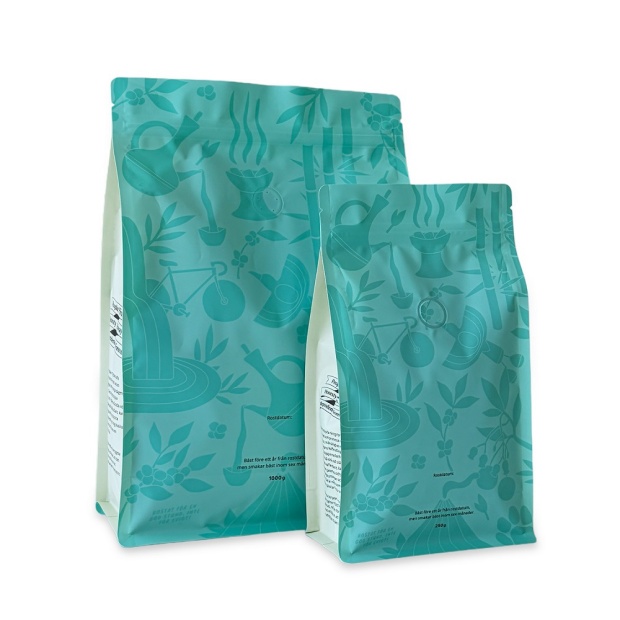
Example of custom-printed granola packaging with a resealable format.
Material selection should start with the actual food, not simply the appearance of the packaging. Plain cereal flakes, granola with nuts, and granola containing dried fruit may have different protection requirements.
Moisture can affect crispness, while oxygen exposure may contribute to quality changes in products containing nuts, seeds, or oils. Light and storage temperature may also matter, depending on the recipe and expected shelf life.
When evaluating flat bottom cereal bags, discuss the following material considerations with your packaging supplier:
There is no single material structure that works best for every cereal product. A simple oat cereal may have different needs from a granola blend containing chocolate, nuts, seeds, and dried fruit. The supplier should evaluate the recipe, target shelf life, distribution environment, and filling process before recommending a final structure.
If sustainability is part of the brand's packaging strategy, ask about available recyclable or PCR-based structures and confirm their actual suitability for the required barrier performance and local recycling systems. Environmental claims should be based on the specific material and applicable evidence rather than the general appearance of the pouch.
The correct pouch size depends on more than the weight printed on the label. Granola contains irregular clusters, while cereal flakes can be light and bulky. Two products with the same net weight may require different internal volumes.
Before ordering packaging, consider these factors:
For example, a pouch for crunchy granola clusters may need a different width and depth from a pouch containing thin cereal flakes, even when both packages hold the same weight. Testing a filled sample is a more reliable way to confirm capacity than choosing dimensions from net weight alone.
For brands offering several flavors or product sizes, using a consistent packaging design system can make the product range easier to recognize. The pouch dimensions and material should still be checked separately for each SKU.
Packaging features should solve a real product or consumer need. Adding more features does not automatically make a pouch better.
Resealable zipper: A zipper is useful for multi-serving cereal and granola packs that consumers may open several times. It allows the package to be closed between uses, although it does not replace proper storage or guarantee freshness on its own. The top seal above the zipper should also be compatible with the filling and sealing process.
Transparent window: A window can help shoppers see the product before purchase. It may be attractive for granola blends with visible nuts, seeds, or dried fruit. However, the window material and size should be assessed against light exposure, barrier requirements, and the package's intended shelf life.
Tear notch: An easy-open feature can improve convenience, especially when the pouch does not use a zipper. Its position should be considered alongside the top seal and opening design.
Surface finish: Matte, glossy, and other available finishes can create different brand impressions. The selected finish should complement the artwork and remain practical for the intended packaging application.
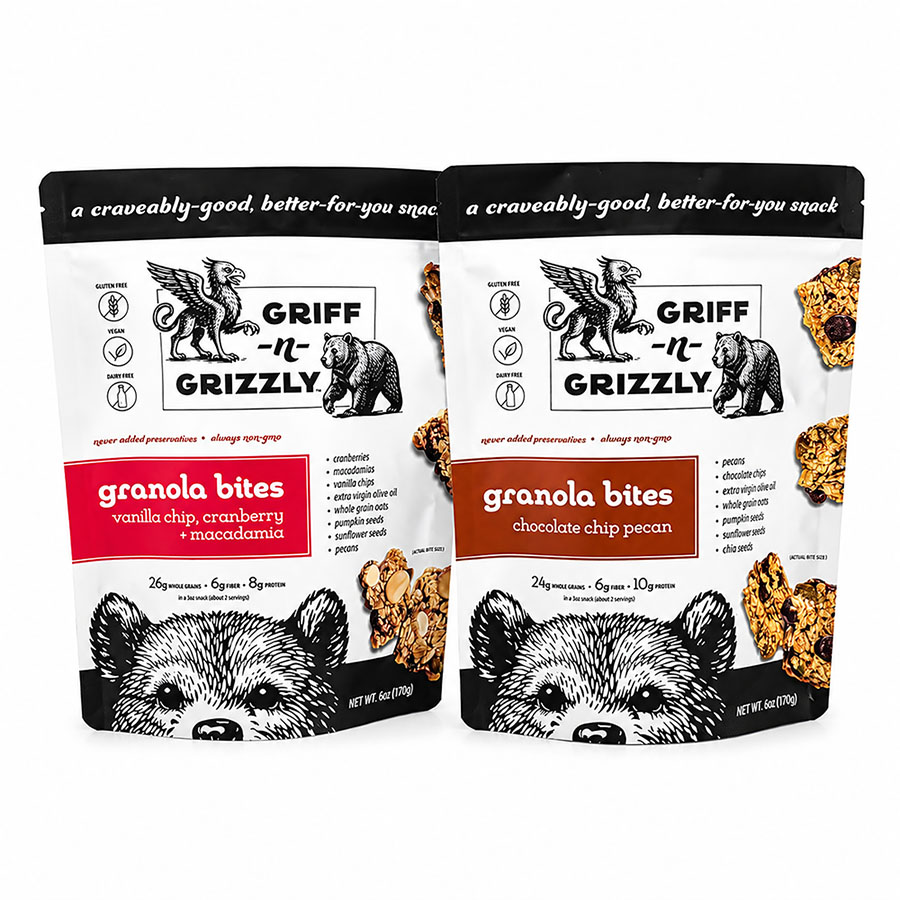
Custom-printed granola snack pouch example with branded graphics.
For a product that needs a different pouch shape, Bioflexi also offers custom stand-up pouches. Compare the structure and available features against your product's filling, storage, and shelf-display needs before finalizing the design.
Granola and cereal shelves often contain many similar products. Packaging needs to communicate the brand and product type quickly, while leaving enough space for required product information.
When preparing artwork for custom-printed pouches, pay attention to:
Do not finalize the artwork based only on a flat digital mockup. A flat bottom pouch changes shape when filled, and some design elements may sit close to folds or seals. Reviewing a production-ready dieline and digital proof helps reduce layout errors before manufacturing.
Printing method selection should reflect order quantity, number of designs, color requirements, and budget. Discuss the available options with the supplier rather than assuming one method is best for every project.
A pouch can look attractive but still create problems if it does not run smoothly on the packaging line. Before approving an order, check whether the pouch dimensions, opening, material, and seal area are compatible with the equipment used by the cereal or granola manufacturer.
Useful checks include:
For commercial orders, ask for samples and run a practical filling trial whenever possible. This can reveal issues with pouch stability, product settling, seal contamination, or equipment compatibility before a large quantity is produced.
It is also useful to agree on the approval process in advance. The final specification should record the pouch dimensions, material structure, thickness, printing artwork, closure, and relevant quality requirements so the approved sample can be used as a reference for production.
Providing complete specifications helps a packaging supplier recommend a suitable structure and prepare a more accurate quotation. Before requesting a quote, gather the following information:
If some specifications are not yet available, explain the product and intended use first. A qualified supplier can help identify the details that need to be confirmed before the pouch design is finalized.
Bioflexi provides customized flexible packaging solutions for food and other applications. Share your granola or cereal packaging requirements to discuss pouch formats, materials, printing, and available customization options.
1. Are flat bottom pouches suitable for granola packaging?
Yes. Flat bottom pouches can be suitable for granola because they stand upright on shelves and offer multiple printable panels. The material, barrier level, size, and closure should be selected according to the recipe, expected shelf life, and filling process.
2. What material is best for flat bottom cereal bags?
There is no universal best material. The right structure depends on moisture and oxygen sensitivity, light exposure, shelf-life targets, food-contact requirements, and sustainability goals. Ask the supplier to recommend and validate a suitable structure for the actual cereal or granola product.
3. Should granola pouches include a resealable zipper?
A zipper is useful for multi-serving packs that consumers open repeatedly. It allows the pouch to be closed between uses, but it does not replace a suitable barrier structure or proper storage. Single-serving products may not need a resealable closure.
4. Can custom granola pouches be printed with different designs?
Yes. Custom printing can accommodate different brand identities, flavors, product images, and label information. Confirm the artwork dimensions, print method, minimum order quantity, and production requirements with the packaging supplier before placing the order.
5. How can I confirm the correct pouch size for cereal?
Start with the net weight, product density, and required package volume. Then check the pouch dimensions, headspace, seal area, and shelf appearance using a filled sample. Different cereal shapes and granola recipes may require different pouch sizes even at the same weight.
6. What information is needed for a custom pouch quotation?
Provide the product type, target weight, dimensions if known, material requirements, closure, artwork, quantity, and target market. If you are unsure about the material structure or dimensions, share the product details and ask the supplier to help define the specification.
Choosing the right flat bottom pouch for granola and cereal means balancing product protection, filling performance, shelf presentation, and packaging cost. Start with the food's actual requirements, confirm the pouch dimensions with a filled sample, and make sure the material and sealing design are suitable for the intended shelf life.
With the right specifications and custom printing, food brands can develop packaging that protects the product while presenting a consistent identity across different flavors and pack sizes. Before moving to mass production, review the artwork, test the filled pouch, and confirm all material and quality requirements with your supplier.
lf you would like to work with us or just want to get intouch, we'd love to hear from you!

Copyright @ 2026 Shanghai BioPouches Co., Ltd All Rights Reserved. Network Supported
leave a message