

Author
Marie R. Winters


Picking the right supplier means matching your defined requirements against verified technical capability, application fit, regulatory compliance, and total cost — in that order.
A poor choice carries real costs. In 2024, packaging and labeling errors caused 45.5% of food recalls and $1.92 billion in industry costs. Reprints, line downtime, failed seals, and rejected shipments follow the same pattern. Gut feel rarely survives that math.
This guide gives you a step-by-step framework for evaluating flexible packaging solutions. Bioflexi serves as a working example of strong documentation and support throughout. You will see what to request, what to test, and how to compare candidates on evidence rather than price alone.
Define your product needs and packaging specifications first. This helps you compare suppliers fairly.
Check each supplier's equipment, print capabilities, and quality certifications. Ask for documented proof.
Test packaging samples on your actual production line. Verify seal strength and shelf-life under real conditions.
Confirm food-contact certifications and traceability records. Compliance is essential for food and non-food products.
Compare total costs, not just unit price. Use a weighted scorecard to evaluate all criteria.
Begin by classifying your product, because that classification drives every later decision. Perishable goods need formats matched to limited shelf-life and temperature sensitivity. Fragile items need structures that absorb handling and shipping damage. Hazardous goods such as cleaning products and chemicals demand leak-free, airtight packaging that meets safety regulations. Define your market expectations next, then select pouch and film formats by performance rather than appearance.
A strong supplier asks thoughtful questions before quoting. Expect discussion of your product, brand aesthetic, target market, and unboxing experience. Bioflexi's intake process follows this discovery step, which surfaces constraints early and aligns custom packaging with the unique goals of your business.
Judge candidate formats against measurable criteria, not samples alone.
|
Performance Criterion |
What to Verify |
|---|---|
|
OTR and WVTR |
Test method, units, temperature, humidity, film thickness |
|
Seal strength and integrity |
Sealing temperature, pressure, dwell time, leak-test method |
|
Puncture and toughness |
Product shape, filled weight, drop conditions |
|
Filling and sealing compatibility |
Machine model, speed, web tension, sealing range |
Lock down the non-negotiables before you compare suppliers. Barrier specs come first: scale oxygen, moisture, light, and aroma protection to your target shelf-life, since products needing 12–24 months demand more robust structures than goods sold within weeks. Modified atmosphere packaging, oxygen absorbers, or desiccants can extend shelf-life further. Record dimensions, print method, fill-line compatibility, annual volume, and your minimum order quantity tolerance.
These packaging needs apply to food and non-food items alike. Write them into a specification sheet you can send to every candidate, and note where sustainability requirements fit among your packaging options. A clear spec shortens quoting, reduces reprints, and gives you a fair basis for comparing packaging solutions for your business.
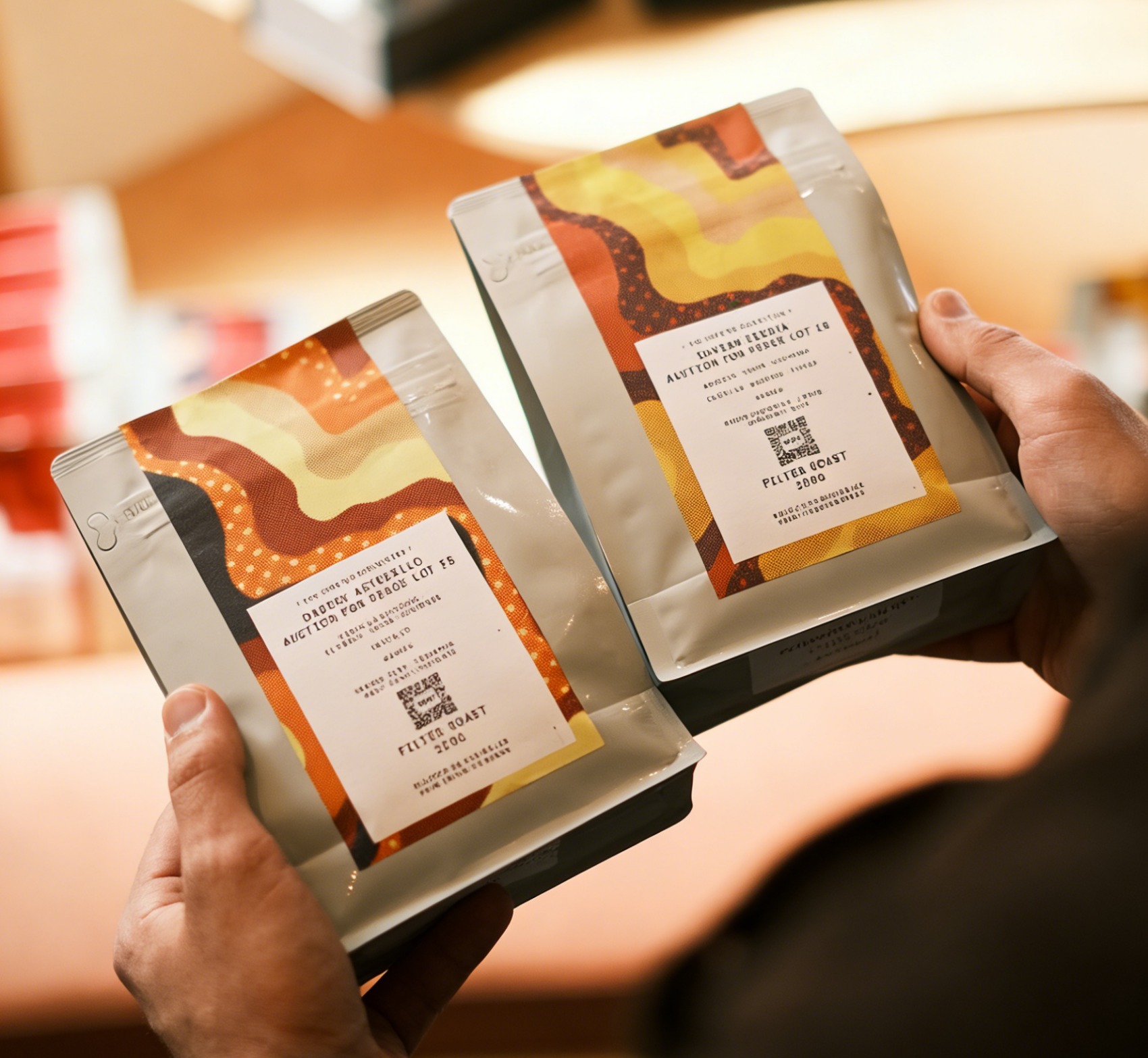
Ask every candidate for a written equipment list and a material range. Verify case erectors, vertical and horizontal form-fill-seal machines, bag inserters, vacuum equipment, and shrink systems. Confirm full system integration support, because a machine that cannot run your film creates downtime you pay for.
Print capability deserves the same scrutiny. Request the color count and the process used. Flexography uses a flexible relief plate and suits high-volume runs. Rotogravure delivers consistent long-run reproduction. Digital printing applies graphics directly onto plastic substrates, which removes labels and inserts, cuts waste, and shortens time to market. Lithography remains an offset option for certain structures. Vertically integrated manufacturing covers flexographic, rotogravure, and digital printing alongside extrusion and adhesive lamination, and that breadth shortens lead times.
Material range tells you how well a flexible packaging supplier can match your barrier and sustainability goals. Look for metallized films, high-barrier structures such as ALOx PET and EVOH co-extrusions, biodegradable PLA films, food-grade aluminum foil, and laminates from PET/PE to mono-material all-PE and all-PP constructions.
Talk directly with candidates about their products and operations. Bioflexi provides documented specs and audit-ready quality records as one example of that transparency. Large-scale converters fit high-volume programs, mid-size operations balance flexibility and cost, and specialty packaging specialists excel at unusual structures or short runs.
Request the quality documentation before you request pricing. Ask for a TDS, COA, MSDS, food-contact documents, migration test reports, and third-party test reports. Confirm the supplier keeps raw material records, production batch records, inspection results, approved samples, and shipment details. Batch-level traceability speeds root-cause investigation when a problem appears.
Consistency depends on process control. Anilox rolls govern ink and coating transfer, and regular audits of the ink management system keep image sharpness stable while reducing waste. Certification signals a mature system: FSSC 22000 Version 6 for food safety, ISO 9001:2015 for quality management, ISO 14001:2015 for environmental management, and REDcert² for traceable recycled content.
Weigh these findings against your own priorities. A supplier with deep certification depth may suit regulated food work, while a smaller operation may offer faster response on custom runs. Neither is automatically the right packaging partner for you.
Paper specs cannot confirm application fit. Run trials with samples from the actual production line. Fill and seal the packs at your machine's real speed, then test seal integrity with a recognized method.
|
Test Method |
Standard |
What It Reveals |
|---|---|---|
|
Bubble emission |
ASTM D3078 |
Gross leaks in flexible packs with headspace gas |
|
Internal pressurization |
ASTM F2096 |
Gross leaks in low-headspace, vacuum-sealed packs |
|
Vacuum decay |
ASTM F2338 |
Leak presence across flexible film and rigid inner seals |
|
Seal strength |
ASTM F88/F88M |
Peel force on a 1-inch seal section |
Drop testing follows sealing. Shelf-life testing comes next, and it must reflect real conditions. Test under actual store conditions, rotate products through different display cases, and log temperatures daily. Track microbiological, chemical, sensory, and packaging performance against acceptance criteria.
Shelf life cannot be precisely predetermined for every product without rigorous testing. Blanket lifespan guarantees from packaging providers without verified tests should be cause for alarm.
A supplier offering custom packaging and container design services should build this testing into the program. Ask for a custom packaging solution backed by trial data, not assurances. The right packaging protects the product through its full product shelf life, and only verified trials prove that claim.
Lead times vary by project type. Stock film with simple print typically runs 2–6 weeks. Custom print on a standard laminate runs 6–10 weeks. Specialty barriers and complex tooling run 10–16+ weeks. Custom flexible pouches commonly fall in the 6–12 week range. Build contingency buffers of 10–30% of the estimated schedule.
Scalability matters as much as speed. Growing brands need suppliers who can scale with them rather than locking them into enterprise-level minimums too early. Confirm the minimum order quantity tolerance and how it changes at higher volumes. Distributors can simplify sourcing and hold inventory to stabilize supply, which supports integrated packaging and supply chain solutions as you grow. Weigh sustainability commitments among your packaging options too, since customizable packaging solutions should scale without abandoning long-term environmental goals.
Food safety and regulatory depth are baseline requirements, not differentiators. Request the documents before you discuss price. Ask for a Declaration of Compliance, migration test reports, material certifications, and traceability records. The certification landscape varies by market, so match the scheme to where you sell.
|
Category |
Requirement |
Notes |
|---|---|---|
|
GFSI-benchmarked systems |
BRCGS Packaging Materials, FSSC 22000, IFS PACsecure, SQF |
Packaging-specific schemes; SQF Module 13 covers films, labels, and closures |
|
US food-contact law |
FDA 21 CFR Parts 174–189 |
Compliance via CFR listing, GRAS, FCN, or TOR |
|
EU food-contact law |
Regulation (EC) 1935/2004 and Regulation (EU) 10/2011 |
Positive list plus migration limits |
|
Proof of compliance |
Declaration of Compliance and migration testing |
DoC states the regulations met |
Compliance applies to food and non-food products alike. A packaging material that touches a cosmetic or a household chemical still carries regulatory obligations. Bioflexi supplies compliance documentation with every quote as one example of a complete submission. Confirm the food safety requirements for your destination market, including regional certificates such as Saudi Arabia's SABER Certificate of Conformity.
Traceability separates a documented supplier from a hopeful one. Ask for job jacket records, receiving inspection reports, roll serial numbers, shop floor scan logs, QC data sheets, and labeled retain samples. These records let you trace a finished pallet back to the raw material lot. That speed matters when a defect appears and you need a root cause.
Audit standards give you an independent check. SQF, BRC, FSSC 22000, and IFS are benchmarked by GFSI, and each covers packaging scope. Review the certificate, its expiry, and the audit report. Weigh sustainability credentials alongside these records, since sustainable packaging solutions still need documented quality behind them. A supplier who protects the product through verified shelf-life data and consistent quality earns the order.
Unit price tells you little on its own. Total cost of ownership adds freight, waste, downtime, inventory carrying cost, and reprint risk to the purchase price. A cheap film that jams your line costs more than a premium structure that runs clean.
Break the analysis into three buckets. Acquisition costs cover the purchase price of materials, machines, and related items, and they represent only one part of true ownership cost. Operational costs accumulate over time: energy, maintenance and repairs, training and payroll, plus process inefficiencies that raise labor costs. Disposal costs cover end-of-life handling of equipment and materials, including regulatory compliance, recycling, or resale. Teams often overlook this third bucket, yet it stays unavoidable in any honest comparison.
|
Cost Component |
Description |
|---|---|
|
Acquisition Costs |
Purchase price of packaging materials, hardware, software, machines, and equipment; often mistaken as the full cost but only one part of TCO. |
|
Operational Costs |
Indirect ongoing expenses: energy/electricity, labor and payroll, maintenance and repairs, equipment operation, software/equipment upgrades, loading/unloading labor, and vehicle TCO (fuel, maintenance, insurance). |
|
Disposal Costs |
End-of-life disposal of equipment and packaging materials, including compliance with regulatory guidelines that may affect disposal expenses. |
A scorecard turns scattered impressions into a defensible decision. Score every candidate across your requirements, technical capability, application fit, compliance, and cost, then apply weights that reflect your priorities. One illustrative model weights price and total cost of ownership at 30%, quality and performance at 25%, and innovation and agility, ESG and sustainability, and risk and resilience at 15% each.
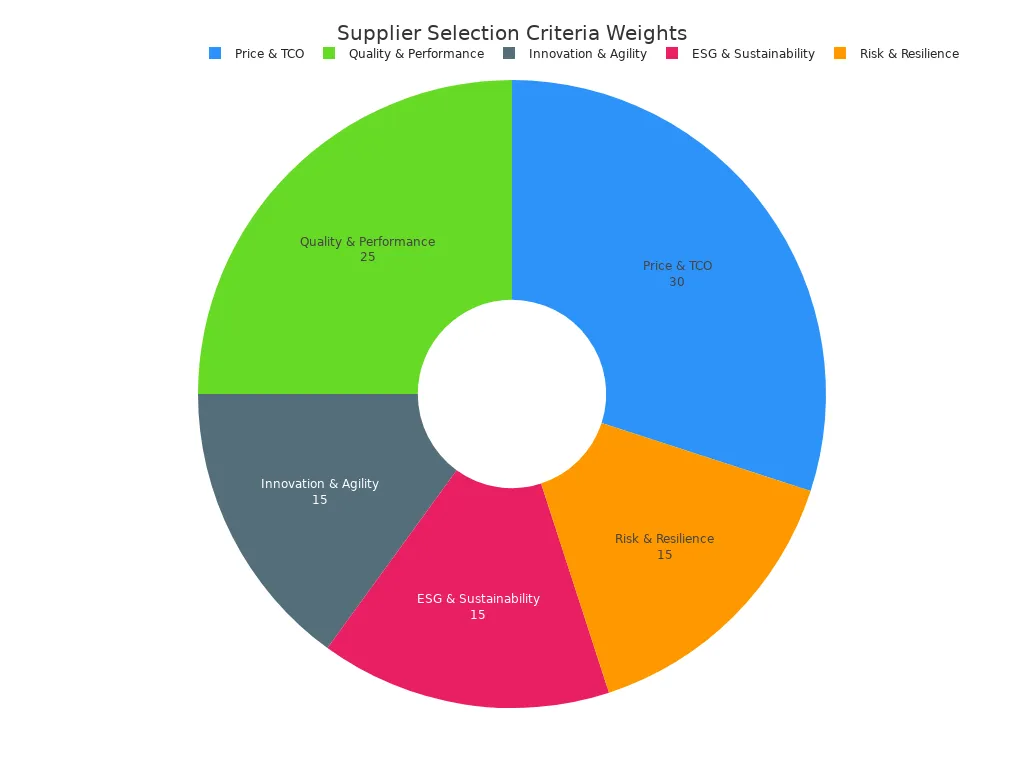
Notice what that model reveals. The highest weighted total went to a supplier that was not the lowest-cost option, which shows how sustainability and other criteria can outweigh pure price. Balance eco-friendly packaging options, manufacturing scale, and cost without letting any single factor decide the outcome.
Weights should be assigned by a cross-functional buying committee reflecting organizational priorities. For instance, during digital transformation, technological capability may carry more weight; when regulatory compliance tightens, ESG performance may shift from a secondary to a primary consideration.
Before you commit, request final samples and documentation from your top two or three candidates. Include a sample and test plan plus a documentation request in the project brief. Decide whether a white-pouch sample, a printed proof, or a small pilot run fits your timeline and budget. Request food-contact declarations, material data sheets, and import paperwork early, because requirements differ by destination market. Review supplier declarations, traceability information, QC checklists, and third-party testing before production begins. That final round confirms which flexible packaging supplier you can trust with your product packaging, and it protects the packaging choice you have already invested in.
You now have a repeatable path. Define your requirements first, vet technical capability second, test application fit third, verify compliance fourth, and compare total cost last. Run that sequence for every candidate, and you replace gut feel with evidence.
Build a weighted scorecard before you sign anything. Request final samples and documentation from your top two or three candidates, then score each one against your own priorities. Bioflexi supports this evaluation with documented specs, trial samples, and compliance records. Start with your requirements list, and let it guide every conversation about flexible packaging solutions.
Ask for the MOQ in writing and request the tolerance at higher volumes. Growing brands should avoid enterprise-level minimums too early. Confirm how the MOQ changes as your order size climbs, then match that curve to your forecast before you commit to flexible packaging solutions.
Request a white-pouch sample, a printed proof, or a small pilot run, depending on your timeline and budget. Pair each sample with a test plan. Ask for food-contact declarations, material data sheets, and import paperwork early, because requirements differ by destination market.
Plan for the trial cycle, not just the quote. Stock film with simple print typically runs 2–6 weeks, custom print on a standard laminate runs 6–10 weeks, and specialty barriers run 10–16+ weeks. Build contingency buffers of 10–30% of the estimated schedule.
Ask for documentation, not marketing language. Request material certifications and traceability records, and confirm recycled content through a recognized scheme such as REDcert². Weigh those credentials alongside quality records, since sustainable packaging solutions still need verified shelf-life data and consistent quality behind them.
Treat a failed trial as data, not a dead end. Identify which test failed — seal integrity per ASTM F88/F88M, leak detection per ASTM D3078, or shelf-life performance — then ask the supplier for a root-cause review and a revised structure. Document the correction before you re-test.
lf you would like to work with us or just want to get intouch, we'd love to hear from you!

Copyright @ 2026 Shanghai BioPouches Co., Ltd All Rights Reserved. Network Supported
leave a message