

Author
Marie R. Winters


Freeze-dried foods are popular for a simple reason: they are lightweight, convenient, and can retain much of their original flavor, color, and nutritional value. From freeze-dried fruits and vegetables to instant meals, snacks, and specialty ingredients, these products offer plenty of opportunities for food brands.
However, freeze-dried food has one important weakness. Once exposed to moisture, it can quickly lose its crisp texture and become less appealing. Oxygen, light, and poor sealing can also affect product quality during storage and distribution. This makes packaging an important part of the product itself.
For many retail brands, stand-up pouches provide a practical balance between product protection, shelf presentation, and consumer convenience. But not every pouch is suitable for every freeze-dried product. Choosing the right structure requires looking at barrier performance, material compatibility, pouch size, closure options, and printing requirements.
This guide explains what food brands should consider when selecting freeze dried food packaging and how to find the right custom stand-up pouch for their products.
Freeze-drying removes moisture from food through a low-temperature dehydration process. The result is a lightweight product with a porous structure. While this helps preserve the food, it also makes the product sensitive to moisture in the surrounding environment.
Even a small amount of moisture entering the package can affect texture. Freeze-dried strawberries may become soft, vegetable pieces can lose their crispness, and instant food ingredients may develop an undesirable texture.
Oxygen exposure is another consideration, particularly for products containing natural fats or oils. Oxidation can gradually affect flavor, aroma, and overall quality. Light exposure may also be a concern for certain ingredients.
Therefore, suitable packaging should provide:
Before selecting a bag, brands should consider the actual sensitivity of their food product rather than choosing packaging based on appearance alone.
Material selection is one of the most important decisions when developing freeze-dried food packaging. A pouch may look attractive on the shelf, but its performance depends largely on the film structure and the quality of its seals.
High barrier food bags are commonly considered for freeze-dried products because they can help reduce the transmission of moisture and oxygen. Depending on the required protection level, different laminated structures can be evaluated.
PET/PE Laminates: These structures offer a combination of mechanical strength, printability, and heat-sealing performance. They may be suitable for products with moderate barrier requirements, depending on the specific film grades and thicknesses.
PET/VMPET/PE Laminates: The metallized layer provides enhanced protection against moisture, oxygen, and light compared with many basic structures. This type of construction can be considered for products that require stronger barrier performance.
Aluminum Foil Laminates: Aluminum foil structures are often selected when a high level of protection is required. They provide a strong barrier against moisture, oxygen, and light, making them worth evaluating for sensitive freeze-dried foods with longer distribution cycles.
PE/EVOH-Based Structures: These materials can provide oxygen barrier performance while supporting certain recyclable packaging designs. However, their actual moisture barrier and overall performance should be evaluated based on the complete film structure.
There is no single material that works best for every freeze-dried product. The right choice depends on product composition, target shelf life, distribution conditions, and packaging cost.
A stand-up pouch has a bottom gusset that allows the package to remain upright on retail shelves. This structure is useful for freeze-dried fruits, vegetable snacks, breakfast ingredients, and other lightweight foods.
Compared with some traditional packaging formats, stand-up pouches offer several practical advantages:
When comparing stand-up pouch options, consider the pouch's bottom gusset, side dimensions, film thickness, and filling requirements. The bag should remain stable when filled without placing excessive stress on its bottom seals.
For brands selling several product sizes, using a consistent pouch design with different dimensions can also help create a recognizable product range.
Not all freeze-dried foods are consumed in one sitting. Larger packs of freeze-dried fruit, vegetable snacks, and meal ingredients may be opened and used multiple times.
A resealable zipper allows consumers to close the pouch after opening. This helps reduce unnecessary exposure to the surrounding environment and makes the package easier to use.
However, a zipper should not be treated as a replacement for the initial hermetic seal. For products requiring stronger protection, the pouch should be heat-sealed above the zipper before first use. Consumers can then tear open the sealed area and use the zipper for subsequent storage.
When evaluating zipper options, consider:
For smaller single-serving products, a simple heat-sealed opening without a zipper may be more economical. The best choice depends on serving size and how consumers use the product.
Freeze-dried foods are often much lighter and bulkier than conventional dried foods. This means net weight alone is not enough to determine pouch dimensions.
For example, 50 grams of freeze-dried strawberries may occupy considerably more space than 50 grams of powdered food ingredients. A pouch designed only around weight may end up being too small or unnecessarily large.
When determining the right size, brands should evaluate:
It is also worth checking the pouch after filling. A package that looks suitable when empty may become unstable or difficult to seal when filled with bulky freeze-dried pieces.
Requesting physical samples and conducting filling trials before mass production can help avoid unnecessary changes later.
Packaging protection is essential, but appearance also influences purchasing decisions. In a competitive retail environment, a well-designed pouch helps customers understand the product and recognize the brand.
Custom stand up pouches allow food brands to select their preferred dimensions, printed artwork, surface finishes, and additional features.
For freeze-dried fruit and vegetable products, clear product photography and simple color schemes can communicate freshness and flavor. For premium snacks, matte finishes or soft-touch effects may create a more refined appearance.
Common customization options include:
A transparent window can help customers see the actual food inside. However, the window area may have different barrier properties from the surrounding laminated film. For moisture-sensitive freeze-dried products, its size and position should be evaluated carefully before production.
For reference, the following packaging designs show different ways to combine pouch structures, printing, and retail presentation.
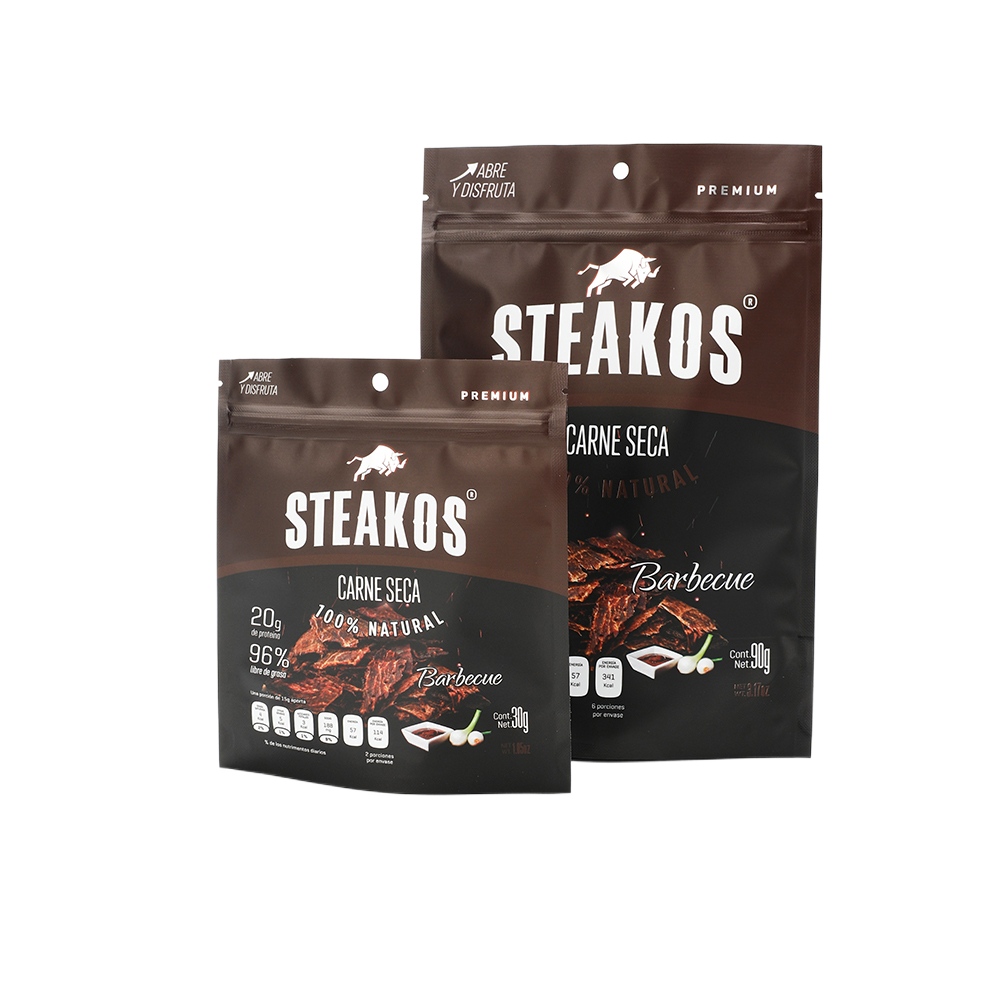
Custom printed stand-up pouch with a resealable zipper and matte finish.
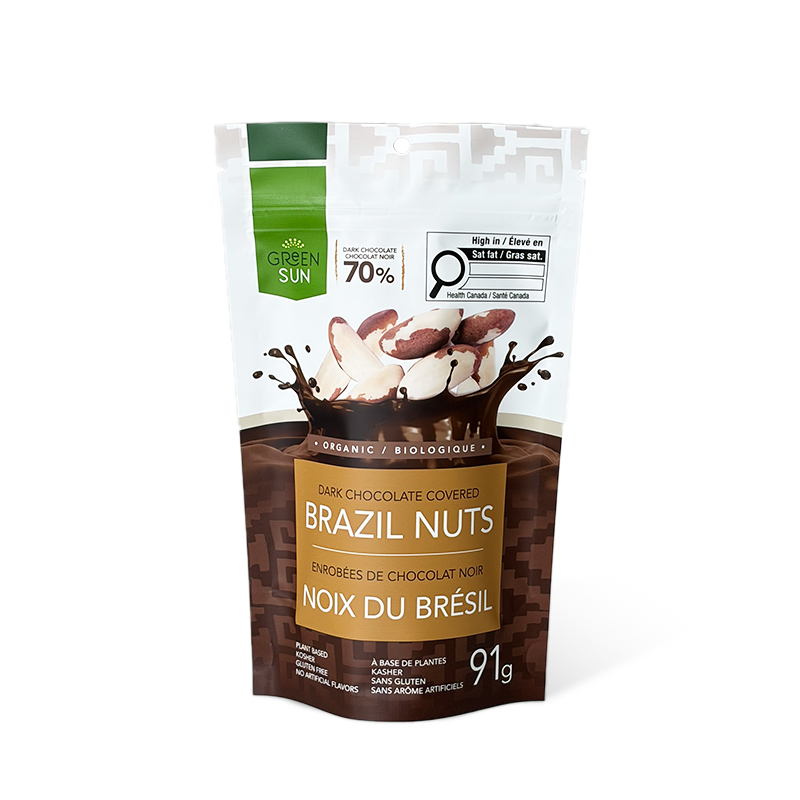
Printed stand-up pouch design for retail snack packaging.

Kraft-style stand-up pouch with a product display window.
Sustainability is becoming an increasingly important consideration for food brands. Recyclable, PCR, and compostable packaging options may help companies meet their environmental goals and respond to changing consumer expectations.
However, freeze-dried foods have demanding packaging requirements. A sustainable material should not be selected based on its environmental claims alone. Its moisture barrier, oxygen transmission rate, sealing performance, and compatibility with the food product must also be considered.
For example, some recyclable mono-material structures can be designed with enhanced barrier properties. Compostable films may also be considered for certain applications, but their barrier performance and expected storage conditions need to be verified.
Before choosing a material, ask the packaging supplier for technical specifications and relevant test information. It is also important to confirm that any compostability or recyclability claims apply to the complete packaging structure, including closures and other components where applicable.
Even when a pouch looks suitable on paper, practical testing is necessary. Different freeze-dried foods have different moisture sensitivities, shapes, and filling characteristics.
Before approving a large production order, food brands should consider the following checks:
Where necessary, conduct shelf-life testing using the actual food product and final packaging structure. Oxygen absorbers or other protective solutions may also be considered when appropriate, but their compatibility and effectiveness should be validated for the specific application.
Choosing a suitable pouch involves more than selecting a bag size and printing a logo. Material structure, barrier performance, sealing conditions, printing quality, and production consistency all influence the final result.
Working with an experienced packaging manufacturer can make the development process easier. A reliable supplier should be able to discuss material options, provide technical information, support artwork preparation, and arrange samples before mass production.
Bioflexi provides customized flexible packaging solutions, including stand-up pouches, flat pouches, side gusset pouches, and other food packaging formats. Available customization options include pouch dimensions, material structures, printing methods, and surface finishes.
For food brands developing new freeze-dried products, discussing the product type, target filling weight, expected shelf life, and distribution environment with the manufacturer is a practical starting point.
1. What type of packaging is best for freeze-dried foods?
High-barrier laminated pouches are commonly considered for freeze-dried foods because they help limit moisture and oxygen exposure. The appropriate structure depends on the food's sensitivity, target shelf life, and storage conditions.
2. Are stand-up pouches suitable for freeze-dried fruit?
Yes. Stand-up pouches are suitable for many freeze-dried fruit products because they provide stable retail display, flexible sizing, and convenient closure options. The material should offer sufficient moisture protection to maintain product crispness.
3. Do freeze-dried food pouches need a zipper?
Not always. A zipper is useful for multi-serving packages that consumers open repeatedly. Single-serving packs may only require a reliable heat-sealed closure. For moisture-sensitive products, the initial seal remains important even when a zipper is included.
4. Which material provides better protection for freeze-dried food?
Aluminum foil laminates generally offer a strong barrier against moisture, oxygen, and light. Metallized films and specialized barrier laminates may also be suitable depending on the product's requirements and desired packaging cost.
5. Can I customize the size and printing of stand-up pouches?
Yes. Custom stand-up pouches can be produced in different dimensions, material structures, thicknesses, colors, and printing designs. Zippers, tear notches, and other optional features can also be selected according to product requirements.
6. How do I know whether a pouch has sufficient barrier performance?
Ask the manufacturer for WVTR and OTR specifications for the complete packaging structure. Conducting seal tests and product shelf-life trials under expected storage conditions provides additional information about actual performance.
The right stand-up pouch for freeze-dried food should do more than look attractive. It needs to protect the product from moisture and oxygen, maintain reliable seals, fit the filling process, and offer a convenient experience for consumers.
By evaluating material structures, barrier performance, pouch dimensions, closure options, and printing requirements together, food brands can make a more informed packaging decision.
Whether you are launching freeze-dried fruit, vegetable snacks, or specialty food ingredients, choosing the right packaging structure early can help reduce product quality risks and create a stronger retail presentation.
lf you would like to work with us or just want to get intouch, we'd love to hear from you!

Copyright @ 2026 Shanghai BioPouches Co., Ltd All Rights Reserved. Network Supported
leave a message