

Author
Marie R. Winters


For food brands, portion control starts with packaging that delivers a consistent amount of product in every pack. Custom pouches improve portion-control packaging by allowing manufacturers to tailor pouch size, structure, opening features, and printed information to specific serving sizes. This makes them a practical option for snacks, nuts, dried fruit, seasonings, protein powders, confectionery, and other food products sold in individual portions.
Unlike one large package that consumers must repeatedly open and measure from, individually portioned pouches can make serving sizes easier to manage, simplify distribution, and improve convenience for customers on the go. With customized flexible packaging solutions from Bioflexi, food brands can develop packaging that balances portion size, product protection, shelf appeal, and material requirements.
The main advantage of custom pouches is that packaging dimensions and features can be designed around the product's intended serving size. Instead of relying entirely on consumers to estimate how much to use, brands can provide a defined quantity in each individual pack.
For example, a snack manufacturer can package nuts or dried fruit into single-serving pouches, while a seasoning supplier can offer pre-measured sachets for individual meals. A powdered beverage brand may use small pouches to provide a consistent amount of powder for each preparation.
This approach offers several practical benefits:
It is important to distinguish packaging size from portion accuracy. The pouch defines the packaging format, but consistent portion weights still depend on the filling equipment, product density, and production quality controls.

Custom printed flat pouches can support clearly differentiated flavors and portion sizes for packaged food products.
Portion-control packaging is useful whenever consumers need a convenient, predictable amount of food for one occasion, one recipe, or one preparation. The best pouch format depends on the product's physical characteristics and how customers will use it.
Snacks, nuts, and dried fruit
Single-serve pouches work well for trail mixes, nuts, dried fruit, chips, and other dry snacks. Smaller packs are convenient for lunchboxes, travel, vending, promotional samples, and retail multipacks. Brands can consider custom three-side seal pouches for food and snack packaging with dimensions and printed designs tailored to each product.
Seasonings, sauces, and food ingredients
Individual sachets can provide a measured amount of seasoning, powdered ingredients, or other suitable food components. This format can help food-service businesses standardize recipes and make preparation more convenient. The pouch material and seal must be suitable for the actual formulation, particularly when the product contains oils, moisture, or volatile ingredients.
Protein powders and powdered beverages
Single-serving powder packs are useful for consumers who want to prepare a drink without carrying a large container. Accurate filling, moisture protection, and sufficient sealing space are especially important because some powders absorb moisture or become difficult to pour when exposed to it. For products sold in larger quantities, resealable packaging may be more appropriate.
Confectionery and sample packs
Candy, chocolate pieces, and trial-size food products can be packed in small quantities for promotions, variety packs, and product launches. Separate pouches also allow brands to distinguish flavors through individual artwork while keeping the package format consistent.

Consistent pouch formats with different printed designs can help food brands distinguish flavors and product variations.
Choosing a pouch for portion control involves more than selecting a small bag. The package must hold the intended quantity, work with the filling process, protect the food, and remain convenient for the end user.
Flat pouches for compact, single-use portions
Flat pouches are a practical starting point for lightweight products, samples, small snack servings, and powdered ingredients. Their compact structure can help reduce storage volume and support efficient packing. For suitable products, custom kraft flat pouches can be evaluated for customized dimensions, printing, and material requirements.
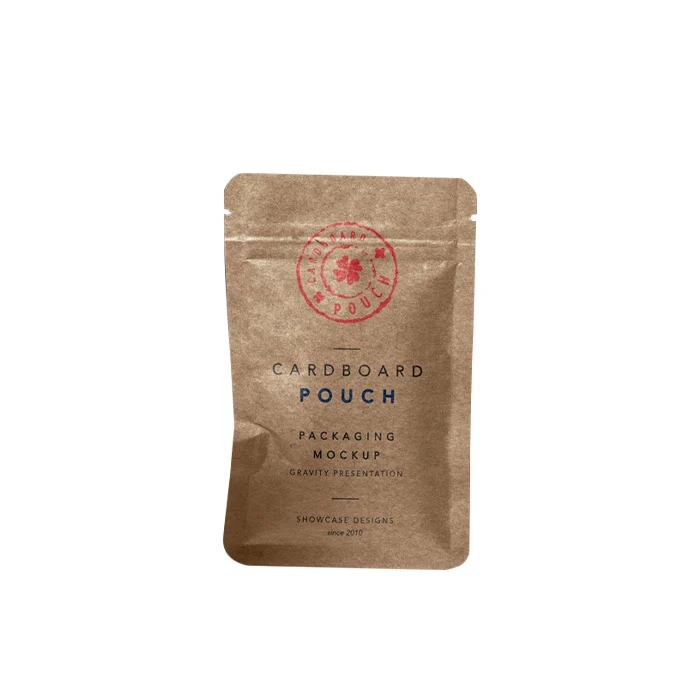
Flat pouch formats can be useful for samples, seasonings, tea, and other compact dry food products.
Stand-up pouches for retail visibility and resealing
Stand-up pouches are often suitable for snacks, granola, nuts, and other foods that benefit from a package that stands upright on a shelf. When a product is intended for several servings rather than one-time consumption, a resealable zipper can help consumers store the remaining contents after opening.
For dried snacks and similar products, custom matte stand-up pouches offer an example of a format with a resealable closure and material options designed around product protection and retail presentation.
Three-side seal pouches for individual packs
Three-side seal pouches are commonly used for compact, flat packaging formats. Depending on the product and filling requirements, they can be suitable for sachets, samples, dry ingredients, and single-use food portions. Their dimensions and seal areas should be checked against the product's fill weight and the intended production equipment.
The final selection should be based on the product's actual weight and volume, not pouch dimensions alone. Two foods with the same net weight may occupy very different amounts of space because their bulk densities differ.
A well-designed portion-control pouch needs to support both reliable filling and convenient consumer use. Several specifications deserve attention before the packaging moves into production.
Before approving a final design, brands should conduct filling trials with the actual food product. This helps identify issues such as powder trapped in the seal, product settling, excessive empty space, or a pouch that is too small for reliable filling.
Yes, provided the material is suitable for the food and its storage conditions. Portion-control packaging and sustainability are not mutually exclusive, but brands need to evaluate the complete packaging system rather than choosing a material based on its environmental claims alone.
For example, a lightweight pouch may reduce packaging material compared with some rigid formats, while correctly sized packaging can help avoid unnecessary excess material. However, individually wrapped portions may also increase the total amount of packaging used per kilogram of food. The overall design should balance portion convenience, product protection, and material efficiency.
Brands can evaluate recyclable materials, post-consumer recycled (PCR) materials, compostable structures, and paper-based packaging where suitable. Availability and suitability depend on the particular pouch design and application.
Food-contact suitability, barrier performance, applicable certifications, and local disposal infrastructure should all be verified before a material is selected. A material marketed as compostable or recyclable is not automatically suitable for every food product or local waste-management system.
Cost-effective portion packaging starts with matching the pouch specification to the product and production process. Making a pouch smaller is not always the best way to reduce costs if it creates filling problems, increases rejected packs, or compromises food protection.
Food brands can review the following areas when developing a new packaging project:
It is also worth checking whether the package is designed for one-time consumption or repeated opening. A simple sealed pouch may be sufficient for a single serving, while a larger multi-serving pouch may justify a resealable closure. Selecting features based on actual use can help control both material and production costs.
Clear specifications make it easier for a packaging supplier to recommend an appropriate pouch structure and provide a realistic quotation. Before requesting samples or production pricing, food brands should prepare the following information:
Where possible, provide a representative food sample or accurate bulk-density information. This helps the supplier evaluate whether the proposed dimensions can accommodate the intended portion while leaving enough space for a dependable seal.
Requesting samples and testing them with the actual product before mass production is a sensible final step. It allows the brand to check appearance, usability, filling performance, and packaging integrity before committing to a larger order.
How do custom pouches help control food portions?
Custom pouches can be designed for a defined target fill weight or volume. When combined with calibrated filling equipment and production checks, they help food brands supply consistent individual servings and make portion information easier for consumers to understand.
Which pouch type is best for single-serve snacks?
Flat pouches and three-side seal pouches are useful options for many compact snack portions and samples. Stand-up pouches may be preferable when shelf visibility or resealing is important. The right format depends on the snack, target weight, barrier requirements, and filling process.
Can custom food pouches be made with sustainable materials?
Yes. Depending on the application, brands can evaluate recyclable, PCR, compostable, or paper-based options. The material must still meet the food's protection needs and applicable food-contact requirements. Environmental claims should be supported by the relevant certifications and disposal conditions.
How can brands ensure each pouch contains the correct amount?
Portion accuracy mainly depends on the filling system and quality-control process. Brands should define the target net weight, calibrate filling equipment, conduct weight checks, and test the pouch dimensions with the actual product before production.
Can one pouch design be used for multiple flavors?
Often, yes. When the products have similar fill weights, volumes, and protection requirements, brands may use a shared pouch structure and change the printed artwork for each flavor. Each variation should still be checked for product compatibility and labeling accuracy.
lf you would like to work with us or just want to get intouch, we'd love to hear from you!

Copyright @ 2026 Shanghai BioPouches Co., Ltd All Rights Reserved. Network Supported
leave a message