

Author
Marie R. Winters


Picture a consumer standing in a big-box pet retail aisle. They face pallets stacked with heavy dry dog kibble. They reach for a 15kg (33lb) bag, lift it by the handle, and make their way toward the checkout. What happens if that handle pinches painfully into their fingers, or worse, shears open at the seam? That single physical interaction shapes brand perception forever.
The bulk pet food segment demands more than vibrant graphics. Heavy kibble sacks experience extreme dynamic stress during warehouse handling, palletization, and consumer transport. Research in packaging ergonomics shows that awkward carrying grips contribute to over 60% of accidental retail drop incidents for goods exceeding 10kg.
Generic sacks fail under pressure. Your heavy packaging requires deliberate engineering. A functional handle transforms cumbersome sacks into convenient carry items. Proper ergonomics build consumer confidence and protect multi-layer barrier integrity. Robust design safeguards against seam blowout and drives retail repeat purchases.
This technical guide explores side-gusset handle options for high-capacity pet food sacks. We contrast integrated die-cut punch handles with external soft loop handles for 15kg to 25kg packaging. We examine tensile stress distribution, film structure configurations, and high-speed filling line compatibility. Discover the right handle configuration for your pet food packaging lineup.
Evaluate 15kg+ bulk bags for dynamic load distribution to prevent gusset tear-out during lifting.
Choose reinforced die-cut handles for automated high-speed form-fill-seal (FFS) lines and lower unit costs.
Deploy soft loop handles to provide superior carrying comfort, non-pinching grips, and premium shelf appeal.
Incorporate BOPA (biaxially oriented polyamide) and high-dart impact metallocene PE to maximize tear resistance.
Conduct ASTM D5276 drop and handle fatigue pull tests to verify seal boundary durability before mass production.
Packaging bulk pet food is a discipline of structural mechanical engineering. When filling a bag with 15kg to 25kg of dense dry kibble, the downward gravitational load generates continuous outward hydrostatic-like pressure along the side walls. Traditional center-carry handles on standard flat pouches simply cannot balance this weight. This mechanical reality explains why the side gusset pouch and quad-seal format dominate the large-format dry pet food category.
Lifting a 15kg sack generates an instantaneous peak jerk force far exceeding static weight. An abrupt pull from a car trunk or store rack can expose the handle anchor zone to dynamic forces upward of 250 to 300 Newtons. If the film structure lacks tensile elongation or the handle lacks reinforcement, stress concentrates directly on the seal notch. This concentration leads to film yielding, micro-perforations, and complete seam failure.
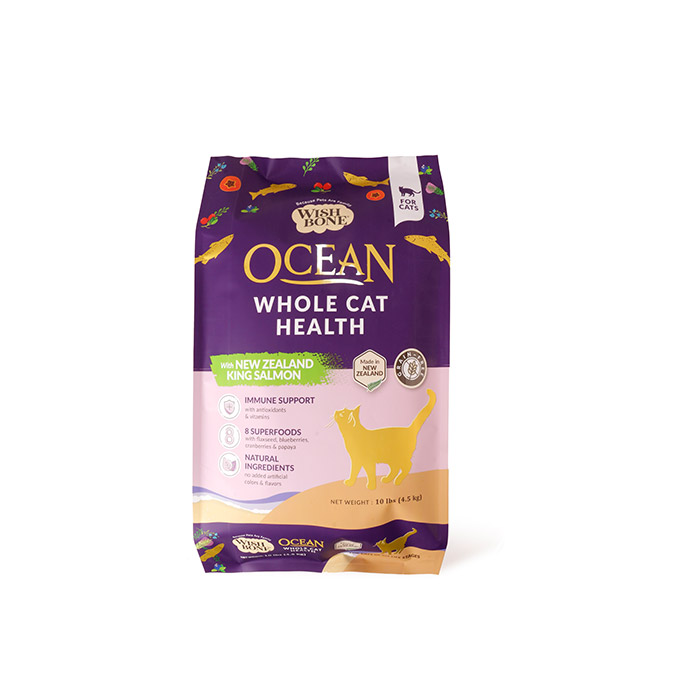
A die-cut handle is created by precision punch-cutting an oval or kidney-shaped aperture directly through the side gusset or top fin seal. In multi-layer flexible packaging, a standard punch through unreinforced laminate creates an immediate weak point. To sustain 15kg+ loads, manufacturers insert an internal heat-sealed reinforcing patch made from rigid high-density polyethylene (HDPE) or cross-laminated oriented film between the laminate layers before die-cutting.
The primary advantage of the reinforced die-cut handle lies in manufacturing and palletizing efficiency. Because the handle remains flush with the bag profile, the sacks lie flat when palletized. There are no protruding loops to catch on conveyor transfer plates or automated robotic palletizer arms. Sacks stack uniformly, maximizing shipping container cube utilization.
However, die-cut handles present functional trade-offs for end consumers. When a consumer carries a 15kg bag by an internal die-cut aperture, the entire weight rests across the narrow edge of the cut plastic film. Without an ergonomic contour, this thin surface bites into fingers, causing discomfort during extended carrying. Furthermore, the punched area reduces the airtight volume inside that gusset sector, demanding meticulous perimeter heat sealing to ensure oxygen barriers remain intact.
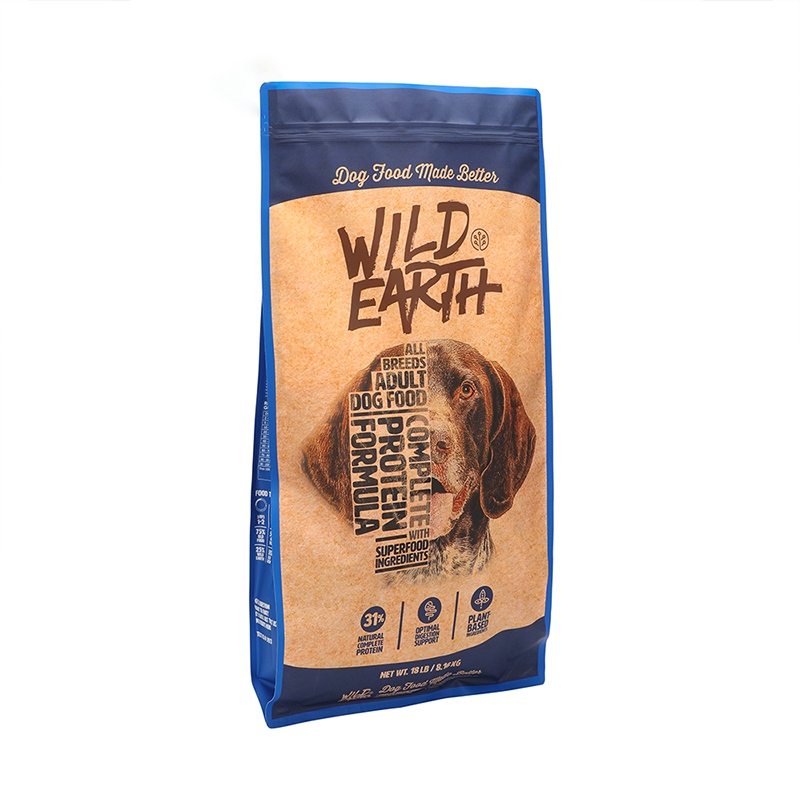
Soft loop handles consist of separate, thick extruded polyethylene or woven webbing straps welded into the side gusset exterior seams. Rather than cutting into the functional barrier laminate, the loop is anchored into dedicated heat-seal flanges along the four-corner quad-seal lines. This preserves the internal hermetic barrier of the pouch entirely.
From an ergonomic perspective, the soft loop handle is unmatched for consumer convenience. The flexible strap accommodates the entire hand, distributing the 15kg load evenly across the palm and fingers rather than focusing stress onto narrow contact edges. Consumers can carry heavy kibble sacks like luggage, keeping the center of gravity closer to the body and reducing back strain. For premium pet nutrition brands aiming to deliver an upscale retail experience, soft loops provide an immediate competitive edge on store shelves.
The trade-off for soft loop handles centers on manufacturing complexity and logistics. The loops require specialized auxiliary application units on pouch-making lines, increasing conversion cycle times. During pallet packing, loose straps can occasionally fold irregularly or snag on sharp edges if shrink-wrapping tension is uneven. Premium brands often pair these handles with a flat bottom pouch format to maximize box-like pallet stability while offering top-tier consumer convenience.
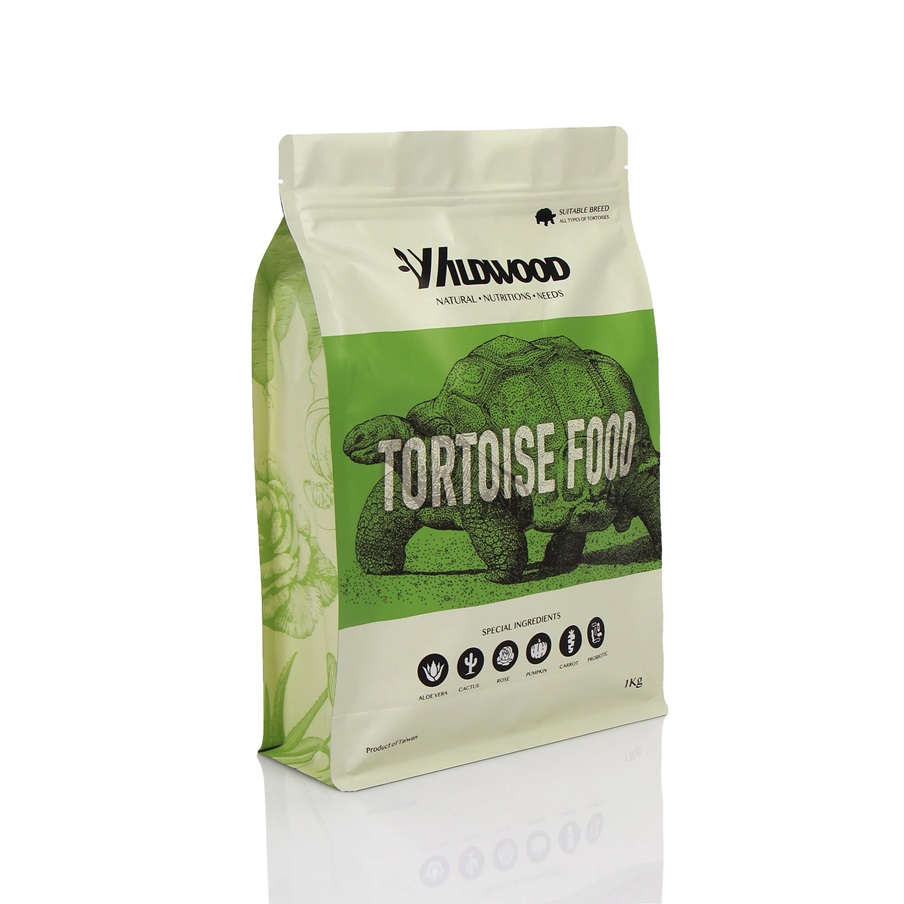
Neither handle design will succeed if the underlying laminated film fails to support the mechanical loads. Standard light-gauge snack pouches use standard PET/PE structures. In contrast, 15kg+ bulk pet food packaging requires robust multi-layer co-extrusions engineered for puncture resistance, flex-crack resistance, and high seal peel strength.
To achieve the mechanical resilience needed for side-gusset handle execution, converters typically engineer a heavy-duty three- or four-ply structure. A high-performance specification for large dry kibble bags incorporates:
Outer Print Layer: 12μm Corona-treated PET or reverse-printed BOPP for scuff-resistant, photorealistic graphics.
Mechanical Reinforcement Layer: 15μm Biaxially Oriented Polyamide (BOPA/Nylon). Nylon delivers exceptional tensile elongation, high puncture resistance, and prevents tear propagation originating from handle stress points.
Barrier Layer: Metallized PET (VMPET) or EVOH barrier co-extrusion to block grease bleed and oxygen ingress while protecting volatile kibble palatability aromas.
Heavy-Duty Sealant Layer: 100μm to 140μm Linear Low-Density Polyethylene (LLDPE) blended with metallocene plastomers. Metallocene enhances hot tack strength, wide heat-seal windows, and high dart impact resistance.
Evaluating the operational balance between these two handle styles requires analyzing key technical criteria:
Dynamic Load Capacity: Reinforced die-cut handles support up to 15kg to 18kg comfortably when reinforced with internal HDPE inserts. Heavy-gauge soft loop handles reliably sustain 20kg to 30kg bulk loads without seam stretching.
Consumer Ergonomic Score: Soft loop handles win decisively. They allow a full power grip, while die-cut apertures create localized finger compression under heavy loads.
Pallet Density & Stacking: Die-cut sacks stack flush without exterior protrusions, minimizing pallet overhang risk. Soft loop sacks require uniform strap placement to ensure flat pallet squaring.
Packaging Line Speed: Side-gusset pouches with integrated die-cut handles run smoothly on automated bag-hanging and filling carousels without loop-indexing delays.
Unit Cost Efficiency: Die-cut configurations reduce tooling costs and eliminate secondary attachment steps, delivering lower per-unit packaging costs.
Before clearing commercial production runs for bulk pet food sacks, packaging engineers conduct rigorous standardized laboratory evaluations to validate handle integrity and seam strength.
Filled 15kg sample sacks undergo conditioning at ambient temperature (23°C, 50% RH) and cold storage conditions (4°C) to test for film embrittlement. Bags are dropped from a calibrated height of 1.2 meters in six orientations: flat face, back face, side gussets, bottom gusset, and top seal. Seams and handle heat-affected zones must show zero pinholing, delamination, or bursting.
A motorized mechanical tester clamps the handle while the sack is weighted to 1.5 times its rated capacity (22.5kg for a 15kg bag). The apparatus subjects the handle to 500 repeated lifting cycles at a stroke rate of 30 cycles per minute. The weld boundaries must maintain complete adhesion without film elongation greater than 3%.
Choosing between reinforced die-cut and soft loop handles comes down to your distribution model, equipment setup, and brand positioning:
Select Reinforced Die-Cut Handles if: Your filling facility uses fully automated high-speed bag placers that require flat pouch geometry. Die-cut designs suit value-oriented or mid-tier dry kibble products where minimizing packaging unit costs is essential, and primary distribution moves through wholesale warehouse clubs using robotic pallet depalletizers.
Select Soft Loop Handles if: You are packaging premium, veterinary-exclusive, or specialty organic pet formulations in 15kg to 25kg formats. The tactile carry experience directly reinforces premium branding. Soft loops deliver vital ergonomic value for boutique pet store customers carrying food to their vehicles, converting a heavy lifting chore into an easy carry experience.
Yes. Bulk pet food sacks frequently combine a side-mounted soft loop handle or top die-cut handle with a heavy-duty press-to-close or hook-to-hook (Velcro) zipper across the top opening. This configuration allows consumers to carry the heavy bag effortlessly by its side and reseal the kibble securely after dispensing.
No, provided the pouch is engineered properly. The die-cut handle is placed within an isolated, hermetically sealed perimeter zone along the upper fin or side gusset flap. The barrier cavity protecting the pet food remains completely sealed, preserving shelf freshness and blocking moisture or pest ingress.
For 15kg to 20kg dry kibble capacity, total film thickness should range between 140μm and 180μm (5.5 to 7.0 mils). The structure should incorporate at least 15μm of biaxially oriented nylon (BOPA) paired with a high-strength metallocene LLDPE sealant layer to resist tearing at handle weld points.
Yes. In mono-material recyclable structures (such as all-PE laminations), the soft loop strap is extruded from compatible high-density or medium-density polyethylene. This ensures the entire pouch, including handle and seal flange, complies with standard PE recycling streams (RIC 4) without requiring material separation.
lf you would like to work with us or just want to get intouch, we'd love to hear from you!

Copyright @ 2026 Shanghai BioPouches Co., Ltd All Rights Reserved. Network Supported
leave a message