

Author
Marie R. Winters


Choosing the right kraft stand up pouch begins with understanding your product’s specific needs. The packaging market reflects this importance, reaching USD 4,659 million in 2024 and projected to hit USD 7,710 million by 2032. That growth signals real opportunity for brands like yours.
You must evaluate three core areas: your product type, the pouch dimensions, and the material structure. Each factor directly affects protection, shelf appeal, and cost. Getting these decisions wrong leads to wasted inventory and damaged goods.
This guide provides a clear framework to navigate these choices. You will learn practical steps that prevent expensive mistakes. Let’s walk through each factor in detail.
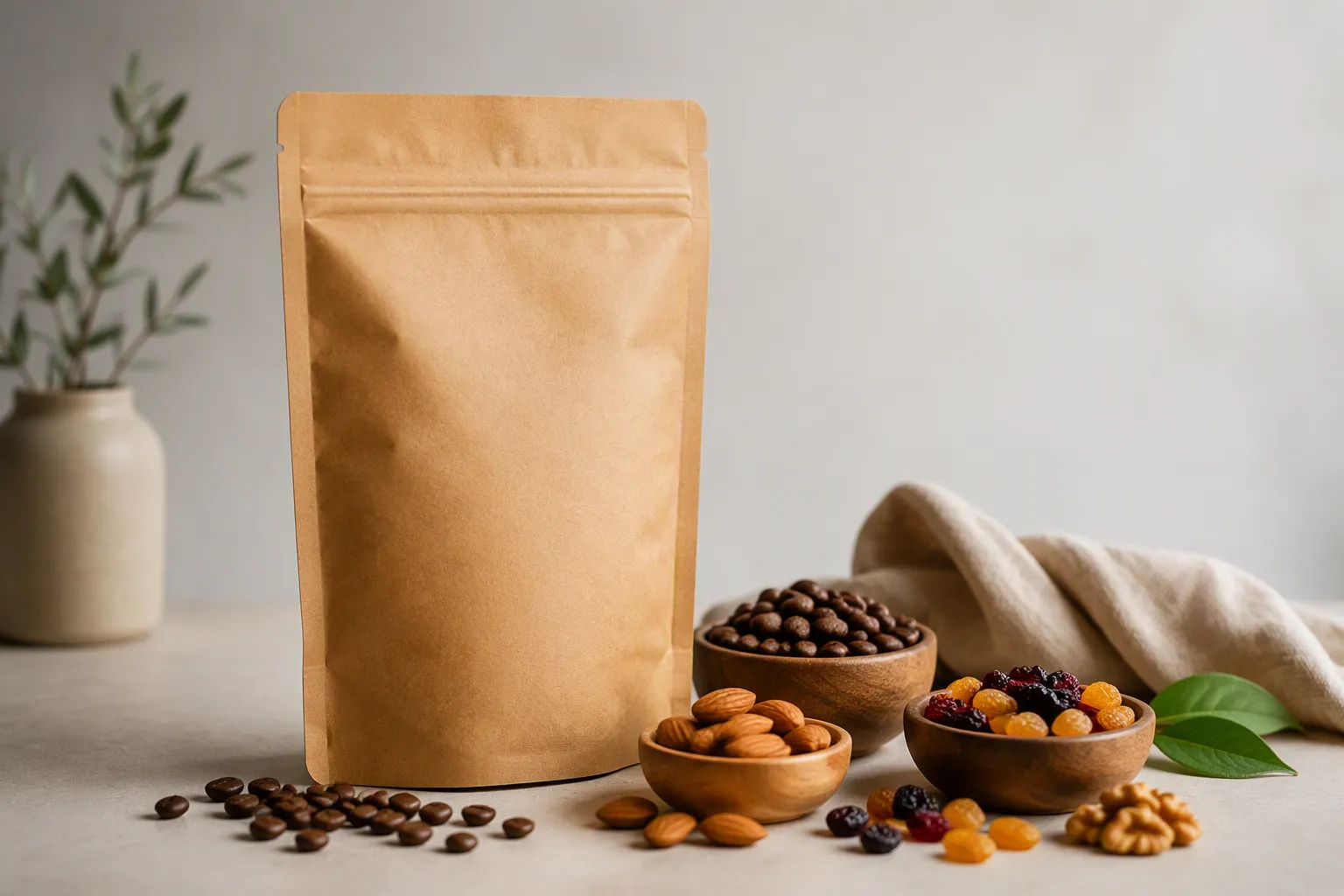
Match your pouch to your product's needs. Dry goods and liquids require different pouch features.
Choose a pouch style that fits your product's weight. Doyen suits light items, flat-bottom suits heavy ones.
Select barrier materials that block moisture, oxygen, and light. This protects your product and extends shelf life.
Design with the pouch's gusset in mind. Keep important artwork away from fold lines to avoid distortion.
Test prototypes before full production. Verify barriers, print quality, and durability to prevent costly mistakes.
Before you select a pouch, you must first understand your product requirements. The right packaging starts with a clear picture of your product's physical properties and the market rules that govern its sale. Two factors matter most: product type and sales channel.
Your product's physical state determines your packaging needs. Dry products like coffee beans, snacks, and powders behave very differently from liquid products like oils, dressings, and syrups. Each requires a specific approach to filling, protection, and storage.
Dry products rely on accurate weight filling and consistent output. Their packaging must protect against moisture and oxygen while maintaining structural integrity. Liquid products demand clean dispensing, consistent fill volumes, and durable containers that resist leaks. The table below shows the key differences.
|
Aspect |
Dry Food Products |
Liquid Products |
|---|---|---|
|
Preferred packaging formats |
Pouches, canisters, bags |
Bottles, jars, pouches with spouts |
|
Filling method |
Weight-based, depends on density and particle size |
Volume-based, depends on viscosity |
|
Key decision factors |
Structure, protection, repeat use |
Clean dispensing, leak resistance |
|
Examples |
Coffee beans, seasonings, granola |
Oils, syrups, marinades |
Shelf life requirements vary widely by product. Roasted coffee beans in a sealed package can last up to one year in cool, dark storage. Ground coffee lasts around six months. Freeze-dried coffee, with advanced packaging, can extend to 30 years. Your product's shelf life target directly affects the barrier materials you need.
Heavier products require thicker pouch materials. A pouch holding 16 ounces of granola needs a stronger film structure than one holding 4 ounces of tea. The weight of your product drives the material thickness and seal strength you must specify.
The way you sell your product determines additional packaging requirements. Retail shelves demand stand-up pouches that stand upright and attract attention. E-commerce requires pouches that survive shipping without damage. Both channels need pouches that fit standard display systems.
Government regulations add another layer of requirements. The FDA regulates flexible packaging under Title 21 of the CFR. Parts 174 through 186 cover everything from adhesives to plastic materials. Any food contact substance that qualifies as a food additive must receive FDA authorization before marketing. The authorization process involves a scientific safety assessment, migration testing, and environmental review.
USDA regulations add specific rules for meat and poultry products.
USDA regulations under 9 CFR 317.24 require packaging suppliers for meat and poultry products to provide a guaranty that the material complies with the FD&C Act and all applicable food additive regulations. The guaranty must identify the packaging materials, conditions of use, and be signed by an authorized official.
This means you must verify that your chosen stand-up pouches meet all applicable regulations for your specific product category. A kraft stand up pouch can work well for many dry products, but you must confirm it meets regulatory standards. These stand-up pouches offer versatility across different product types when specified correctly. Working with a knowledgeable converter who understands these requirements saves time and prevents compliance issues.
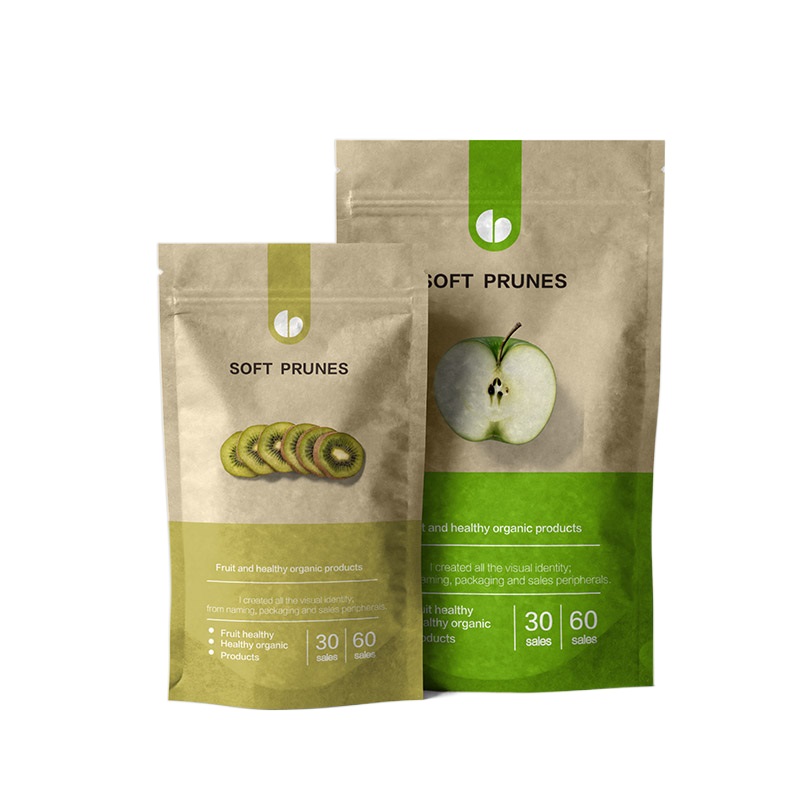
Once you understand your product's physical requirements, you can match those needs to a specific pouch design. The flexible packaging market offers three dominant stand-up pouch styles, each with distinct structural features. Your choice affects stability, capacity, and retail presentation.
The Doyen pouch features bottom edges sealed directly to the body. This original stand-up structure works well for lighter products. Snacks, candies, spices, chips, and small specialty foods fit naturally in this style. The Doyen offers a cost-effective solution for everyday items.
The K-seal gusset design seals both sides of the bottom gusset at an upward angle. This creates a stronger base that supports heavier fill weights. Powders, pet food, and other dense products benefit from this reinforced structure. The angled seals distribute weight more evenly across the bottom.
|
Pouch Style |
Structural Feature |
Best For |
|---|---|---|
|
Doyen |
Bottom edges sealed to body |
Lighter items: snacks, spices, candies |
|
K-Seal |
Angled side seals on bottom gusset |
Heavier products: powders, pet food |
|
Flat Bottom |
Box-like base, 360° printable surface |
Premium coffee, bulk items, high-density goods |
The flat-bottom pouch, also called a block bottom, provides maximum stability. Its boxy shape stands upright without support and offers a 360° printable surface. Premium coffee, pet food, protein powders, and dry mixes benefit from this structure. The flat bottom creates an excellent retail presence that justifies higher packaging costs for premium positioning.
For cost-effective everyday SKUs, Doyen or K-seal typically win on value. For products that need strong shelf presence, the flat-bottom style delivers superior results. A kraft paper stand up zipper pouch in the flat-bottom style combines natural aesthetics with premium functionality.
Selecting the right size requires understanding the difference between outer dimensions and fillable area. The fillable area spans from the bottom of the pouch up to the zipper line. The space above the zipper accommodates heat sealing and tamper-evident features. This top area contributes to the total outer dimensions but does not hold product.
This distinction matters more than most buyers realize. A pouch listed as 4″ x 6″ will not fit a product measuring 4″ x 5″. The top seal area consumes part of the height. You must always measure three key dimensions: the fillable area, the area above the zipper, and the pouch width.
Standard outer dimensions for kraft stand-up pouches vary by capacity. A 4.75″w × 6″h × 2″d pouch holds approximately 2–4 ounces of whole coffee beans. A 9.64″w × 12″h × 4.72″d pouch accommodates 24 ounces to 2 pounds. The largest common size, 13″w × 16″h × 5.5″d, handles 3–5 pounds.
Capacity estimates assume whole coffee beans. Product density changes these figures significantly. Salt weighs more per volume than tea, so always test your specific product.
Consider how the pouch will display at retail. A pouch that must stand upright on a shelf requires a stable bottom gusset. A pouch that hangs from a display peg needs a reinforced header with a hang hole. These display requirements influence both style and size decisions.
Choose a pouch slightly larger than your product volume. This extra space accommodates settling during transit and provides room for the zipper closure. Measure your product in its final form, then add appropriate clearance for the seal areas. Order samples to verify the fit before committing to a full production run.
The material structure of your kraft stand up pouch determines how well it protects your product. A typical structure combines an outer kraft paper layer with inner barrier films. The kraft exterior delivers the natural, eco-friendly aesthetic that consumers associate with artisan and organic brands. The inner films provide the functional protection your product needs against moisture, oxygen, and light.
The outer kraft layer serves both visual and structural purposes. It offers a tactile, textured surface that signals authenticity and sustainability. This layer also provides stiffness that helps the pouch maintain its shape on retail shelves. Beneath this kraft exterior, you will find one or more inner barrier films that do the heavy lifting for product protection.
Common barrier options include foil, which blocks oxygen and light almost completely, and clear plastic films that offer moderate protection while allowing product visibility. The choice between these materials depends on your product's sensitivity. Coffee beans, for example, require strong oxygen barriers to preserve freshness. Dried herbs may need less protection but still benefit from moisture resistance.
Your product's weight also influences material selection. Heavier products require thicker films to prevent punctures and seal failures during transit and handling. A lightweight tea pouch can use thinner materials than a bag holding several pounds of pet food.
Evaluate your product's vulnerability to three main threats: moisture, oxygen, and light. Each threat requires a different barrier strategy. Moisture-sensitive products like powders and granola need films with low water vapor transmission rates. Oxygen-sensitive products such as roasted coffee and nuts demand high-oxygen barriers. Light-sensitive items like certain spices benefit from opaque kraft layers that block UV rays.
Your target shelf life directly determines the barrier strength you need. Products destined for quick turnover can use simpler, less expensive films. Products that must remain fresh for months or years require advanced multi-layer structures. The table below shows sustainable lamination options that balance protection with environmental goals.
|
Lamination Option |
Key Feature |
|---|---|
|
Home Compostable (C20™) |
Bio-based laminate, certified home compostable (BPI & TÜV), breaks down in ~90 days |
|
Kraft Paper |
Home compostable film with FSC-certified post-consumer kraft exterior, curbside recyclable |
|
BioLaminate™ |
Plant-based polyethylene, strong barrier, recyclable |
|
ReLaminate™ |
Contains recycled plastic content, reduces virgin material use |
These options demonstrate that sustainable materials no longer require sacrificing performance. A laminate derived from eucalyptus and cassava root, for instance, provides a high barrier to oxygen and moisture suitable for various industry applications. This plant-based approach offers food compatibility without petroleum-derived plastics.
These pouches are made from kraft paper combined with a compostable laminated film, offering a natural-look alternative to petroleum-based plastics.
When you choose compostable stand up pouches, you must verify that the entire structure meets your product's protection needs. Some compostable films offer excellent barriers, while others suit only short-shelf-life products. Always request material samples and test them with your actual product under real storage conditions.
Food-safe materials remain non-negotiable. Every layer that contacts your product must comply with FDA regulations for food contact substances. Your converter should provide documentation confirming compliance. This verification protects your customers and your brand reputation.
The flexible packaging industry continues to innovate in sustainable materials. You can now find kraft stand-up pouches that are recyclable, compostable, or made with recycled content. These options let you meet sustainability goals without compromising product protection. The right material structure balances barrier performance, environmental impact, and cost. Work with your converter to identify the structure that meets all three criteria for your specific product.
Your kraft stand-up pouches offer a distinctive canvas that sets your product apart. The natural kraft paper exterior communicates authenticity and sustainability before a customer reads a single word. Designing effectively requires understanding how the pouch structure affects your artwork. You must also consider how finishes influence consumer perception.
The bottom gusset of your stand-up pouches changes the printable area significantly. A flat dieline on screen does not show how the gusset distorts artwork when filled. You must position logos and essential text away from the bottom gusset fold lines. These areas physically warp when the pouch stands upright, making critical content unreadable.
Reserve the bottom gusset for non-critical elements. Background patterns, solid color blocks, or secondary brand messaging work well there. Use more conservative margins in this zone than on flat panel areas. Artwork shifts more dramatically in the gusset region once the pouch fills with product.
Always review artwork on a physically filled mock pouch. A flat dieline cannot reveal how the gusset expansion changes the visual geometry of the front and back panels. This step prevents costly printing mistakes. Many stand-up pouches fail at retail because brands skip this verification.
Kraft's printable surface supports custom artwork that reinforces your brand identity. You can choose finishes that shape how consumers perceive your product. The table below shows key differences between matte and glossy options.
|
Perceptual Dimension |
Matte Finish |
Glossy Finish |
|---|---|---|
|
Haptic roughness |
Rougher |
Smoother |
|
Perceived thickness |
Thicker |
Thinner |
|
Perceived weight |
Heavier |
Lighter |
|
General appeal |
Less appealing |
More appealing |
For organic and natural products, a matte finish conveys a substantial, earthy feel. A glossy finish appears more polished but may feel less aligned with unprocessed values.
Certain design elements increase consumer purchase intent:
Minimalist typography with bold negative space creates a modern, upscale look.
Hand-drawn illustrations highlight the artisan nature of your brand.
Clear windows in oval, full-panel, or leaf shapes let customers see the product inside.
Earth-tone color palettes with small bright accents keep the design grounded in eco-friendly values.
Texture-embossed kraft and debossed logos add a sophisticated tactile quality.
QR codes and storytelling back panels share your brand story or sustainability information.
For truly eco-friendly packaging, explore compostable stand up pouches that maintain the same design flexibility. A recyclable pouch structure further appeals to environmentally conscious consumers.
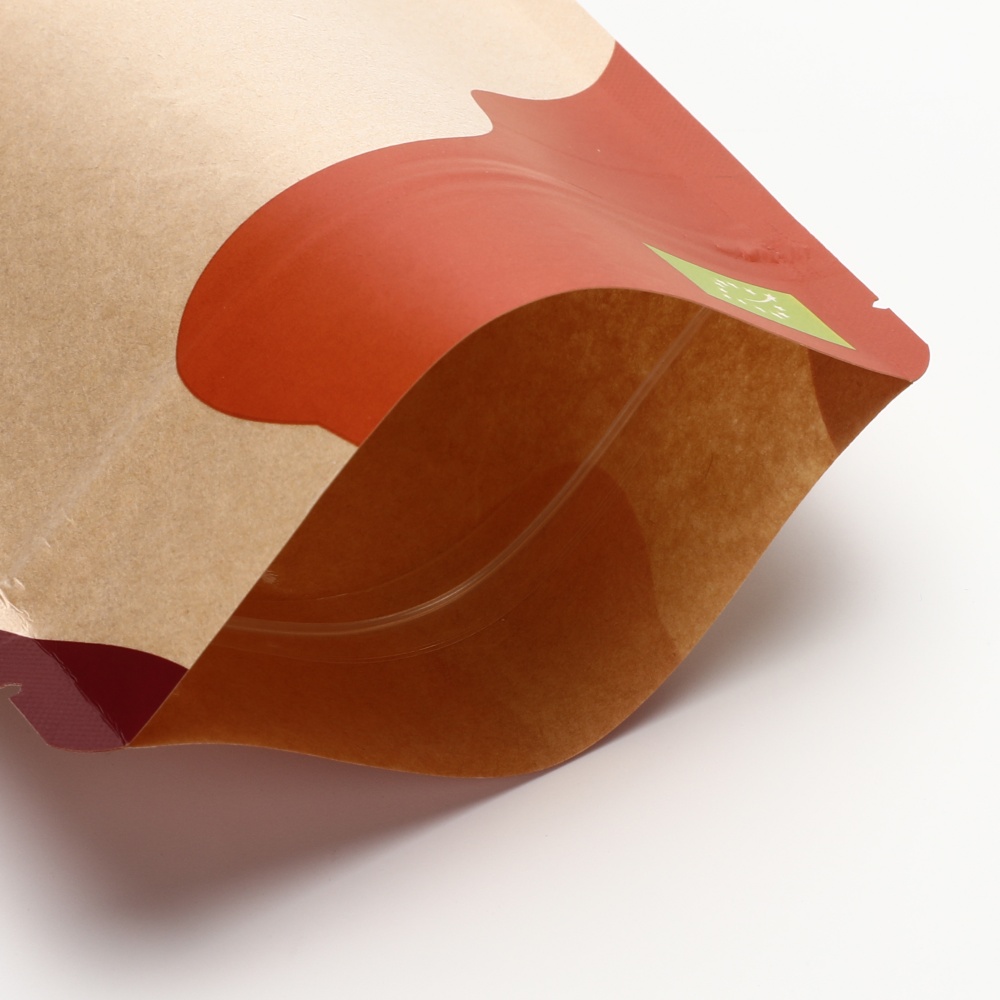
Functional features transform a basic pouch into packaging that fits your customer's daily routine. Each addition should serve a specific use case rather than add cost without purpose. Evaluate your product's consumption pattern before choosing features.
A resealable zipper makes sense for products consumers use repeatedly. Coffee, snacks, dried fruit, and pet treats all benefit from a closure that preserves freshness between uses. A kraft paper stand up zipper pouch combines the natural exterior with the convenience of a zipper, keeping contents crisp long after the first opening. Without a zipper, consumers must transfer unused product to another container or risk staleness.
Products consumed in one sitting rarely need a zipper. Single-serve snacks or individual portions work fine with a simple heat seal. Adding a zipper to these items only increases material cost and production complexity.
Easy-open features matter for every pouch, regardless of zipper presence. You have two primary options for tear notches:
Mechanical Notching: A physical blade cuts a 'V' or 'U' shape into the film edge. This method is fast and cost-effective for standard materials. However, blade wear can affect consistency, and the complete cut-through at the edge may create micro-tears during processing.
Laser Scoring: A high-intensity laser vaporizes a thin line into the outer layers only. This approach offers high precision and digital control over depth and width. The inner barrier layer remains intact until opening, producing a clean, almost invisible line ideal for premium products.
Laser scoring maintains pouch integrity better because it avoids a full cut-through. Choose this option when your product demands a strong barrier and a polished opening experience.
A clear window lets customers see the actual product inside your stand-up pouches. This visual proof builds trust, especially for food items where texture and color signal quality. Window shapes range from small oval cutouts to full-panel displays. Consider your product's appearance before adding this feature.
QR codes create a direct connection between your packaging and digital content. Capri Sun, a Kraft Heinz brand, placed a QR code on the front of its pouch for a sweepstakes campaign. The campaign generated over 579,000 landing page views and more than 28,000 subscription entries, ranking among the top three code-based campaigns across all Kraft Heinz brands. You can use QR codes for recipes, brand stories, or loyalty programs that encourage repeat purchases.
Hang holes suit products displayed on peg hooks in retail stores. Reinforce the header area to prevent tearing under the product's weight. This feature works well for lightweight items like dried herbs, spices, or single-serving snacks that benefit from vertical display.
Each feature you add should tie directly to how customers use your product. Test any combination with real users before committing to full production.
Prototype testing protects you from costly mistakes. You must verify three things before committing to a full production run: barrier performance, print accuracy, and physical durability. Each test reveals different weaknesses in your packaging design.
Your barrier materials must perform as specified. Request samples from your converter and test them with your actual product under real storage conditions. Store filled pouches at the temperature and humidity levels your product will face in distribution. Measure moisture content and oxygen levels inside the pouches at regular intervals. Compare these readings against your product's shelf life requirements.
Print accuracy matters equally for brand integrity. Compare prototype colors against your brand guidelines using a spectrophotometer. This device measures color objectively rather than relying on visual judgment. Verify that logos remain sharp and text stays legible across all panels. Check that gusset areas do not distort critical artwork when the pouch stands filled.
Your stand-up pouches must survive the journey from your facility to the retail shelf or customer doorstep. Physical testing simulates real-world stresses that damage packaging. The table below shows standard test protocols and their acceptance criteria.
|
Simulation Factor |
Specific Test Protocol |
Key Pass/Fail Criteria |
|---|---|---|
|
Humidity Cycling |
TAPPI TIP 0404-09 |
≤10% loss in burst strength and ≤15% loss in puncture energy relative to baseline |
|
Burst Strength |
ASTM D774 |
Must not exceed a 10-20% loss post-cycling, with no visible delamination or seal separation |
|
Puncture Energy |
ASTM D5748 |
Must not exceed a 15% loss post-cycling |
|
Seal Strength |
ASTM F88-22 |
No seal separation is permitted after environmental cycling |
These tests reveal how your kraft stand up pouch responds to environmental stress. You should also simulate the physical shocks your packaging will encounter:
Drop impact during parcel handling, especially for e-commerce or sample shipments
Compression damage from stacked cartons exceeding 4 to 6 layers
Vibration that causes puncture, abrasion, and panel cracking
Humidity ingress that affects pouch material and contents
Seal contamination leading to seal split and micro-leaks
Point-load abrasion from sharp or heavy items within the pouch or carton
Your bottom gusset must provide stable upright support for retail display. Fill a prototype pouch with your product and let it stand on a shelf for several days. Observe whether the base buckles or the pouch tips over. A properly designed gusset maintains its shape under the product's weight. Different stand-up pouches may perform differently in this test, so compare multiple designs side by side.
Compostable stand up pouches require additional scrutiny during testing. Their barrier films may behave differently under humidity cycling than conventional materials. Verify that your chosen structure meets your product's protection needs before ordering.
Order samples from multiple converters when possible. Test each one against the same criteria. This comparison reveals which supplier delivers the quality your product demands. A kraft paper stand up zipper pouch that passes these tests will serve your customers reliably.
Once your prototypes pass testing, you can plan your production run. Two decisions shape your costs: the printing method and the order quantity. Both affect your per-unit price and your timeline for stand-up pouches.
Your production volume determines which printing method makes financial sense. Digital printing requires no plates, so setup costs stay near zero. Flexographic printing needs engraved plates and make-ready time, creating a substantial upfront investment. The table below shows how these costs behave at different volumes.
|
Cost Factor |
Digital Printing |
Flexographic Printing |
|---|---|---|
|
Upfront Setup Cost |
Almost none (no plates) |
High (plates + make-ready) |
|
Per-Unit Cost at Low Volume |
Low and stable |
High due to amortized setup |
|
Per-Unit Cost at High Volume |
Remains relatively high |
Drops significantly |
|
Economic Break-Even Point |
Best below 5,000 units |
Becomes cheaper above 5,000–10,000 units |
Digital printing suits short runs and seasonal stand-up pouches. You can test new flavors or limited editions without committing to large inventory. Flexographic printing rewards larger orders with dramatically lower per-unit costs.
Your business expands and you now need 15,000, 25,000 or more pouches or bags? Are you going to want to continue paying $.35 to $.50 each?
Color quality also differs between methods. Digital printing achieves vibrant colors and simulates PMS colors using CMYK, though not an exact match. Toners may fade in direct sunlight, but UV-resistant ink prevents this issue. Modern flexo presses deliver crisp details and accurate colors, making them a cost-effective balance for medium runs. Digital printing's color depth may not reach gravure's photographic precision, but it offers exceptional agility.
Minimum order quantities for stand-up pouches vary widely among manufacturers. Digital printing typically requires only 500 pieces. Gravure printing demands 10,000 pieces or more. Some converters offer no minimum with tiered pricing. Lead times range from 7 to 15 days for standard orders, with rush options at 7 to 9 days. New designs take longer than repeat orders.
Material sourcing affects both cost and timeline. Kraft paper, barrier films, and compostable laminates come from different suppliers. Your converter must coordinate these materials before printing begins. Sustainable options like compostable stand up pouches may require longer sourcing lead times.
Order samples before committing to a full production run. A kraft paper stand up zipper pouch that looks perfect in a digital proof may behave differently in production. Samples let you verify print quality, barrier performance, and structural integrity. This step costs little compared to a full run of unusable packaging.
The right printing method and order quantity balance your budget against your go-to-market timeline for your stand-up pouches. Work with your converter to find the sweet spot for your specific kraft stand up pouch needs. The flexible packaging market offers options at every volume level.
Start by defining your product's physical requirements. Match the pouch style and size to those needs. Select kraft and barrier materials that protect against moisture, oxygen, and light. Design around kraft's natural aesthetic, add functional features, and test prototypes before manufacturing.
The right kraft stand up pouch balances protection, appearance, sustainability, and cost. Your choice within flexible packaging affects every part of your supply chain. Well-designed stand-up pouches enhance shelf presence while preserving product quality. Thoughtfully specified stand-up pouches reduce waste and build customer trust.
Use this checklist to order samples and partner with a converter who can deliver the perfect solution for your product.
Test your product's sensitivity to moisture, oxygen, and light. Coffee beans need strong oxygen barriers. Dried herbs require less protection. Match your barrier choice to your target shelf life. Request material samples and test them under real storage conditions before committing to a kraft stand up pouch structure.
Doyen pouches seal bottom edges directly to the body, making them ideal for lighter items like snacks and spices. Flat-bottom pouches feature a box-like base that stands without support. They offer a 360° printable surface for premium products like coffee and protein powders. Both stand-up pouches serve different retail purposes.
Yes. Modern compostable stand up pouches use bio-based laminates that block oxygen and moisture effectively. Look for certifications like BPI or TÜV. Verify the entire structure meets your product's shelf life needs. Some compostable films suit short-shelf-life products only, so always test with your product.
Add a zipper when consumers use your product repeatedly. Coffee, snacks, and dried fruit benefit from resealable closures. A kraft paper stand up zipper pouch keeps contents fresh between uses. Products consumed in one sitting rarely need this feature. Consider your customer's consumption pattern before adding cost.
Order samples of your stand-up pouches from multiple converters when possible. Test each one against the same criteria: barrier performance, print accuracy, and physical durability. Fill prototypes with your product and simulate transit conditions. This comparison reveals which supplier delivers the quality your product demands.
lf you would like to work with us or just want to get intouch, we'd love to hear from you!

Copyright @ 2026 Shanghai BioPouches Co., Ltd All Rights Reserved. Network Supported
leave a message